Detailed Heart Anatomy and Blood Flow
From the i need to learn about the parts of the heat and also the cardiovascular system with how blood transfusion works and all the parts of the heart curriculum
TL;DR
The heart is a four-chambered muscular pump that circulates blood throughout your body, with each side handling a different part of the circulatory system. Blood flow is highly regulated by valves to prevent backflow and ensure efficient oxygen delivery and waste removal. Blood transfusions involve safely transferring blood components from a donor to a recipient to replace missing or deficient blood.
1. The Mental Model
Think of your heart as a tireless, two-sided pump. One side sends "used" blood to the lungs to pick up oxygen, and the other side sends this "freshly oxygenated" blood to the rest of your body. All this happens in a continuous loop, powered by the heart's rhythmic contractions.
2. The Core Material
Your cardiovascular system is a closed loop made up of your heart, blood vessels (arteries, veins, capillaries), and blood. It's responsible for transporting oxygen, nutrients, hormones, and waste products throughout your body.
Heart Chambers and Valves

Photo by ClickerHappy on Pexels
Your heart has four main chambers:
- Atria (plural for atrium): These are the two upper chambers that receive blood.
- Right Atrium (RA): Receives deoxygenated blood from the body via the superior vena cava (from the upper body) and inferior vena cava (from the lower body).
- Left Atrium (LA): Receives oxygenated blood from the lungs via the pulmonary veins.
- Ventricles: These are the two lower, more muscular chambers that pump blood out of the heart.
- Right Ventricle (RV): Pumps deoxygenated blood to the lungs via the pulmonary artery.
- Left Ventricle (LV): Pumps oxygenated blood to the rest of the body via the aorta.
To ensure blood flows in only one direction, the heart has four valves:
- Atrioventricular (AV) Valves: Located between the atria and ventricles.
- Tricuspid Valve: Between the RA and RV (has three cusps, hence "tri").
- Mitral Valve (Bicuspid Valve): Between the LA and LV (has two cusps, hence "bi").
- Semilunar Valves: Located at the exits of the ventricles.
- Pulmonic Valve: Between the RV and the pulmonary artery.
- Aortic Valve: Between the LV and the aorta.
Blood Flow Pathway

Photo by https://kaboompics.com/ on Pexels
Let's trace a drop of blood:
- Deoxygenated blood from the body enters the Right Atrium (RA) via the superior and inferior vena cava.
- From the RA, it passes through the Tricuspid Valve into the Right Ventricle (RV).
- The RV contracts, pumping the blood through the Pulmonic Valve into the Pulmonary Artery.
- The Pulmonary Artery carries this deoxygenated blood to the Lungs.
- In the lungs, blood releases carbon dioxide and picks up oxygen (this is called gas exchange).
- Oxygenated blood returns from the lungs to the Left Atrium (LA) via the Pulmonary Veins.
- From the LA, it passes through the Mitral Valve into the Left Ventricle (LV).
- The LV, the most muscular chamber, contracts forcefully, pumping the blood through the Aortic Valve into the Aorta.
- The Aorta, the body's largest artery, branches out, distributing oxygenated blood to the rest of the Body.
- After delivering oxygen and nutrients and collecting waste, the now deoxygenated blood returns to the Right Atrium, completing the cycle.
graph TD
    A["Body (Deoxygenated Blood)"] --> B(Superior & Inferior Vena Cava)
    B --> C(Right Atrium)
    C --> D(Tricuspid Valve)
    D --> E(Right Ventricle)
    E --> F(Pulmonic Valve)
    F --> G(Pulmonary Artery)
    G --> H(Lungs)
    H --> I(Pulmonary Veins)
    I --> J(Left Atrium)
    J --> K(Mitral Valve)
    K --> L(Left Ventricle)
    L --> M(Aortic Valve)
    M --> N(Aorta)
    N --> A
The Cardiovascular System Overview

Photo by Los Muertos Crew on Pexels
The cardiovascular system has two main circuits:
- Pulmonary Circulation: Carries deoxygenated blood from the heart to the lungs and returns oxygenated blood to the heart. This involves the right side of the heart, pulmonary artery, lungs, and pulmonary veins.
- Systemic Circulation: Carries oxygenated blood from the heart to the rest of the body and returns deoxygenated blood to the heart. This involves the left side of the heart, aorta, arteries, capillaries, veins, and vena cava.
How Blood Transfusion Works
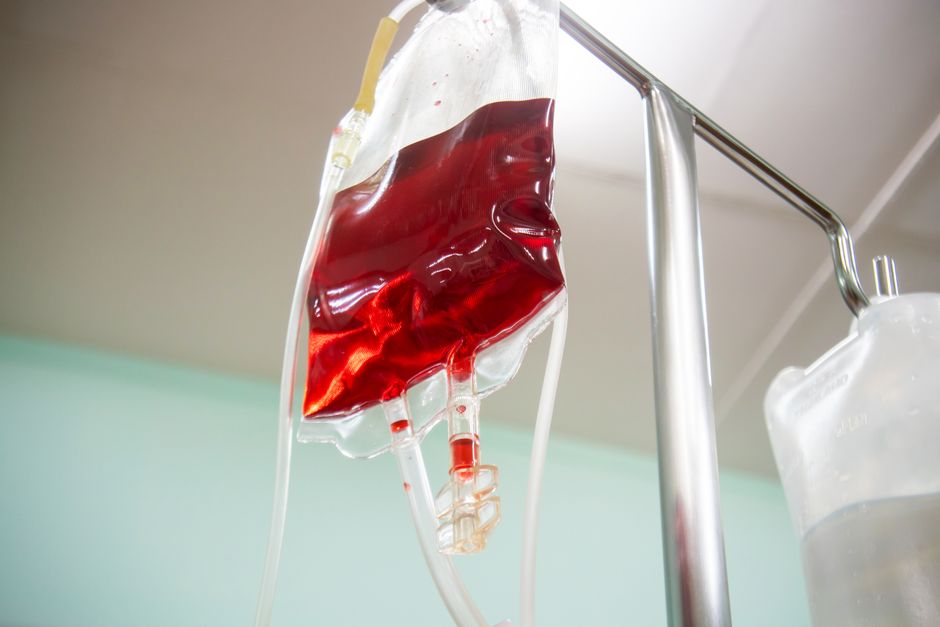
Photo by panumas nikhomkhai on Pexels
A blood transfusion is a medical procedure where healthy blood or blood components are transferred from one person (the donor) to another (the recipient). It's used when a person's body can't make enough healthy blood or if they've lost a lot of blood.
Here's the basic process:
- Blood Donation: A donor gives a unit of blood. This blood is then separated into its components:
- Red Blood Cells: Carry oxygen.
- Plasma: The liquid part of blood, contains proteins, clotting factors.
- Platelets: Help with blood clotting.
- White Blood Cells: Fight infection (often removed before transfusion).
- Blood Typing and Cross-matching: The most crucial step. A recipient's blood type (A, B, AB, O, and Rh factor like positive or negative) must be matched with the donor's blood. This prevents a severe immune reaction where the recipient's body attacks the transfused blood cells.
- Transfusion: The selected blood component is given intravenously (through a vein) to the recipient, usually over a few hours. Medical staff closely monitor the recipient for any adverse reactions.
3. Worked Example
Imagine someone, let's call her Sarah, has been in an accident and lost a significant amount of blood. Her red blood cell count is dangerously low, meaning her body isn't getting enough oxygen. The doctors decide she needs a red blood cell transfusion.
- Diagnosis: Sarah's blood tests show severe anemia due to blood loss.
- Blood Typing: Her blood is tested and found to be O negative (O-).
- Cross-matching: The blood bank finds units of O- red blood cells. A small sample of Sarah's blood is mixed with a sample of the donor's O- blood to ensure there's no reaction (cross-matching).
- Transfusion: Once cleared, a unit of O- red blood cells is hung from an IV pole and slowly infused into Sarah's vein over a few hours. Nurses monitor her vital signs (heart rate, blood pressure, temperature) and watch for any signs of an allergic reaction or other complications.
- Outcome: After the transfusion, Sarah's red blood cell count increases, her oxygen-carrying capacity improves, and her symptoms of fatigue and weakness lessen as her body starts to recover.
4. Key Takeaways
- Your heart is a powerful, four-chambered pump divided into two sides for pulmonary and systemic circulation.
- Blood flows in a specific, one-way direction through the heart, regulated by four valves that prevent backflow.
- The right side of the heart pumps deoxygenated blood to the lungs, while the left side pumps oxygenated blood to the body.
- The pulmonary artery carries deoxygenated blood, which is unique among arteries, and pulmonary veins carry oxygenated blood.
- Blood transfusions replace missing blood components, and blood typing and cross-matching are critical to prevent dangerous immune reactions.
Common Mistakes to Avoid:
- Confusing arteries (generally carry blood away from the heart) with veins (generally carry blood to the heart); remember, pulmonary vessels are exceptions in terms of oxygenation.
- Forgetting the role of valves in ensuring one-way blood flow.
- Underestimating the importance of blood typing in transfusions; a mismatch can be life-threatening.
- Thinking the right side of the heart handles oxygenated blood; it always handles deoxygenated blood.
5. Now Try It
Draw your own diagram of the heart and label all four chambers, the four valves, and the major blood vessels (superior/inferior vena cava, pulmonary artery, pulmonary veins, aorta). Then, using arrows, trace the path of a single red blood cell from the moment it enters the heart from the body until it leaves the heart for the body.
What success looks like: You'll have a clear diagram with correct labels and a continuous, accurate path for blood flow through both the pulmonary and systemic circuits.
Frequently asked about Detailed Heart Anatomy and Blood Flow
More from i need to learn about the parts of the heat and also the cardiovascular system with how blood transfusion works and all the parts of the heart
Get the full i need to learn about the parts of the heat and also the cardiovascular system with how blood transfusion works and all the parts of the heart curriculum
Clone the complete plan to your dashboard for unlimited AI-generated notes, practice quizzes, and a personalised revision schedule.
Save this course free