Introduction to Matter and States of Matter
From the physics curriculum
Introduction to Matter and States of Matter
TL;DR
Matter is anything that has mass and takes up space. It primarily exists in four states: solid, liquid, gas, and plasma. These states differ based on particle arrangement and energy.
1. The Mental Model
Think of matter as the "stuff" everything around you is made of. Its state depends on how much energy its tiny particles have and how tightly they're packed. More energy usually means more movement and less structure.
2. The Core Material
Matter is the fundamental substance of the universe, possessing both mass and volume (it occupies space). You, your computer, the air you breathe – it's all matter. We often describe matter by its state, which largely depends on the temperature and pressure it's under.
States of Matter
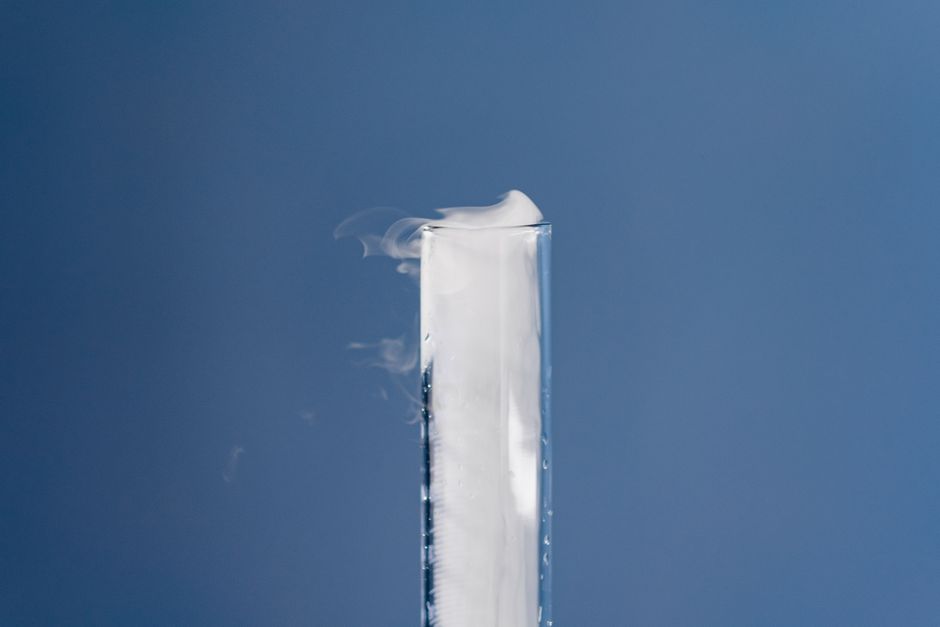
Photo by Ron Lach on Pexels
There are four primary states of matter you'll encounter in physics:
- Solids: Particles are tightly packed in a fixed arrangement and vibrate in place. They have a definite shape and a definite volume. Think of an ice cube; it holds its shape and doesn't expand or shrink unless heated.
- Liquids: Particles are close together but can move past one another. They have a definite volume but take the shape of their container. Water in a glass is a good example; it fills the bottom of the glass but stays the same amount.
- Gases: Particles are far apart and move randomly and rapidly. They have neither a definite shape nor a definite volume, expanding to fill any container. The air in a balloon completely fills it.
- Plasma: This is often called the "fourth state of matter." It's an ionized gas, meaning its atoms have lost or gained electrons, creating a mix of ions and free electrons. Plasma is the most common state of matter in the universe, found in stars, lightning, and fluorescent lights. It conducts electricity.
Phase Changes
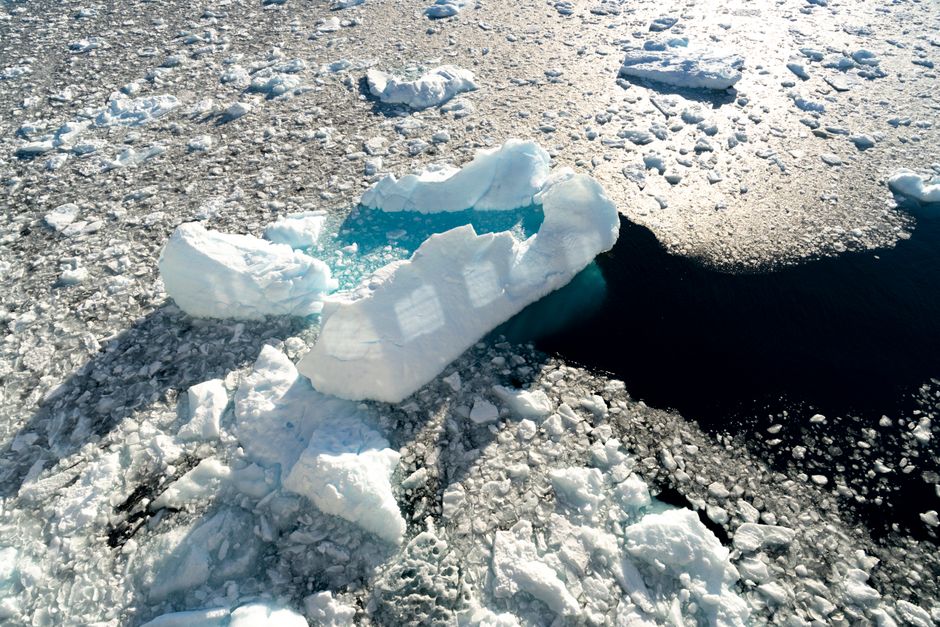
Photo by Hugo Sykes on Pexels
Matter can change from one state to another. These are called phase changes and usually involve adding or removing energy (often as heat).
graph LR
    Solid["Solid (fixed shape/volume)"]
    Liquid["Liquid (fixed volume, variable shape)"]
    Gas["Gas (variable shape/volume)"]
    Plasma["Plasma (ionized gas)"]

    Solid -- Melting (add heat) --> Liquid
    Liquid -- Freezing (remove heat) --> Solid
    Liquid -- Evaporation/Boiling (add heat) --> Gas
    Gas -- Condensation (remove heat) --> Liquid
    Solid -- Sublimation (add heat) --> Gas
    Gas -- Deposition (remove heat) --> Solid
    Gas -- Ionization (add energy) --> Plasma
    Plasma -- Recombination (remove energy) --> Gas
- Melting: Solid to liquid (e.g., ice to water)
- Freezing: Liquid to solid (e.g., water to ice)
- Evaporation/Boiling: Liquid to gas (e.g., water to steam)
- Condensation: Gas to liquid (e.g., steam to water droplets)
- Sublimation: Solid directly to gas (e.g., dry ice turning into fog)
- Deposition: Gas directly to solid (e.g., frost forming)
- Ionization: Gas to plasma (e.g., in a fluorescent light)
- Recombination: Plasma to gas (e.g., as a star cools)
These changes are physical changes; the chemical composition of the substance remains the same.
3. Worked Example
Imagine you have a block of ice at -10°C.
- Heating the ice: As you add heat, the ice's temperature rises from -10°C to 0°C. It's still a solid.
- Melting: At 0°C, adding more heat causes the ice to change into liquid water. During this phase change, the temperature stays at 0°C even though you're adding heat. This energy is used to break the bonds holding the water molecules in a fixed solid structure. It's now a liquid.
- Heating the water: Once all the ice has melted, adding more heat raises the water's temperature from 0°C to 100°C. It's still a liquid.
- Boiling: At 100°C, adding more heat causes the water to change into steam. Again, the temperature stays at 100°C during this phase change as energy is used to separate the water molecules further. It's now a gas.
- Heating the steam: Beyond 100°C, the steam's temperature will continue to rise. It's still a gas.
You can reverse this process by removing heat, causing condensation and then freezing.
4. Key Takeaways
- Matter is anything with mass and volume.
- The four main states of matter are solid, liquid, gas, and plasma.
- Solids have a fixed shape and volume, liquids have fixed volume but variable shape, and gases have variable shape and volume.
- Plasma is an ionized gas, found in extreme energy environments like stars.
- Phase changes occur when matter transitions between states, usually by adding or removing energy.
- During a phase change (like melting or boiling), the temperature remains constant even as energy is added.
Common Mistakes to Avoid:
- Don't confuse physical changes (like phase changes) with chemical changes (like burning wood).
- Don't assume all phase changes involve boiling; evaporation happens below the boiling point.
- Remember that plasma isn't just "really hot gas"; it's a gas where atoms have been ionized.
- Don't forget that temperature doesn't always rise when heat is added; it can stay constant during a phase change.
5. Now Try It
Think about a candle burning. Describe the states of matter involved, from the solid wax to the flame. For each part, identify its state and briefly explain why it fits that description. What phase change(s) are happening?
Frequently asked about Introduction to Matter and States of Matter
Study this next
Get the full physics curriculum
Clone the complete plan to your dashboard for unlimited AI-generated notes, practice quizzes, and a personalised revision schedule.
Create Free Account