Applications and Hazards of Radioactivity
From the Physics Atomic structure and Radioactive decay curriculum
TL;DR
Radioactivity has numerous beneficial applications in medicine, industry, and energy production, but its ionising nature also poses significant health and environmental hazards. Understanding how to use and manage radioactive materials safely is crucial. Protection measures like shielding, distance, and time minimise exposure risks.
1. The Mental Model
Think of radioactivity like a powerful tool: it can be incredibly useful when handled correctly and with proper safety gear, but it can also be very dangerous if you're careless or unprotected. The key is to control its energy.
2. The Core Material
Radioactive materials spontaneously emit ionising radiation (alpha, beta, gamma). This radiation carries energy and can affect matter it passes through. How we harness this energy or protect against it defines its applications and hazards.
Applications of Radioactivity

Photo by Polina Tankilevitch on Pexels
Radioactivity has revolutionised many fields:
-
Medical Applications:
- Diagnosis (Tracers): Radioactive isotopes with short half-lives are injected into the body. Their emitted radiation is detected externally to create images of organs or track metabolic processes. For example, Technetium-99m is widely used for bone scans, heart scans, and brain scans.
- Therapy (Radiotherapy): High doses of radiation are used to destroy cancerous cells. Cobalt-60 or linear accelerators (which produce X-rays) are common. The aim is to target cancer cells while minimising damage to healthy tissue.
- Sterilisation: Gamma radiation can sterilise medical instruments, food, and other products by killing bacteria and viruses without using heat or chemicals.
-
Industrial Applications:
- Thickness Gauging: Beta or gamma sources are used to measure the thickness of materials like paper, plastic films, or metal sheets. A detector measures the radiation passing through; thicker material absorbs more radiation.
- Leak Detection: A small amount of a radioactive tracer can be added to a pipe system. A detector can then locate leaks by identifying where the tracer escapes.
- Smoke Detectors: Americium-241 in ionisation-type smoke detectors ionises the air between two electrodes, creating a small current. Smoke particles disrupt this current, triggering the alarm.
- Industrial Radiography: Gamma sources are used to inspect welds or cast metal for flaws, similar to X-rays for bones.
-
Power Generation:
- Nuclear Power: Fission of uranium-235 (or plutonium-239) releases enormous amounts of energy, which heats water to produce steam, driving turbines to generate electricity. This is a carbon-free electricity source during operation.
Hazards of Radioactivity

Photo by princess on Pexels
Ionising radiation can damage living cells, leading to various health problems. The severity depends on the type of radiation, the dose received, and the duration of exposure.
-
Cellular Damage: Ionising radiation can break chemical bonds, particularly in DNA. This can lead to:
- Acute Radiation Syndrome: High doses over a short period can cause immediate illness (nausea, vomiting, hair loss, organ failure) and can be fatal.
- Cancer: Damaged DNA can lead to uncontrolled cell growth years later. This is a long-term risk even from low-level exposure.
- Genetic Mutations: Damage to reproductive cells can cause mutations that might be passed on to future generations.
- Birth Defects: Exposure during pregnancy can harm the developing fetus.
-
Environmental Contamination:
- Radioactive waste (from nuclear power plants, medical treatments, industrial uses) remains hazardous for very long periods due to long half-lives.
- Improper disposal can contaminate soil, water, and air, affecting ecosystems and human food chains.
Radiation Protection (ALARA Principle)
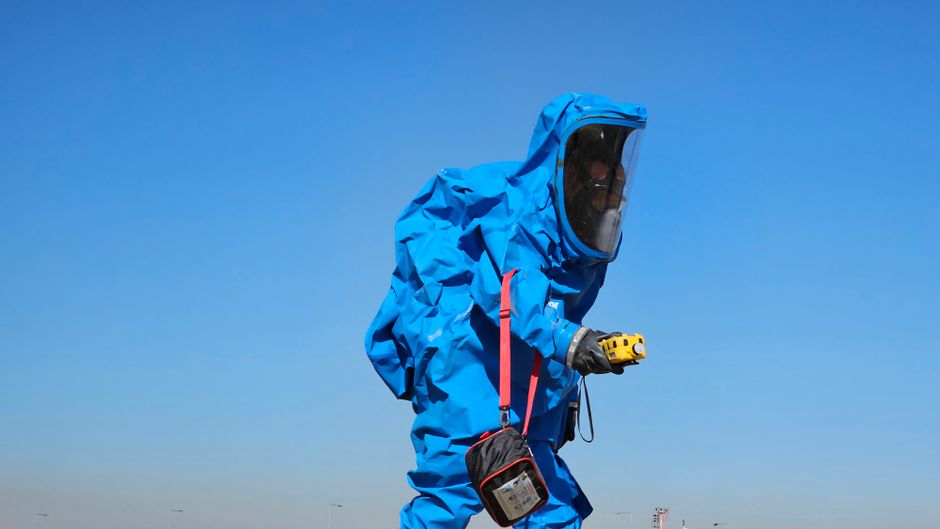
Photo by Fahrettin Turgut on Pexels
The fundamental principle for radiation protection is ALARA: As Low As Reasonably Achievable. This means you should always try to minimise your exposure.
graph TD
    A["Source of Radiation"] --> B["Exposure to Individual"]
    B --> C["Potential Harm (Cell Damage, Cancer)"]

    subgraph Protection Measures
        D["Shielding (e.g., Lead, Concrete)"] --> B
        E["Distance (Increase separation)"] --> B
        F["Time (Reduce exposure duration)"] --> B
        G["Containment (Enclose source)"] --> B
        H["Monitoring (Dosimeters)"] --> B
    end

    style A fill:#f9f,stroke:#333,stroke-width:2px
    style C fill:#f9f,stroke:#333,stroke-width:2px
- Time: Reduce the time you spend near a radioactive source. If a task takes twice as long, you receive twice the dose.
- Distance: Increase your distance from the source. Radiation intensity decreases rapidly with distance (inverse square law: intensity is proportional to 1/distance²). Doubling your distance reduces the dose rate by a factor of four.
- Shielding: Place absorbing materials between yourself and the source. The type and thickness of shielding depend on the radiation:
- Alpha particles: Easily stopped by a sheet of paper or skin.
- Beta particles: Stopped by a few millimetres of aluminium.
- Gamma rays/X-rays: Require dense materials like lead or thick concrete.
- Neutrons: Require hydrogen-rich materials like water or paraffin.
- Containment: Keep radioactive materials in sealed containers to prevent their spread and accidental ingestion or inhalation.
- Monitoring: Use dosimeters (devices that measure accumulated radiation dose) to track personal exposure and ensure it stays within safe limits.
3. Worked Example
Imagine you're a radiographer using a gamma source to check for cracks in a metal pipe. The source emits gamma rays.
- Application: Industrial radiography for quality control.
- Hazard: Direct exposure to gamma radiation, which can cause cellular damage.
- Protection:
- Time: You set up the equipment and then move away quickly, activating the source remotely. You spend the absolute minimum time next to the unshielded source.
- Distance: You move to a control room or a safe distance (e.g., 10-20 meters away) while the source is active.
- Shielding: The source itself is stored in a heavy lead container when not in use. During operation, you might use lead screens as temporary barriers, and the control room walls are often made of thick concrete.
- Monitoring: You wear a personal dosimeter to record your accumulated radiation dose over time, ensuring it doesn't exceed safe limits.
By following these steps, you harness the benefits of gamma radiation for inspection while dramatically reducing the risk of harm to yourself.
4. Key Takeaways
- Radioactivity is used in medicine for diagnosis (tracers like Technetium-99m) and treatment (radiotherapy for cancer).
- Industries use radioactivity for thickness gauging, leak detection, smoke alarms, and checking material integrity.
- Nuclear power plants convert the energy from nuclear fission into electricity.
- Ionising radiation damages cells, leading to risks like cancer, acute radiation sickness, and genetic mutations.
- The ALARA principle (As Low As Reasonably Achievable) guides all radiation protection efforts.
- Key protection measures are reducing Time of exposure, increasing Distance from the source, and using appropriate Shielding.
- Containment prevents the spread of radioactive material, and monitoring tracks individual exposure.
Common Mistakes to Avoid:
- Underestimating the inverse square law: Thinking doubling distance only halves the dose rate, when it actually reduces it to a quarter.
- Believing all radiation is equally harmful or requires the same shielding; alpha is easily stopped, gamma needs heavy protection.
- Forgetting that internal contamination (inhaling or ingesting radioactive material) is also a significant hazard, not just external exposure.
- Neglecting the long-term storage and disposal challenges of radioactive waste.
5. Now Try It
You are designing a safety plan for a hospital department that uses Technetium-99m for patient scans. This isotope emits gamma rays and has a half-life of 6 hours. List three specific safety rules you would implement for the staff handling the isotope, explaining why each rule is important in terms of ALARA. What success looks like is clearly stating the rule and linking it directly to Time, Distance, or Shielding, and explaining the benefit.
Try it yourself: Radioactive decay and half-life calculator
Frequently asked about Applications and Hazards of Radioactivity
Study this next
Get the full Physics Atomic structure and Radioactive decay curriculum
Clone the complete plan to your dashboard for unlimited AI-generated notes, practice quizzes, and a personalised revision schedule.
Save this course free