Density and States of Matter
From the physics curriculum
TL;DR
Density tells you how much "stuff" is packed into a given space, and it's a key property for understanding how materials behave. Matter exists in different states like solid, liquid, and gas, each with unique particle arrangements and energy levels. Understanding these concepts helps explain phenomena from why objects float to how a refrigerator works.
1. The Mental Model
Imagine you have a box. Density is like asking how many marbles you can cram into that box. States of matter are about how those marbles are arranged and how much they're wiggling around inside the box.
2. The Core Material
Density is a fundamental physical property that relates a substance's mass to its volume. Basically, it tells you how compact a substance is. If you have two objects of the same size, the one that feels heavier is denser.
The formula for density is:
$$ \text{Density (ρ)} = \frac{\text{Mass (m)}}{\text{Volume (V)}} $$
The Greek letter 'rho' (ρ) is often used to represent density. Common units for density include kilograms per cubic meter (kg/m³) or grams per cubic centimeter (g/cm³).
States of Matter
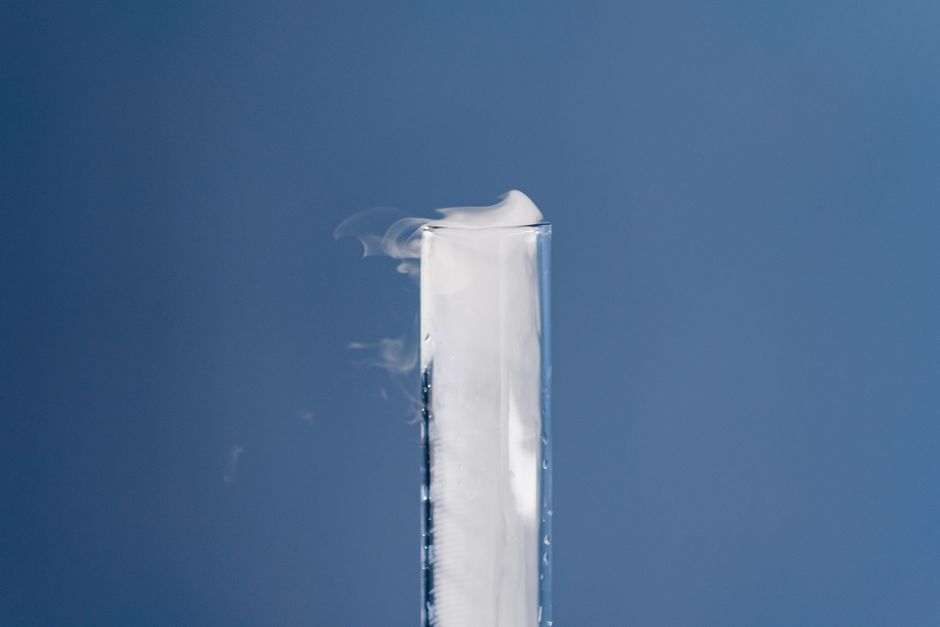
Photo by Ron Lach on Pexels
Matter typically exists in three main states: solid, liquid, and gas. These states depend on the energy of the particles (atoms or molecules) and the forces between them.
- Solids: Particles are packed closely together in fixed positions, vibrating slightly. They have a definite shape and a definite volume. Think of an ice cube.
- Liquids: Particles are close together but can move past each other. They have a definite volume but take the shape of their container. Think of water.
- Gases: Particles are far apart and move randomly and rapidly. They have no definite shape or volume and will expand to fill their container. Think of steam.
You can change the state of matter by adding or removing energy, usually in the form of heat.
* Melting: Solid → Liquid (e.g., ice to water)
* Freezing: Liquid → Solid (e.g., water to ice)
* Boiling/Evaporation: Liquid → Gas (e.g., water to steam)
* Condensation: Gas → Liquid (e.g., steam to water droplets)
* Sublimation: Solid → Gas (e.g., dry ice to CO₂)
* Deposition: Gas → Solid (e.g., frost forming)
Here's how energy influences the state of matter:
graph TD
    A["Low Energy (Particles fixed)"] --> B["Solid"]
    B -->|Add Heat (Melting)| C["Liquid"]
    C -->|Add Heat (Boiling/Evaporation)| D["Gas"]
    D -->|Remove Heat (Condensation)| C
    C -->|Remove Heat (Freezing)| B
    B -- "Add Heat (Sublimation)" --> D
    D -- "Remove Heat (Deposition)" --> B
    D["High Energy (Particles move freely)"]
Buoyancy and Density
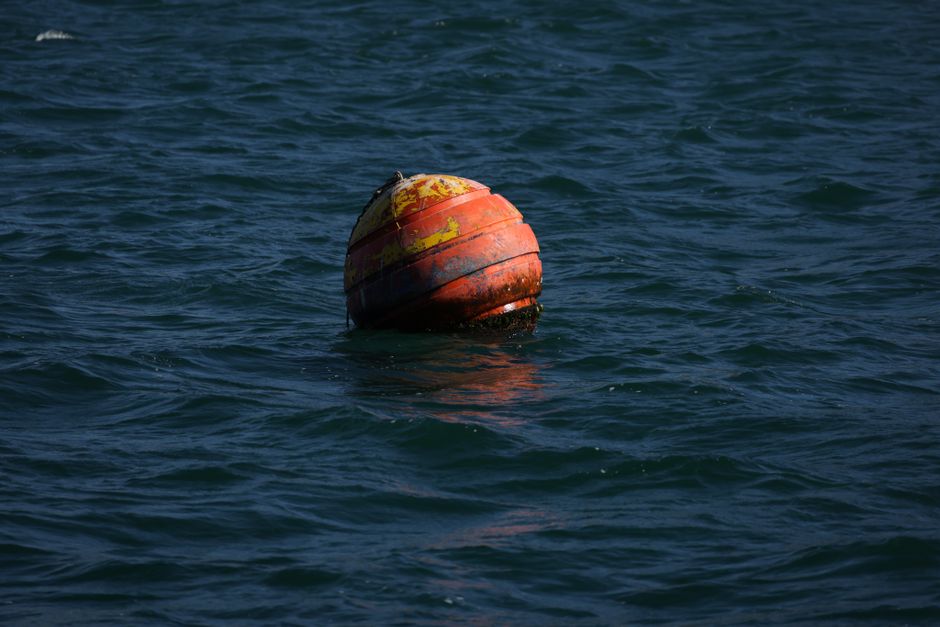
Photo by Magda Ehlers on Pexels
Density helps us understand why some things float and others sink. An object will float in a fluid if its density is less than the density of the fluid. If it's denser, it will sink. This is all thanks to buoyancy, an upward force exerted by a fluid that opposes the weight of an immersed object.
3. Worked Example
Let's say you have a metal block with a mass of 540 grams (g) and its dimensions are 3 cm x 5 cm x 6 cm. Will it float or sink in water? (The density of water is approximately 1 g/cm³).
First, calculate the volume of the block:
Volume (V) = length × width × height
V = 3 cm × 5 cm × 6 cm
V = 90 cm³
Next, calculate the density of the metal block:
Density (ρ) = Mass / Volume
ρ = 540 g / 90 cm³
ρ = 6 g/cm³
Now, compare the density of the metal block to the density of water:
Block density = 6 g/cm³
Water density = 1 g/cm³
Since the density of the metal block (6 g/cm³) is greater than the density of water (1 g/cm³), the metal block will sink.
4. Key Takeaways
- Density is a measure of how much mass is packed into a given volume (ρ = m/V).
- Solids have fixed shapes and volumes with particles in fixed positions.
- Liquids have fixed volumes but take the shape of their container, with particles that can slide past each other.
- Gases have no fixed shape or volume, with particles moving freely and far apart.
- Adding or removing heat energy changes a substance's state of matter.
- An object floats if it's less dense than the fluid it's in; it sinks if it's denser.
Common Mistakes to Avoid:
- Don't confuse mass with density; a large object can have low density if it's mostly empty space.
- Remember that volume is a measurement of space occupied, not just length or area.
- Forgetting that temperature changes can significantly affect a substance's density and state.
- Assuming all liquids have the same density; different liquids have different densities.
5. Now Try It
You find an irregularly shaped rock. You measure its mass to be 210 grams. You then place it in a graduated cylinder containing 100 mL of water, and the water level rises to 170 mL. Calculate the density of the rock. Then, state whether the rock would float or sink in mercury, which has a density of 13.6 g/mL.
Frequently asked about Density and States of Matter
Study this next
Get the full physics curriculum
Clone the complete plan to your dashboard for unlimited AI-generated notes, practice quizzes, and a personalised revision schedule.
Save this course free