Particle Nature of Matter and States of Change
From the biology, chemistry and physics curriculum
TL;DR
Matter is made of tiny particles that are always moving, and their arrangement and energy determine its state. Adding or removing energy changes how these particles behave, leading to transitions between solid, liquid, and gas. These changes happen at specific temperatures and involve energy without temperature change.
1. The Mental Model
Imagine everything around you, even yourself, is built from countless tiny, invisible LEGO bricks. How these bricks are packed together and how much they jiggle determines if you see a rigid wall, a flowing stream, or a wispy cloud. Adding or removing energy just makes them jiggle more or less, or change their packing.
2. The Core Material
Matter exists primarily in three common states: solid, liquid, and gas. The state depends on how its constituent particles (atoms, molecules, or ions) are arranged and how much energy they possess.
Solids
In solids, particles are closely packed in fixed positions, often in a regular lattice arrangement. They vibrate around these fixed points but don't move past each other. This gives solids a definite shape and volume. They're generally incompressible.
Liquids
Liquid particles are still closely packed but can move past each other. They don't have a fixed shape and will take the shape of their container, but they do have a definite volume and are nearly incompressible. Their movement allows them to flow.
Gases
Gas particles are far apart and move randomly and rapidly. They have no fixed shape or volume and will expand to fill their container. Gases are easily compressible because there's so much space between particles.
States of Change
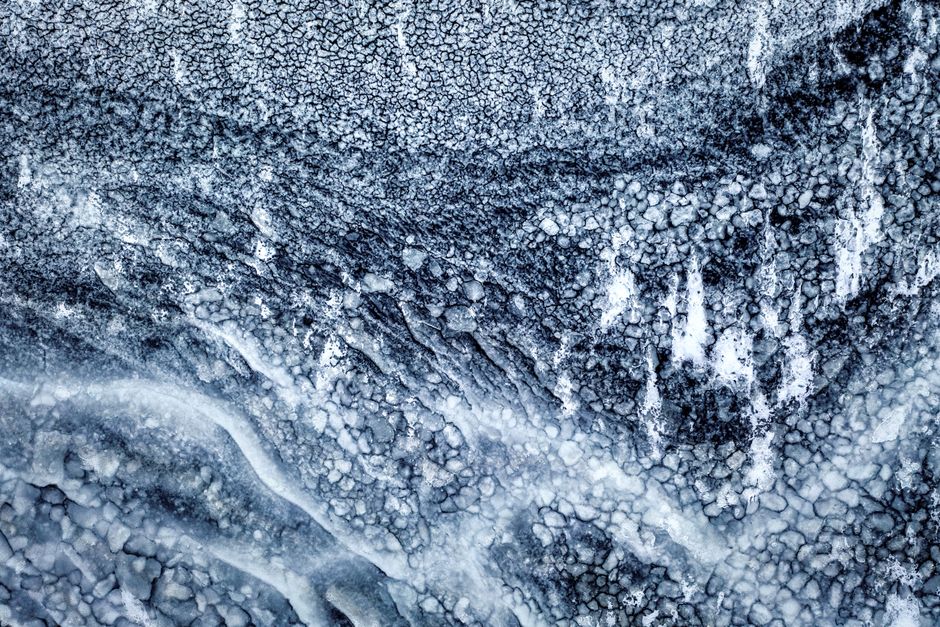
Photo by Tom Fisk on Pexels
Changing the state of matter involves adding or removing energy, usually in the form of heat. This energy doesn't always change the temperature; sometimes it's used to break or form bonds/forces between particles.
- Melting: Solid to liquid (e.g., ice to water). Requires energy input (heat).
- Freezing: Liquid to solid (e.g., water to ice). Releases energy (heat).
- Boiling/Evaporation: Liquid to gas (e.g., water to steam). Requires energy input. Boiling happens throughout the liquid at a specific temperature; evaporation happens at the surface at any temperature.
- Condensation: Gas to liquid (e.g., steam to water droplets). Releases energy.
- Sublimation: Solid directly to gas (e.g., dry ice to CO₂ gas). Requires energy input.
- Deposition: Gas directly to solid (e.g., frost forming from water vapor). Releases energy.
During these changes of state, the temperature remains constant even though energy is being added or removed. This is because the energy is being used to overcome (or form) the intermolecular forces between particles, not to increase their kinetic energy (which would raise the temperature).
graph TD
    A["Solid (fixed shape/volume)"] -->|Melting (add heat)| B("Liquid (fixed volume, no fixed shape)")
    B -->|Boiling/Evaporation (add heat)| C("Gas (no fixed shape/volume)")
    C -->|Condensation (remove heat)| B
    B -->|Freezing (remove heat)| A
    A -->|Sublimation (add heat)| C
    C -->|Deposition (remove heat)| A
3. Worked Example
Imagine you have a block of ice at -10°C and you heat it until it becomes steam at 110°C.
- Ice at -10°C to Ice at 0°C: Heat added increases the kinetic energy of water particles in the solid state. Temperature rises.
- Ice at 0°C to Water at 0°C: Heat added (latent heat of fusion) breaks the fixed bonds in the solid structure, allowing particles to move past each other. The temperature remains constant at 0°C during this melting process.
- Water at 0°C to Water at 100°C: Further heat added increases the kinetic energy of water particles in the liquid state. Temperature rises.
- Water at 100°C to Steam at 100°C: Heat added (latent heat of vaporization) gives particles enough energy to completely overcome intermolecular forces and escape into the gas phase. The temperature remains constant at 100°C during boiling.
- Steam at 100°C to Steam at 110°C: More heat added increases the kinetic energy of water particles in the gaseous state. Temperature rises.
At 0°C and 100°C, adding energy didn't raise the temperature; it changed the state of matter.
4. Key Takeaways
- Matter exists as solids, liquids, or gases based on particle arrangement and energy.
- Solid particles vibrate in fixed positions; liquid particles move past each other; gas particles move freely and far apart.
- Adding heat generally increases particle kinetic energy and temperature, or it breaks intermolecular forces to change state.
- Removing heat generally decreases particle kinetic energy and temperature, or it allows intermolecular forces to form, changing state.
- During a change of state (like melting or boiling), temperature remains constant as latent heat is absorbed or released.
- Sublimation and deposition are direct changes between solid and gas.
Common Mistakes to Avoid

Photo by KATRIN BOLOVTSOVA on Pexels
- Don't confuse temperature with heat; heat is energy transfer, temperature is a measure of average kinetic energy.
- Don't think particles stop moving in a solid; they still vibrate.
- Don't assume adding heat always increases temperature; it can cause a state change.
- Don't forget that evaporation can happen below the boiling point, but boiling occurs only at a specific temperature.
5. Now Try It
Imagine you're boiling a pot of water to cook pasta. Describe what's happening to the water particles from the moment you turn on the heat until the water is boiling vigorously, focusing on energy changes and particle behavior. What happens if you keep the heat on after it's boiling? What would you observe if you then put a lid on the pot?
What success looks like: You've described the increase in particle kinetic energy, the temperature rise, the constant temperature during boiling, and how the particles then gain enough energy to become gas. You'll also explain how the lid affects the gas particles.
Frequently asked about Particle Nature of Matter and States of Change
Study this next
Get the full biology, chemistry and physics curriculum
Clone the complete plan to your dashboard for unlimited AI-generated notes, practice quizzes, and a personalised revision schedule.
Save this course free