Fundamentals of Water Resources
Fundamentals of Water Resources
TL;DR
Water is crucial for all life and its availability varies widely across the globe due to natural processes and human activities. Understanding the global water cycle and how water is distributed is key to managing this essential resource sustainably. You'll learn about different water sources and how they connect.
1. The Mental Model
Think of Earth's water as a single, constantly moving system, where water changes forms and locations but never truly disappears. It's like a huge, interconnected plumbing system.
2. The Core Material
Water is the lifeblood of our planet, covering about 71% of its surface. However, not all this water is readily available for human use. The vast majority of it is saltwater, leaving a small percentage as freshwater.
Let's break down where all this water is found:
2.1 Global Water Distribution
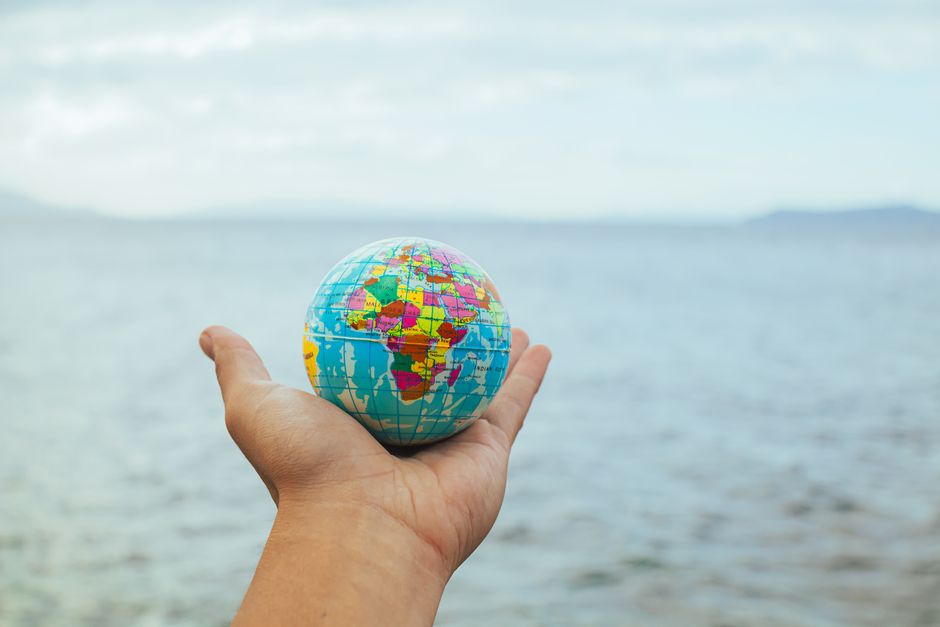
Photo by Nothing Ahead on Pexels
Most of the Earth's water is in the oceans. The freshwater that's accessible to us is found in various forms, both on and beneath the surface.
graph TD
    A["Total Earth's Water (100%)"] --> B["Saltwater (97.5%)"]
    A --> C["Freshwater (2.5%)"]
    C --> D["Glaciers and Ice Caps (68.7%)"]
    C --> E["Groundwater (30.1%)"]
    C --> F["Surface & Other Freshwater (1.2%)"]
    F --> G["Permafrost (69%)"]
    F --> H["Lakes (20.9%)"]
    F --> I["Soil Moisture (3.8%)"]
    F --> J["Atmosphere (3.0%)"]
    F --> K["Swamps & Marshes (2.6%)"]
    F --> L["Rivers (0.4%)"]
    F --> M["Biological Water (0.2%)"]
As you can see, even within the freshwater category, most of it is locked up in glaciers and ice caps. This means the water we can easily use – from lakes, rivers, and accessible groundwater – makes up a tiny fraction of the total.
2.2 The Water Cycle (Hydrologic Cycle)
Photo by brazil topno on Pexels
The water cycle describes the continuous movement of water on, above, and below the surface of the Earth. It's powered by the sun's energy and gravity.
Here's how it generally works:
- Evaporation/Transpiration: Heat from the sun turns liquid water from oceans, lakes, and rivers into water vapor, which rises into the atmosphere. Plants also release water vapor into the atmosphere through transpiration.
- Condensation: As water vapor rises, it cools and forms clouds.
- Precipitation: When clouds become saturated, water falls back to Earth as rain, snow, sleet, or hail.
- Runoff/Infiltration: Precipitated water either flows over the land surface into rivers and eventually oceans (runoff) or seeps into the ground to become groundwater (infiltration).
- Storage: Water can be stored for varying lengths of time in oceans, lakes, glaciers, ice caps, and aquifers (underground rock formations that hold water).
This cycle continuously replenishes our freshwater sources, but the rate of replenishment isn't always enough to meet human demands, especially in certain regions.
2.3 Key Water Sources

Photo by cottonbro studio on Pexels
- Surface Water: This includes rivers, lakes, reservoirs, and wetlands. It's often the most accessible source but can be easily polluted and is susceptible to drought.
- Groundwater: Water stored beneath the Earth's surface in aquifers. It's generally cleaner than surface water but can be over-extracted, leading to issues like land subsidence and depletion.
- Glaciers and Ice Caps: While a huge store of freshwater, this source is largely inaccessible for direct human use and contributes to sea-level rise when melting.
- Atmospheric Water: Water vapor in the atmosphere. Not a direct source for widespread use, but technologies like cloud seeding exist, though they're not widely adopted.
Understanding these sources and their connection through the water cycle is crucial for sustainable management.
3. Worked Example
Let's imagine a small town that gets its water from a local river and a few groundwater wells.
In a typical year, the town uses 1,000,000 cubic meters (m³) of water.
The river provides 700,000 m³ (70% of total).
The wells provide 300,000 m³ (30% of total).
During a severe drought, river flow drops significantly. The town's water utility observes that the river can only reliably supply 400,000 m³.
To meet the town's demand of 1,000,000 m³, how much more water must they extract from groundwater?
- Current demand: 1,000,000 m³
- River supply during drought: 400,000 m³
- Remaining water needed: 1,000,000 m³ - 400,000 m³ = 600,000 m³
The town would need to extract 600,000 m³ from groundwater, double their usual groundwater extraction. This increased reliance on groundwater during drought highlights the interconnectedness of water sources and the need for careful management to avoid over-extraction of aquifers.
4. Key Takeaways
- The vast majority of Earth's water is saltwater, with only a small fraction being freshwater.
- Most freshwater is locked in glaciers and ice caps, making readily available surface and groundwater scarce.
- The water cycle continuously moves water, but its processes can be unevenly distributed in time and space.
- Surface water (rivers, lakes) and groundwater (aquifers) are the primary sources for human use.
- Over-reliance on a single water source, especially during stress events like drought, can lead to serious issues.
- Understanding the proportions and movements of water is fundamental to managing it effectively.
Common Mistakes to Avoid:
- Assuming that because Earth has a lot of water, there's always enough freshwater for everyone.
- Forgetting that groundwater and surface water are often connected and impact each other.
- Underestimating the time it takes for groundwater aquifers to recharge after extraction.
- Ignoring the impact of climate change on the water cycle, such as altered precipitation patterns.
5. Now Try It
Imagine your own local area. Identify the main sources of freshwater (e.g., a specific river, lake, or groundwater basin). Think about what human activities in your area might impact the quantity or quality of that water source. Write down two potential impacts and suggest one simple action that could help mitigate each impact. You've succeeded if you can clearly identify local water sources, potential threats, and practical solutions.
Frequently asked about Fundamentals of Water Resources
Get the full geography, water and its spatial distribution, sustainable management of water, spatial distribution of tropical rainforests and mangroves, sustainable management of tropical rainforests and mangroves curriculum
Clone the complete plan to your dashboard for unlimited AI-generated notes, practice quizzes, and a personalised revision schedule.
Create Free Account