Introduction to Oceanography and Earth's Water Bodies
From the oceans and life geography curriculum
TL;DR
Oceanography is the scientific study of the ocean, covering its physical, chemical, biological, and geological aspects. Earth's water is mostly saltwater in oceans, with a small fraction as freshwater crucial for life. Understanding how water moves through the Earth's systems is key to appreciating our planet's interconnectedness.
1. The Mental Model
Imagine Earth as a giant blue marble, with vast oceans connecting everything. These oceans aren't just big puddles; they're dynamic systems influencing weather, climate, and all life. Think of oceanography as the science that helps us understand this massive, life-giving blue part of our planet.
2. The Core Material
Oceanography is a fascinating interdisciplinary science. It combines aspects of physics, chemistry, biology, and geology to study the global ocean. It's not just about looking at fish; it's about understanding currents, seafloor mapping, marine ecosystems, and the ocean's role in climate regulation.
2.1 The Four Main Branches of Oceanography

Photo by Nothing Ahead on Pexels
- Physical Oceanography: Focuses on the ocean's physical properties like temperature, salinity, waves, tides, and currents. It explains how oceans move and mix.
- Chemical Oceanography: Studies the composition of seawater, including its dissolved gases and nutrients, and how these affect marine life and geological processes.
- Biological Oceanography (Marine Biology): Explores marine life, from microscopic plankton to giant whales, their interactions, and their ecosystems.
- Geological Oceanography (Marine Geology): Investigates the seafloor, including plate tectonics, sediments, and the formation of ocean basins and features like trenches and mid-ocean ridges.
2.2 Earth's Water Distribution
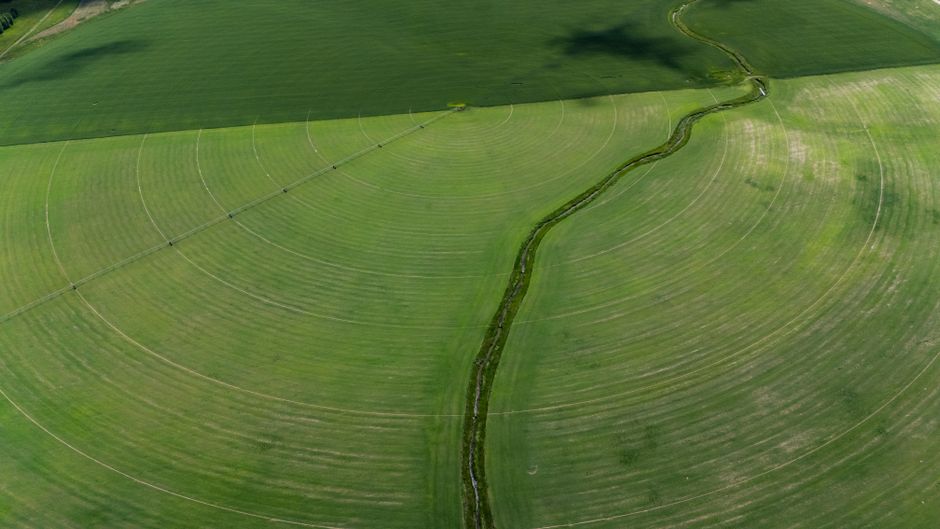
Photo by Sam McCool on Pexels
Our planet is truly the "Blue Planet," but most of that water isn't readily available for drinking or agriculture. Here's a breakdown:
- Oceans: Approximately 97.5% of all Earth's water is saltwater found in oceans.
- Freshwater: Only about 2.5% is freshwater.
- Most freshwater (around 68.7%) is locked up in glaciers and ice caps.
- About 30.1% is groundwater.
- A tiny fraction (around 1.2%) is surface water (lakes, rivers, swamps) and atmospheric water.
This distribution highlights why freshwater resources are so precious and why understanding the water cycle is critical.
2.3 The Hydrologic Cycle (Water Cycle)
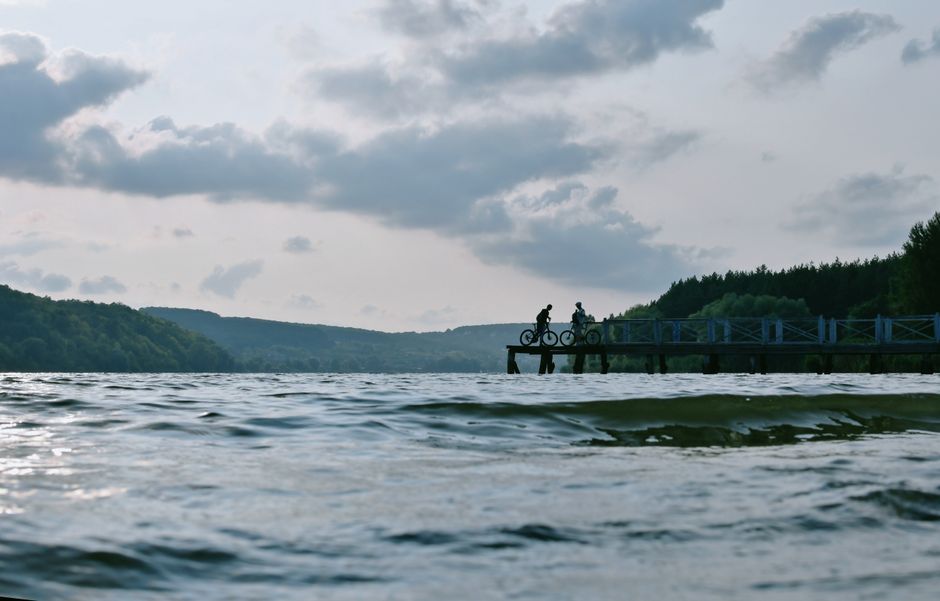
Photo by Darya Grey_Owl on Pexels
The hydrologic cycle describes the continuous movement of water on, above, and below the surface of the Earth. It's a closed system, meaning the total amount of water remains constant, but it's constantly changing states and locations.
graph TD
    A["Ocean (Largest Reservoir)"] --> B{Evaporation}
    B --> C["Atmosphere (Water Vapor)"]
    C --> D{Condensation (Cloud Formation)}
    D --> E{Precipitation (Rain, Snow)}
    E --> F["Land (Lakes, Rivers, Soil)"]
    F --> G{Runoff/Groundwater Flow}
    G --> A
    E --> A
    F --> B
Key processes in the hydrologic cycle:
- Evaporation: Liquid water turns into water vapor, usually from oceans, lakes, and rivers, driven by solar energy.
- Transpiration: Water vapor released by plants.
- Condensation: Water vapor in the atmosphere cools and changes back into liquid water, forming clouds.
- Precipitation: Water released from clouds in the form of rain, snow, sleet, or hail.
- Runoff: Water flowing over the land surface into rivers, lakes, and eventually oceans.
- Infiltration/Percolation: Water soaking into the ground to become groundwater.
3. Worked Example
Let's consider a drop of water that starts in the Pacific Ocean.
- Evaporation: The sun's energy heats the ocean surface, and our water drop evaporates, becoming water vapor. It rises into the atmosphere.
- Condensation: As it rises, the water vapor cools and condenses around tiny particles, becoming part of a cloud.
- Precipitation: The cloud moves inland. Eventually, the water drop, now part of a raindrop, falls over the Rocky Mountains.
- Runoff: It lands in a stream, which flows into a larger river (like the Colorado River).
- Return to Ocean: The Colorado River eventually carries our water drop to the Gulf of California, returning it to the ocean, ready to restart its journey.
This cycle can take days, years, or even millennia, depending on where the water is stored (e.g., in a glacier or deep underground aquifer).
4. Key Takeaways
- Oceanography is a broad science studying the physical, chemical, biological, and geological aspects of the ocean.
- The vast majority of Earth's water is saltwater in the oceans, with only a small percentage being freshwater.
- Most freshwater is locked in glaciers and ice caps, making easily accessible freshwater a limited resource.
- The hydrologic cycle continuously moves water through evaporation, condensation, precipitation, and runoff.
- Oceans play a critical role in Earth's climate and support an immense diversity of life.
- Understanding water distribution and movement is fundamental to managing water resources.
Common Mistakes to Avoid:
- Don't confuse oceanography (the study of the ocean) with oceanology (not a commonly used scientific term; usually just oceanography).
- Don't assume all "water on Earth" means "freshwater available for human use."
- Forgetting that the water cycle is continuous and involves different states of water (liquid, gas, solid).
- Underestimating the interconnectedness: what happens in one part of the ocean or water cycle affects others.
5. Now Try It
Imagine you are explaining the importance of oceans and the water cycle to someone who knows nothing about science. Write a short, simple paragraph (3-4 sentences) explaining why we should care about oceanography and where our drinking water actually comes from, linking it to the hydrologic cycle.
Success looks like: Your paragraph clearly explains the value of ocean study and correctly identifies the ultimate source of drinking water in the context of the water cycle, using easy-to-understand language.
Frequently asked about Introduction to Oceanography and Earth's Water Bodies
Study this next
Get the full oceans and life geography curriculum
Clone the complete plan to your dashboard for unlimited AI-generated notes, practice quizzes, and a personalised revision schedule.
Save this course free