Fundamentals of Water Geography
Fundamentals of Water Geography
TL;DR
Water geography explores how water is distributed across the Earth, where it comes from, and where it goes. Understanding the water cycle is key to grasping how water moves through different forms and locations. We'll also look at how human activities significantly impact water availability and quality.
1. The Mental Model
Think of water as a global traveller, constantly moving between the atmosphere, land, and oceans. This journey, the water cycle, dictates where you find water and how much there is. Human actions can either help or hinder this natural process.
2. The Core Material
You're probably familiar with water, but understanding its global distribution and movement is crucial in geography. We're talking about the hydrosphere, which includes all the water on Earth – in oceans, lakes, rivers, glaciers, groundwater, and even in the atmosphere.
The Water Cycle (Hydrologic Cycle)
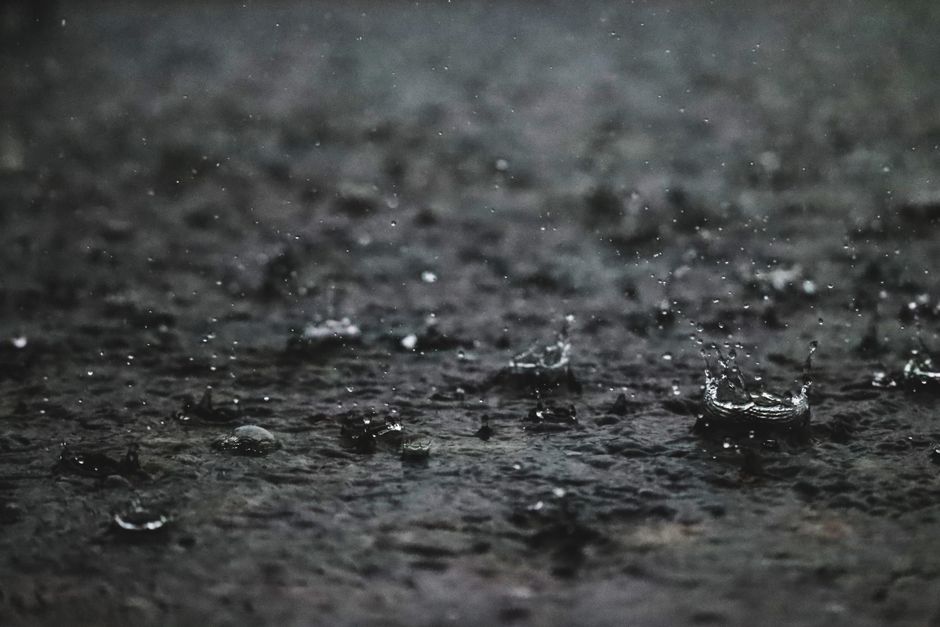
Photo by brazil topno on Pexels
The water cycle describes the continuous movement of water on, above, and below the surface of the Earth. It's powered by the sun's energy and gravity.
- Evaporation: Heat from the sun turns liquid water (from oceans, lakes, etc.) into water vapour, which rises into the atmosphere.
- Transpiration: Plants release water vapour into the atmosphere through their leaves. It's like evaporation but from plants!
- Condensation: As water vapour rises, it cools and changes back into tiny liquid droplets or ice crystals, forming clouds.
- Precipitation: When these droplets or crystals get too heavy, they fall back to Earth as rain, snow, sleet, or hail.
- Runoff: Water that flows over the land surface, often into rivers, lakes, and eventually the oceans.
- Infiltration/Percolation: Some precipitation soaks into the ground, becoming soil moisture or groundwater. Groundwater is stored in underground layers called aquifers.
- Storage: Water can be stored in various places for different lengths of time – oceans (long-term), glaciers (very long-term), lakes, rivers, and groundwater.
graph TD
    A["Solar Energy"] --> B["Evaporation (from oceans, lakes, rivers)"];
    A --> C["Transpiration (from plants)"];
    B --> D["Water Vapour in Atmosphere"];
    C --> D;
    D --> E["Condensation (cloud formation)"];
    E --> F["Precipitation (rain, snow, etc.)"];
    F --> G["Runoff (surface flow)"];
    F --> H["Infiltration/Percolation (into ground)"];
    G --> I["Rivers/Lakes"];
    I --> J["Oceans"];
    H --> K["Groundwater"];
    K --> I;
    I --> J;
    J --> B;
Global Water Distribution
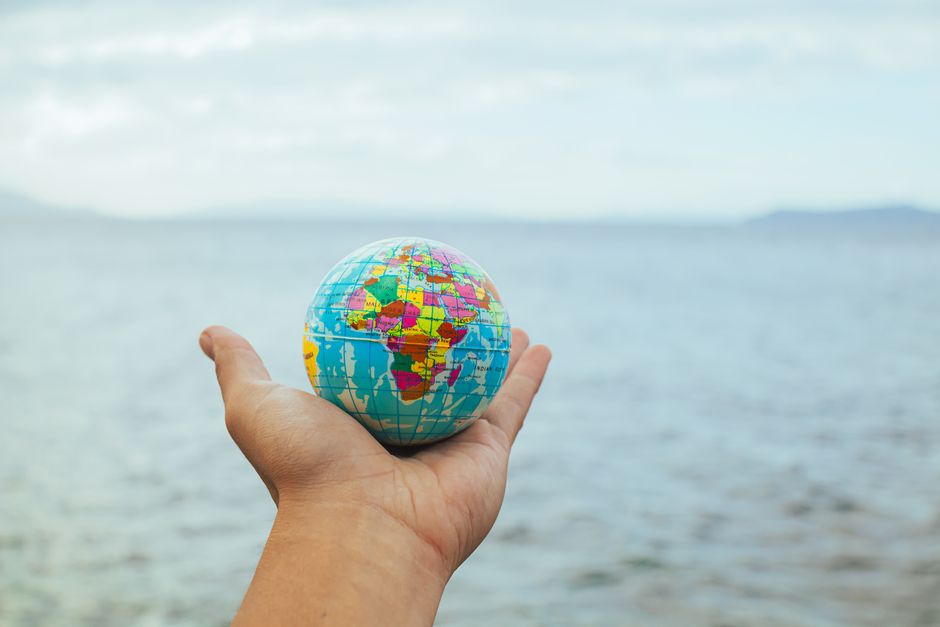
Photo by Nothing Ahead on Pexels
Most of Earth's water isn't freshwater available for drinking.
- Oceans: About 97% of all water is saltwater in oceans. It's too salty for direct human use.
- Freshwater: Only about 3% is freshwater.
- Glaciers and Ice Caps: Most freshwater (around 68.7%) is locked up in glaciers and ice caps, mainly in the polar regions.
- Groundwater: About 30.1% of freshwater is found underground in aquifers. This is a crucial source for many areas.
- Surface Water: A tiny fraction (around 1.2%) is readily available as surface water in lakes, rivers, and swamps. Atmospheric water and biological water make up even smaller amounts.
This uneven distribution means that while there's plenty of water on Earth, only a small part is easily accessible freshwater, making its management incredibly important.
Human Impacts on the Water Cycle
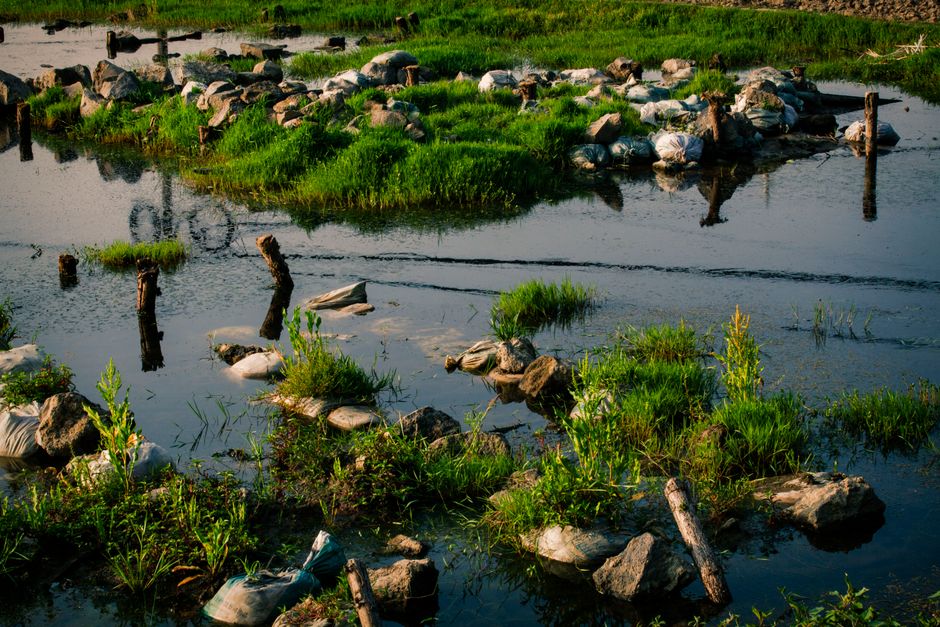
Photo by 光曦 刘 on Pexels
Humans significantly alter the water cycle and its distribution:
- Deforestation: Removing forests reduces transpiration and increases surface runoff, leading to soil erosion and reduced groundwater recharge.
- Urbanization: Paving over land reduces infiltration, increasing runoff and the risk of floods. Impermeable surfaces prevent water from soaking into the ground.
- Agriculture: Irrigation uses vast amounts of water, often from rivers and groundwater, depleting these sources. Fertilizers and pesticides can also pollute water bodies.
- Industry: Many industries require large volumes of water for cooling or processing, and can sometimes discharge pollutants.
- Climate Change: Warmer temperatures can increase evaporation, alter precipitation patterns (more intense storms, longer droughts), and melt glaciers, affecting freshwater supplies.
3. Worked Example
Imagine a small town, "Dry Creek," situated near a river and reliant on groundwater. Historically, the river flowed consistently, and wells provided ample water. Over the last two decades, the area experienced significant deforestation for cattle ranching, and a new factory opened upstream.
Now, Dry Creek faces challenges: The river's flow is lower, especially in dry seasons, and local wells are running dry or need to be drilled deeper. When it does rain, there's more flash flooding.
Let's break down the impact using our understanding:
- Deforestation: Reduced trees mean less transpiration returning water to the atmosphere locally. More importantly, the exposed soil has less capacity to absorb rainwater, leading to decreased infiltration and percolation to recharge groundwater. Instead, rain quickly runs off the surface, contributing to runoff and flash floods, and carrying away topsoil.
- Factory Upstream: The factory likely extracts water from the river for its processes, reducing the available flow for Dry Creek downstream. If the factory also discharges untreated wastewater, it can pollute the river, making the remaining water unusable for the town.
- Increased Runoff: With less vegetation and more compacted soil from ranching, rainfall isn't absorbed. This rapid surface flow quickly fills river channels, causing floods, but doesn't replenish the underground aquifers that feed the wells.
This example shows how human activities, like land-use change and industrial water use, directly disrupt the natural water cycle, leading to observable problems like water scarcity and flooding in a specific location.
4. Key Takeaways
- The water cycle is the continuous movement of water powered by solar energy and gravity through evaporation, condensation, precipitation, runoff, and infiltration.
- Most of Earth's water is saltwater in oceans; less than 1% is readily accessible freshwater.
- Freshwater is predominantly stored in glaciers and ice caps, followed by groundwater.
- Human activities like deforestation, urbanization, and agriculture significantly impact the water cycle by altering runoff, infiltration, and water quality.
- Climate change further exacerbates these impacts by altering precipitation patterns and increasing evaporation.
- Understanding water distribution is crucial for managing freshwater resources sustainably.
-
Freshwater scarcity is often a problem of uneven distribution or human-induced depletion/pollution, not necessarily a lack of total water.
-
Common Mistakes to Avoid:
- Assuming all water on Earth is available for human use.
- Forgetting that groundwater is a major freshwater source, often impacted by surface activities.
- Underestimating the impact of local land-use changes on the larger water cycle.
- Confusing evaporation (from surfaces) with transpiration (from plants).
5. Now Try It
Spend 15 minutes researching a specific local water issue in your region (e.g., a dried-up lake, a polluted river, or recent flooding). Identify at least two components of the water cycle that are being directly affected by this issue, and explain how human activities or natural processes have contributed to these changes.
Success looks like: You can clearly articulate the local water problem, connect it to specific parts of the water cycle (e.g., reduced infiltration, increased runoff, altered precipitation), and point to human causes (e.g., agricultural practices, industrial discharge, climate patterns) that explain the situation.
Frequently asked about Fundamentals of Water Geography
Get the full geography, water and its spatial distribution, sustainable management of water, spatial distribution of tropical rainforests and mangroves, sustainable management of tropical rainforests and mangroves curriculum
Clone the complete plan to your dashboard for unlimited AI-generated notes, practice quizzes, and a personalised revision schedule.
Create Free Account