Natural Resources and Water Cycle Fundamentals
From the Geography curriculum
TL;DR
Natural resources are materials from Earth that humans use, and they're categorized as renewable or non-renewable based on their replenishment rate. The water cycle continuously moves water through different states and locations, making it a crucial renewable resource for all life. Understanding these concepts helps us manage resources sustainably and appreciate their interconnectedness.
1. The Mental Model
Think of Earth as a giant store. Natural resources are the "products" available in this store, some of which restock quickly (renewable) and others slowly or not at all (non-renewable). The water cycle is like the store's constant internal delivery system, moving one of its most vital products—water—around continually.
2. The Core Material
Natural resources are anything supplied by nature that humans can use. They are essential for our survival and development, providing everything from food and shelter to energy and raw materials for industry.
We primarily classify natural resources into two types:
2.1 Renewable Resources
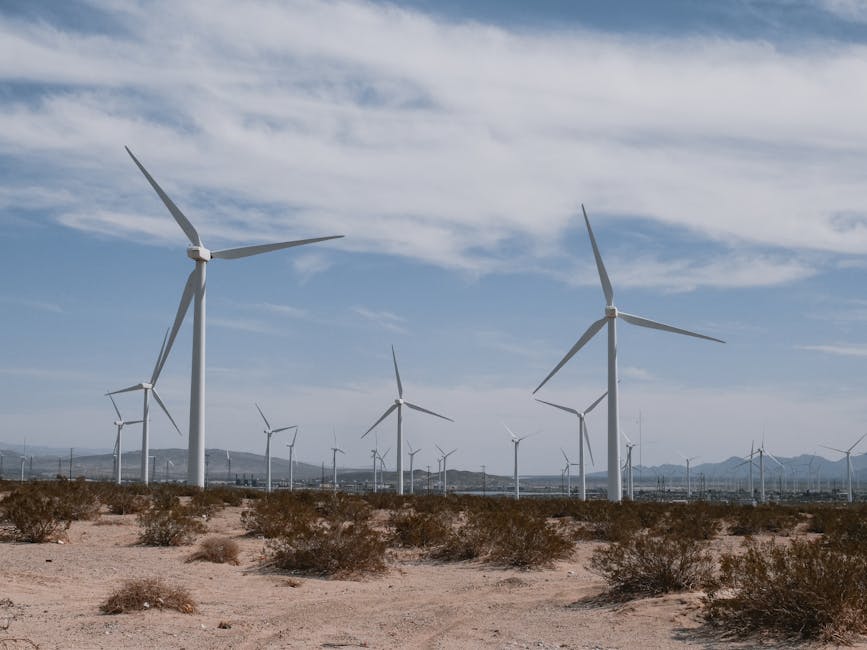
Photo by Kindel Media on Pexels
These are resources that can replenish themselves naturally over a relatively short period, often within a human lifetime. Even though they regenerate, over-consumption or misuse can still deplete them faster than they can recover, leading to scarcity.
Examples include:
* Solar energy: Continuously supplied by the sun.
* Wind energy: Generated by atmospheric processes.
* Hydropower: Uses the kinetic energy of moving water.
* Biomass: Organic matter (like plants) that can be regrown.
* Forests: Trees can be replanted and grow back.
* Water: Continuously cycled through the environment (more on this below).
2.2 Non-Renewable Resources

Photo by Tom Fisk on Pexels
These resources either exist in fixed amounts or are replenished over geological timescales, which are millions of years – far longer than a human lifetime. Once used up, they are effectively gone or take too long to replace.
Examples include:
* Fossil fuels: Coal, oil, and natural gas formed from ancient organic matter.
* Minerals: Ores like iron, copper, gold, and bauxite.
* Nuclear fuels: Uranium, used in nuclear power.
2.3 The Water Cycle (Hydrologic Cycle)

Photo by Ron Lach on Pexels
The water cycle describes the continuous movement of water on, above, and below the surface of the Earth. It's a fundamental process that drives weather patterns and distributes fresh water globally, making water a critical renewable resource.
Here's a breakdown of its main stages:
- Evaporation: Heat from the sun turns liquid water from oceans, lakes, and rivers into water vapor, which rises into the atmosphere.
- Transpiration: Plants release water vapor into the atmosphere through their leaves. This is essentially evaporation from plants.
- Condensation: As water vapor rises, it cools and changes back into tiny liquid water droplets or ice crystals, forming clouds.
- Precipitation: When these clouds become too heavy, water falls back to Earth as rain, snow, sleet, or hail.
- Runoff: Precipitation that flows over the land surface, eventually making its way into rivers, lakes, and oceans.
- Infiltration/Percolation: Some precipitation soaks into the ground, filling pores in the soil and rock to become groundwater.
- Groundwater Flow: Water stored underground moves slowly through aquifers, eventually discharging into surface water bodies or oceans.
The water cycle is vital because it purifies water, transports it to different locations, and sustains all ecosystems.
graph TD
    A["Sunlight Energy"] --> B["Evaporation (from oceans, lakes, rivers)"]
    A --> C["Transpiration (from plants)"]
    B --> D["Water Vapor in Atmosphere"]
    C --> D
    D --> E["Condensation (forms clouds)"]
    E --> F["Precipitation (rain, snow, hail)"]
    F --> G["Runoff (surface flow)"]
    F --> H["Infiltration/Percolation (into ground)"]
    G --> I["Lakes, Rivers, Oceans"]
    H --> J["Groundwater (aquifers)"]
    J --> I
    I --> B
3. Worked Example
Let's consider a community that relies on a local forest for timber and a nearby river for drinking water and electricity.
Scenario: The community uses wood from the forest to build homes and furniture. They also have a small hydroelectric power plant on the river, and the river water is treated for drinking.
Analysis:
* Forest (Timber): This is a renewable resource. If the community practices sustainable forestry (e.g., planting new trees for every tree harvested, leaving some areas untouched for biodiversity), the forest can continue to provide timber indefinitely. However, if they clear-cut without replanting or over-harvest, the resource can become depleted, leading to soil erosion and loss of habitat, even though it's technically "renewable."
* River (Hydropower & Drinking Water): Water is a renewable resource, constantly replenished by the water cycle. The hydroelectric plant uses the flow of water without significantly depleting it, converting its kinetic energy into electricity. The drinking water supply is also renewable, assuming the river isn't excessively polluted or drawn down faster than the water cycle can replenish it (e.g., during a prolonged drought or excessive upstream abstraction). The water cycle ensures that precipitation eventually refills the river.
This example shows how both types of resources require careful management, even renewables, to ensure long-term availability.
4. Key Takeaways
- Natural resources are materials from Earth used by humans, categorized as renewable or non-renewable.
- Renewable resources (like solar energy, forests, water) can replenish naturally over short periods but can still be overused.
- Non-renewable resources (like fossil fuels, minerals) exist in fixed amounts or take millions of years to form.
- The water cycle is the continuous movement of water through evaporation, condensation, precipitation, and runoff/infiltration.
- The water cycle makes water a critical renewable resource, purifying and distributing it globally.
- Sustainable management is crucial for all resources to ensure their availability for future generations.
Common mistakes to avoid:
- Assuming "renewable" means "inexhaustible"; over-extraction can still deplete renewable resources.
- Confusing the energy source (e.g., wind) with the technology used to harness it (e.g., wind turbine).
- Forgetting that the water cycle is driven by solar energy and gravity.
- Not considering the environmental impact of resource extraction (e.g., mining for minerals, deforestation).
5. Now Try It
Imagine you're advising a new town being built. List three natural resources the town will need to function (e.g., for power, water, housing). For each, identify if it's renewable or non-renewable and briefly explain one sustainable practice the town could implement to ensure its long-term availability. Success looks like you identifying appropriate resources, classifying them correctly, and suggesting a practical, relevant sustainable practice for each.
Frequently asked about Natural Resources and Water Cycle Fundamentals
More from Geography
Get the full Geography curriculum
Clone the complete plan to your dashboard for unlimited AI-generated notes, practice quizzes, and a personalised revision schedule.
Save this course free