Fundamental Concepts of Radiation
From the radprod curriculum
TL;DR
Radiation is energy moving through space, either as waves or particles, originating from unstable atoms or high-energy processes. We categorize it into ionizing (strong enough to damage atoms) and non-ionizing (weaker energy forms). Understanding its types and how it interacts with matter is crucial for safety and practical applications.
1. The Mental Model
Think of radiation as tiny projectiles or ripples of energy. These can either just nudge things around or be powerful enough to knock pieces off, depending on their strength. It's all about energy in motion.
2. The Core Material
Radiation is simply energy traveling through space. This energy can come in two main forms: particles (like electrons or protons) or waves (like X-rays or gamma rays). What makes radiation relevant in many fields, especially in medicine and safety, is how much energy it carries and how it interacts with matter.
We primarily categorize radiation based on its energy level and ability to cause ionization. Ionization is the process where an atom or molecule gains or loses electrons, becoming an ion. This change can alter the chemical properties of the material and, in living tissues, can lead to cell damage.
Ionizing vs. Non-Ionizing Radiation
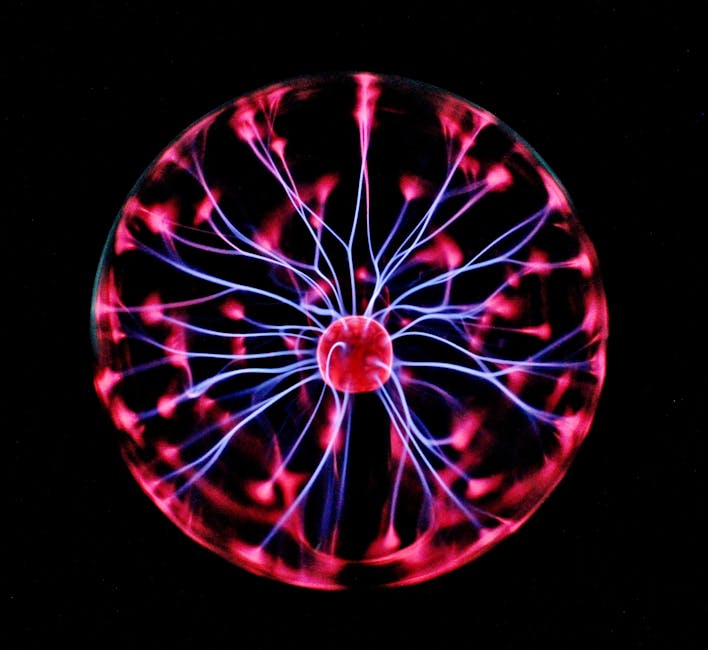
Photo by Pixabay on Pexels
- Ionizing Radiation: This type carries enough energy to eject electrons from atoms, creating ions. This is powerful enough to break chemical bonds, which is why it can be harmful to biological organisms. Examples include X-rays, gamma rays, alpha particles, and beta particles.
- Non-Ionizing Radiation: This type has lower energy and doesn't have enough power to cause ionization. It can still transfer energy (e.g., heat), but it doesn't fundamentally change the atomic structure by stripping electrons. Examples include radio waves, microwaves, infrared light, visible light, and ultraviolet (UV) light (though some higher-energy UV can approach ionizing levels).
Types of Ionizing Radiation

Photo by MART PRODUCTION on Pexels
Let's break down the main types you'll encounter:
- Alpha Particles ($\alpha$): These are essentially helium nuclei – two protons and two neutrons bound together. They're heavy and carry a positive charge. Due to their size and charge, they interact strongly with matter, losing energy quickly. This means they have very low penetrating power; a sheet of paper or the outer layer of skin can stop them. However, if ingested or inhaled, they can cause significant internal damage.
- Beta Particles ($\beta$): These are high-speed electrons or positrons emitted from the nucleus. They're much lighter than alpha particles and carry a negative (electron) or positive (positron) charge. They're more penetrating than alpha particles but can be stopped by a thin sheet of aluminum or plastic.
- Gamma Rays ($\gamma$) and X-rays: These are both forms of electromagnetic radiation (like light, but with much higher energy). They have no mass or charge and travel at the speed of light. The main difference is their origin: gamma rays come from the nucleus of an atom during radioactive decay, while X-rays are produced by electrons outside the nucleus (e.g., by accelerating electrons and crashing them into a target). Both are highly penetrating and require dense materials like lead or thick concrete for shielding.
- Neutrons: These are uncharged particles found in the nucleus of atoms. Because they have no charge, they don't interact electrically with electrons or protons. Instead, they interact primarily with atomic nuclei. This makes them highly penetrating and capable of causing materials to become radioactive (neutron activation). They are typically produced in nuclear reactors or atomic bombs.
Interaction with Matter

Photo by Katerina Holmes on Pexels
How radiation interacts with matter determines its effects and how we shield against it.
- Charged Particles (Alpha, Beta): They lose energy primarily through ionization and excitation. As they pass near electrons in an atom, their electric field pulls on the electrons. If enough energy is transferred, the electron is ejected (ionization). If less energy is transferred, the electron jumps to a higher energy level (excitation).
- Electromagnetic Radiation (Gamma, X-rays): They interact through three main processes:
- Photoelectric Effect: The photon's energy is completely absorbed by an atom, ejecting an electron. This is dominant at lower photon energies.
- Compton Scattering: The photon interacts with an electron, transferring some of its energy to the electron (ejecting it) and scattering at a reduced energy and new direction. This is dominant at moderate photon energies.
- Pair Production: A high-energy photon interacts with the electric field of an atomic nucleus and converts its energy into an electron-positron pair. This occurs only when photon energy exceeds 1.02 MeV.
- Neutrons: They interact mainly through elastic scattering (bouncing off a nucleus, transferring kinetic energy) or inelastic scattering (exciting a nucleus, which then emits gamma rays). They can also be captured by a nucleus, making it unstable (neutron capture).
graph TD
    A["Radiation (Energy in Motion)"] --> B{{"Categorized By <br/> Ionization Potential"}}

    B --> C["Non-Ionizing Radiation (Lower Energy)"]
    B --> D["Ionizing Radiation (Higher Energy)"]

    C --> C1("Radio Waves")
    C --> C2("Microwaves")
    C --> C3("Infrared")
    C --> C4("Visible Light")
    C --> C5("UV (Lower Energy)")

    D --> D1["Particulate Radiation"]
    D --> D2["Electromagnetic Radiation"]
    D --> D3["Neutron Radiation"]

    D1 --> D1A("Alpha Particles (He nucleus)")
    D1 --> D1B("Beta Particles (e-/e+)")

    D2 --> D2A("Gamma Rays (Nuclear Origin)")
    D2 --> D2B("X-rays (Electron Origin)")

    D1A --> P1["Low Penetration<br/>(Paper, Skin)"]
    D1B --> P2["Moderate Penetration<br/>(Aluminum, Plastic)"]
    D2A --> P3["High Penetration<br/>(Lead, Concrete)"]
    D2B --> P3
    D3 --> P4["Very High Penetration<br/>(Water, Paraffin for shielding)"]

    style D1 fill:#f9f,stroke:#333,stroke-width:2px
    style D2 fill:#f9f,stroke:#333,stroke-width:2px
    style D3 fill:#f9f,stroke:#333,stroke-width:2px
3. Worked Example
Imagine you're dealing with a radioactive source emitting both alpha particles and gamma rays. You need to handle it safely.
- Identify the radiation types: Alpha particles (particulate, charged, low penetration) and Gamma rays (electromagnetic, uncharged, high penetration).
- Determine interaction and shielding for alpha: Alpha particles are easily stopped. Your skin's outer layer is usually enough to prevent them from reaching living tissue. However, you absolutely don't want to ingest or inhale alpha emitters. A thin glove or even just the air between you and the source provides good external protection.
- Determine interaction and shielding for gamma: Gamma rays are much more penetrating. They'll pass right through skin, clothing, and even most light materials. To reduce your exposure significantly, you'll need dense shielding like lead or thick concrete. The further you are from the source (distance), the less exposure you get due to the inverse square law, and minimizing time near the source also helps.
- Overall strategy: Use tongs or a robotic arm for distance. Wear a lab coat and gloves for general contamination control, knowing they won't stop the gamma, but will stop alpha. Crucially, position a lead shield between yourself and the source for the gamma rays. Ensure good ventilation if there's any chance of airborne alpha-emitting contamination.
4. Key Takeaways
- Radiation is energy in transit, either as particles or waves, originating from atomic processes.
- Ionizing radiation (alpha, beta, gamma, X-rays, neutrons) carries enough energy to eject electrons, causing potential harm to living tissue.
- Non-ionizing radiation (radio waves, microwaves, visible light) has lower energy and doesn't cause ionization.
- Different types of ionizing radiation have vastly different penetrating powers, dictating shielding requirements.
- Alpha particles are easily stopped but dangerous if ingested; gamma rays are highly penetrating and require dense shielding.
-
Distance, shielding, and time are the fundamental principles of radiation protection.
-
Common Mistakes to Avoid:
- Confusing penetration power with overall danger; internal alpha emitters are very hazardous.
- Assuming all radiation is the same; a microwave oven is very different from a gamma source.
- Underestimating the importance of distance and time when dealing with penetrating radiation.
- Thinking personal protective equipment (like gloves) will stop highly penetrating radiation like gamma rays.
5. Now Try It
For a scenario involving a medical X-ray machine, describe the type of radiation involved, its primary interaction with human tissue, and how a radiographer typically protects themselves during an imaging procedure. What success looks like: You should correctly identify X-rays as electromagnetic, explain the photoelectric effect and Compton scattering as key interactions, and mention distance, shielding (lead apron/wall), and minimizing exposure time as protection methods.
Frequently asked about Fundamental Concepts of Radiation
Study this next
Get the full radprod curriculum
Clone the complete plan to your dashboard for unlimited AI-generated notes, practice quizzes, and a personalised revision schedule.
Save this course free