Cell Culture and Fermentation Technology
From the BioTech curriculum
TL;DR
Cell culture grows cells outside their natural environment, providing controlled conditions for research and production. Fermentation technology uses microorganisms or cells to convert raw materials into desired products at scale. Together, they're fundamental for creating everything from vaccines to biofuels, requiring careful control of nutrients, environment, and purity.
1. The Mental Model
Think of cell culture as a mini-farm for cells, providing them with everything they need to grow and thrive in a controlled dish or flask. Fermentation takes this concept and scales it up significantly, using large vessels to make products from these cells or microbes.
2. The Core Material
You'll encounter two main areas: cell culture (often for animal or plant cells) and fermentation (typically for microbial cells like bacteria or yeast). While they share many principles, the specifics differ.
A. Cell Culture Fundamentals
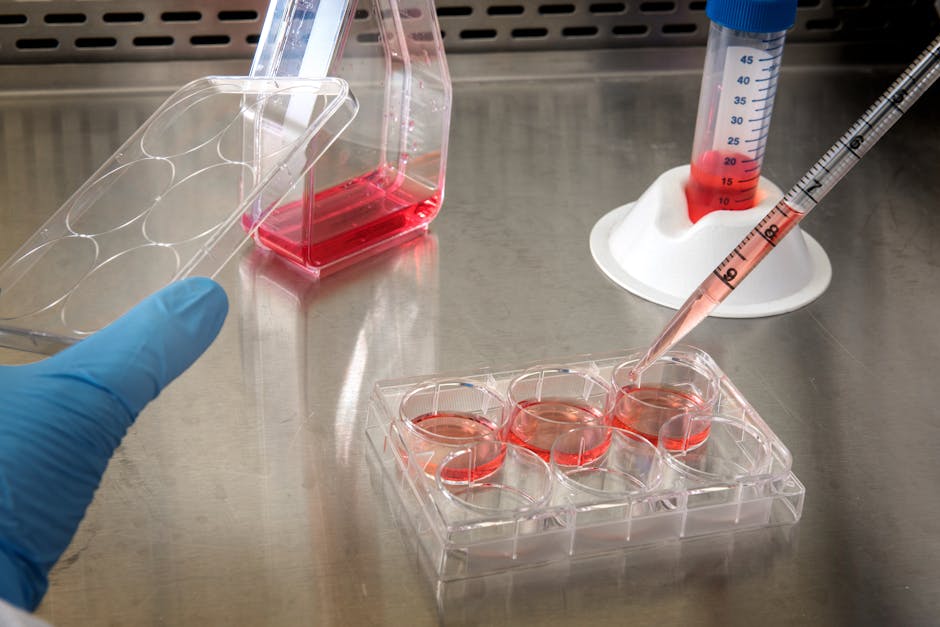
Photo by CDC on Pexels
Cell culture involves growing cells in vitro (outside a living organism). It's crucial for research (e.g., studying disease, drug testing) and production (e.g., vaccines, therapeutic proteins).
You'll need:
* Sterile environment: Aseptic techniques are paramount to prevent contamination by bacteria or fungi. This means working in a laminar flow hood and sterilizing all equipment.
* Culture medium: This is the food for your cells. It contains essential nutrients like salts, amino acids, vitamins, glucose, and often growth factors (e.g., fetal bovine serum).
* Incubator: Provides precise control over temperature (e.g., 37°C for mammalian cells), humidity, and CO2 levels (important for pH buffering).
* Culture vessels: Flasks, dishes, or bioreactors where cells grow.
Cells can be grown in two main ways:
* Adherent: Cells attach to a surface to grow (most mammalian cells).
* Suspension: Cells grow freely floating in the medium (some mammalian cells, many microbial cells).
B. Fermentation Technology
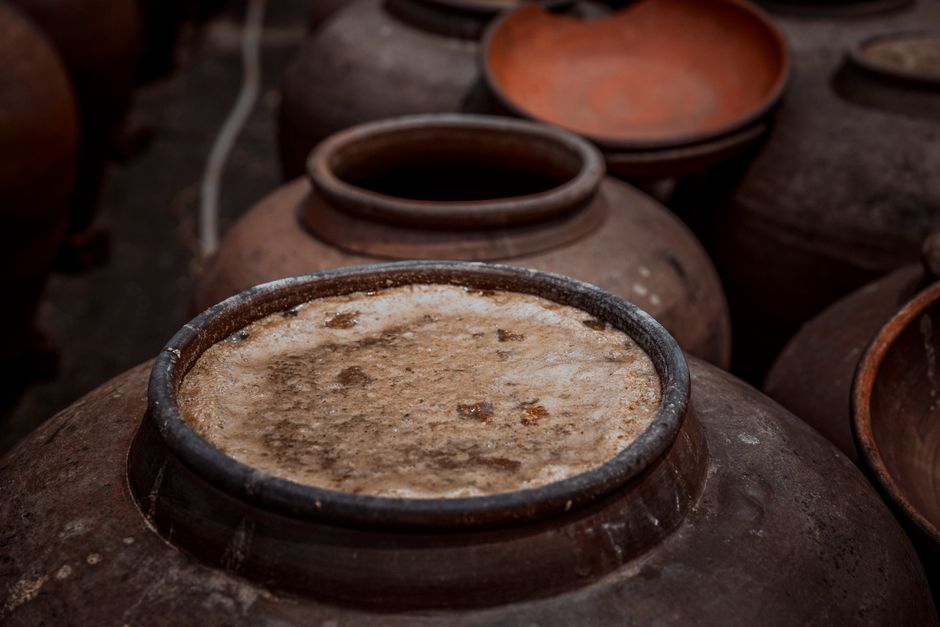
Photo by HONG SON on Pexels
Fermentation is a broader term, usually referring to large-scale cultivation of microorganisms or cells to produce specific products. This can be anaerobic (without oxygen) or aerobic (with oxygen).
Key components of a fermenter (bioreactor):
* Vessel: A controlled environment for growth, usually stainless steel for industrial scale.
* Agitator/Impeller: Mixes the broth, keeping cells suspended and distributing nutrients and oxygen evenly.
* Aeration system: Provides sterile air or oxygen (for aerobic processes).
* Temperature control: A jacketed vessel or internal coil maintains optimal temperature.
* pH control: Sensors and pumps add acid or base to maintain the ideal pH for growth and product formation.
* Sampling ports: For monitoring cell growth, nutrient consumption, and product formation.
* Sensors: Monitor parameters like dissolved oxygen (DO), pH, temperature, and foam levels.
Common fermentation modes:
* Batch: All nutrients are added at the start, and the fermentation proceeds until nutrients are depleted or waste products inhibit growth.
* Fed-batch: Nutrients are added intermittently or continuously during the run, extending the production phase and increasing product yield.
* Continuous: Fresh medium is continuously added, and spent medium (with product) is continuously removed, maintaining a steady state.
Here's a flow of a typical fermentation process:
graph TD
    A["Sterile Medium Prep"] --> B["Inoculum Prep (Starter Culture)"]
    B --> C["Fermenter Sterilization"]
    C --> D["Batch Start (Inoculation)"]
    D --> E{"Fermentation Run (Monitoring & Control)"}
    E -- "Nutrient Addition (Fed-batch)" --> E
    E -- "Sampling & Analysis" --> F["Process Data"]
    E --> G["Harvest (Product Recovery)"]
    G --> H["Downstream Processing (Purification)"]
    H --> I["Final Product"]
C. Critical Parameters to Monitor and Control

Photo by Egor Komarov on Pexels
- Temperature: Each cell type has an optimal range.
- pH: Affects enzyme activity and cell metabolism.
- Dissolved Oxygen (DO): Crucial for aerobic processes; too low, cells die; too high, can be toxic.
- Nutrient Levels: Ensure sufficient carbon source, nitrogen, vitamins, and minerals.
- Sterility: Preventing contamination is a constant battle.
- Agitation/Mixing: Essential for nutrient distribution and gas transfer, but too much can damage cells.
3. Worked Example
Let's consider producing a therapeutic protein using mammalian cells in a fed-batch bioreactor.
- Seed train: You start by thawing a frozen vial of your chosen mammalian cell line. You grow these cells in small flasks, then larger flasks, gradually expanding their numbers in a sterile incubator.
- Inoculation: Once you have enough cells (the inoculum), you transfer them to a 100-liter bioreactor containing sterile cell culture medium. The bioreactor is already sterilized and maintained at 37°C, 5% CO2, and a neutral pH.
- Batch phase: For the first 2-3 days, cells grow exponentially, consuming initial nutrients. pH and DO are monitored closely; sterile oxygen is sparged if DO drops.
- Fed-batch phase: When key nutrients like glucose start to deplete, you begin a continuous or intermittent feed of concentrated nutrient solution. This extends the cell's productive lifespan. You adjust feed rates based on glucose consumption and lactate production.
- Monitoring: Samples are taken daily to check cell viability, cell count, glucose/lactate levels, and product concentration. If pH drifts, sterile acid or base is automatically added.
- Harvest: After 10-14 days, when cell viability drops or product accumulation plateaus, you harvest the culture. The cell suspension, now rich in your therapeutic protein, is transferred for downstream processing (purification).
4. Key Takeaways
- Cell culture provides a controlled environment for growing cells outside an organism for research or product generation.
- Fermentation scales up cell or microbial growth to produce target compounds in bioreactors.
- Aseptic technique is fundamental to prevent contamination in both cell culture and fermentation.
- Key parameters like temperature, pH, dissolved oxygen, and nutrient levels must be carefully monitored and controlled.
- Fermentation processes can be batch, fed-batch, or continuous, each with different operational characteristics.
- The choice of cell type and culture method directly impacts the type and yield of the desired product.
- Downstream processing is always required after fermentation to purify the product.
Common Mistakes to Avoid:

Photo by KATRIN BOLOVTSOVA on Pexels
- Poor aseptic technique: Leads to contamination, ruining experiments and product batches.
- Ignoring cell health: Overlooking changes in cell morphology or growth rate can signal problems.
- Inadequate media preparation: Incorrect nutrient ratios or pH can severely hinder growth.
- Incorrect parameter control: Deviations in temperature, pH, or DO can stress cells and reduce yields.
- Lack of detailed record-keeping: Without good notes, troubleshooting problems or reproducing successful runs is impossible.
5. Now Try It
Imagine you need to produce a new enzyme using E. coli bacteria. Outline the steps you'd take, starting from a frozen stock of E. coli up to having a large volume of culture ready for product recovery. Focus on the main equipment and control parameters you'd use at each stage. What would be two critical differences if you were culturing human cells instead?
Success looks like: A clear, sequential list of steps, mentioning relevant equipment (e.g., incubator, fermenter), key parameters (e.g., temperature, pH), and at least two distinct differences for human cell culture (e.g., sterility level, growth medium complexity, CO2 requirement).
Frequently asked about Cell Culture and Fermentation Technology
Study this next
Get the full BioTech curriculum
Clone the complete plan to your dashboard for unlimited AI-generated notes, practice quizzes, and a personalised revision schedule.
Save this course free