Introduction to Biotechnology and Fundamental Biology
From the BioTech curriculum
TL;DR
Biotechnology uses living organisms or their components to create useful products and technologies. It's built on a core understanding of biology, especially how DNA, RNA, and proteins function. By manipulating these biological building blocks, we can design solutions for health, agriculture, and industry.
1. The Mental Model
Think of biology as a set of LEGO bricks and biotechnology as the process of building new, useful things with those bricks. You're taking the basic instructions and pieces of life – like genes and cells – and re-engineering them for specific purposes.
2. The Core Material
Biotechnology is a field that blends biology, chemistry, computer science, and engineering to solve problems and make products. At its heart, it relies on understanding and manipulating the fundamental units of life.
The Central Dogma of Molecular Biology

Photo by Steve A Johnson on Pexels
This is the foundational concept explaining how genetic information flows within a biological system. It dictates that information flows from DNA to RNA to protein.
- DNA (Deoxyribonucleic Acid): This is the blueprint of life. It contains the instructions for building and operating an organism, stored as a sequence of chemical units called nucleotides (A, T, C, G). Your cells contain a copy of your entire DNA.
- RNA (Ribonucleic Acid): RNA acts as a messenger and worker molecule. It's transcribed from DNA and carries genetic information out of the cell's nucleus, where it's then translated into proteins. There are different types of RNA, each with specific jobs (e.g., mRNA, tRNA, rRNA).
- Proteins: These are the workhorses of the cell. Made up of amino acids, proteins perform almost all the functions in a cell, from catalyzing reactions (enzymes) to providing structural support and transporting molecules. Their specific 3D shape determines their function.
Here's how the information flows:
graph TD
    DNA["DNA (Genetic Blueprint)"] --> Transcription["Transcription (DNA to RNA)"]
    Transcription --> mRNA["mRNA (Messenger RNA)"]
    mRNA --> Translation["Translation (RNA to Protein)"]
    Translation --> Protein["Protein (Workhorse Molecules)"]
Key Biological Tools and Techniques in Biotech

Photo by Thirdman on Pexels
To manipulate this flow, biotechnologists use various tools:
- Recombinant DNA Technology: This is about cutting and pasting DNA. You can take a gene from one organism and insert it into another, often using enzymes called restriction enzymes to cut DNA at specific sites and DNA ligase to join pieces together. This allows for things like producing human insulin in bacteria.
- PCR (Polymerase Chain Reaction): A technique to make millions of copies of a specific DNA segment very quickly. It's like a molecular photocopy machine, essential for diagnostics, forensic science, and research.
- CRISPR-Cas9 Gene Editing: A revolutionary technology that allows for precise editing of DNA sequences. It's like a molecular "find and replace" function for genes, offering potential cures for genetic diseases.
- Cell Culture: Growing cells outside their natural environment, in a controlled lab setting. This is crucial for vaccine production, drug testing, and producing biological molecules.
Applications of Biotechnology
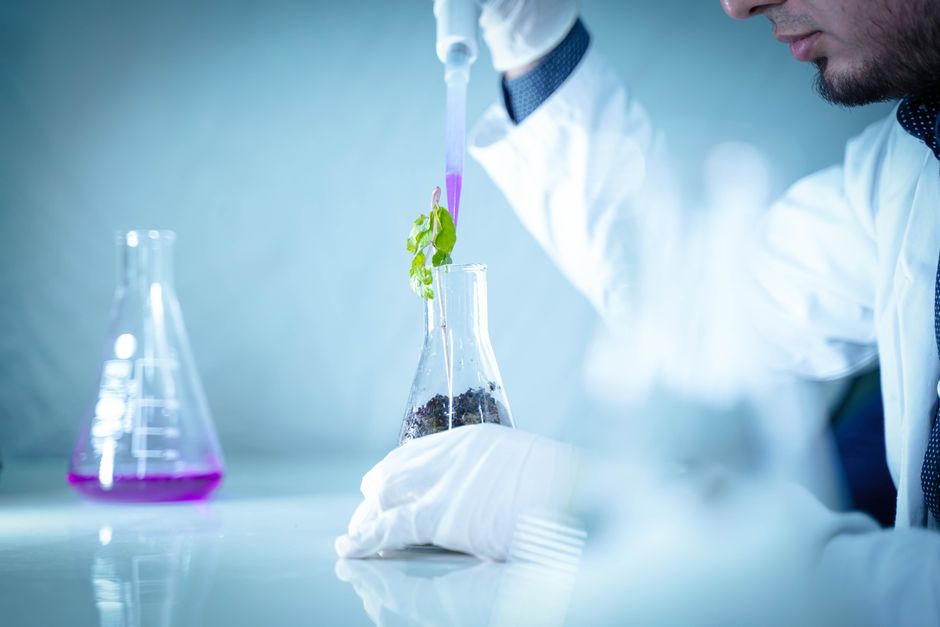
Photo by Mehul Patel on Pexels
Biotechnology touches many fields:
- Healthcare (Red Biotech): Developing new drugs, vaccines, diagnostics, gene therapies, and regenerative medicine. Think insulin production, antibody drugs, and COVID-19 PCR tests.
- Agriculture (Green Biotech): Creating genetically modified crops for increased yield, pest resistance, or nutritional value. Also, developing bio-fertilizers and improving livestock.
- Industrial (White Biotech): Using enzymes and microorganisms to produce industrial chemicals, biofuels, bioplastics, and detergents more sustainably.
- Environmental (Blue/Environmental Biotech): Bioremediation (using organisms to clean up pollution), wastewater treatment, and developing bio-based energy sources.
3. Worked Example
Let's look at how human insulin is produced using biotechnology, a classic example of recombinant DNA technology.
- Identify the gene: Scientists first identify and isolate the human gene responsible for producing insulin.
- Choose a vector: They then select a plasmid, which is a small, circular piece of DNA found in bacteria, to act as a carrier. Plasmids are ideal because they can replicate independently within the bacterial cell.
- Cut and paste: Both the human insulin gene and the bacterial plasmid are cut with the same restriction enzyme. This creates "sticky ends" – short, single-stranded overhangs that can bind to complementary sequences.
- Ligation: The human insulin gene is then inserted into the opened plasmid, and DNA ligase "pastes" the two pieces together, forming a recombinant plasmid.
- Transformation: This recombinant plasmid is introduced into bacterial cells (e.g., E. coli). The bacteria now contain the instructions for human insulin.
- Expression and Production: As the bacteria multiply, they replicate the plasmid and express the human insulin gene, producing human insulin protein.
- Purification: The bacterial cells are harvested, and the human insulin is extracted and purified, ready for use as a medication for diabetics.
This process allows for large-scale, cost-effective production of a life-saving human protein that would otherwise be scarce and expensive.
4. Key Takeaways
- Biotechnology uses biological systems and organisms to create new products and technologies.
- The Central Dogma (DNA → RNA → Protein) is the fundamental process of genetic information flow.
- Recombinant DNA technology allows us to combine DNA from different sources, like making bacteria produce human insulin.
- PCR rapidly amplifies specific DNA segments for analysis and diagnostics.
- CRISPR-Cas9 offers precise gene editing capabilities, opening doors for treating genetic diseases.
- Biotechnology has diverse applications in medicine, agriculture, industry, and environmental protection.
Common mistakes to avoid:
- Confusing the roles of DNA, RNA, and protein; remember DNA is the blueprint, RNA is the messenger/worker, and protein is the workhorse.
- Thinking biotechnology is only about genetic engineering; it encompasses a much broader range of biological applications.
- Underestimating the ethical considerations involved in manipulating life.
- Believing that "natural" means "better" or "safer" in all biological contexts; biotech often improves upon natural processes.
5. Now Try It
Research and briefly explain one specific example of Green Biotechnology (agricultural application) that wasn't mentioned in these notes. Describe what problem it addresses and how it uses a biological system or component. Your explanation should be no more than 100 words.
What success looks like: You'll provide a concise, clear example of a biotech application in agriculture, identifying the problem it solves and the biological method used.
Frequently asked about Introduction to Biotechnology and Fundamental Biology
Study this next
Get the full BioTech curriculum
Clone the complete plan to your dashboard for unlimited AI-generated notes, practice quizzes, and a personalised revision schedule.
Save this course free