Introduction to Plant Tissues and Complex Permanent Tissues
From the complex permanent tissues curriculum
Introduction to Plant Tissues and Complex Permanent Tissues
TL;DR
Plants are made of different tissues that work together, much like organs in animals. Complex permanent tissues, specifically xylem and phloem, are crucial for transporting water, nutrients, and sugars throughout the plant. These tissues are "permanent" because their cells don't divide once they mature.
1. The Mental Model
Imagine a plant as a building. While some parts are always growing (like new shoots), others are fixed structures. Plant tissues are these structures, with complex permanent tissues acting as the building's plumbing system, moving everything around to where it's needed.
2. The Core Material
Plants, like all living things, are organized into different levels. Cells form tissues, tissues form organs (like leaves, stems, roots), and organs form the plant organism.
2.1 Plant Tissue Types
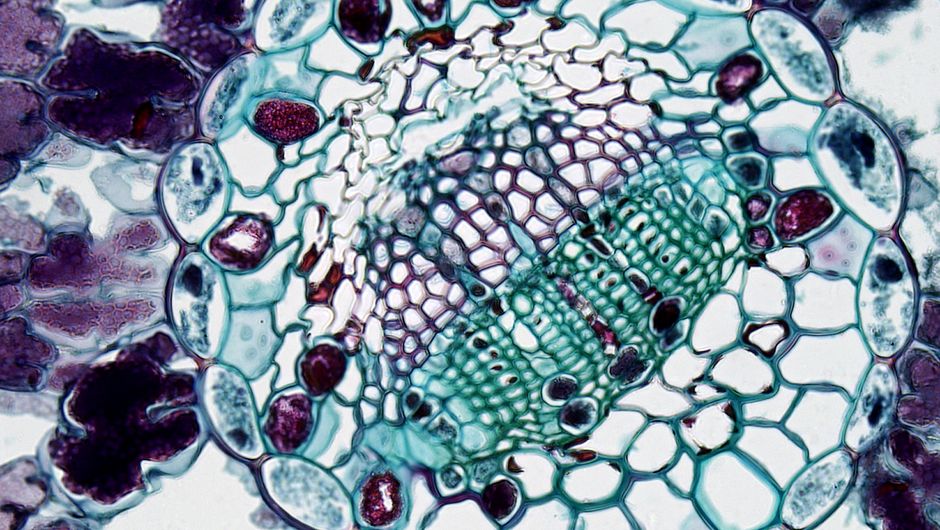
Photo by Fayette Reynolds M.S. on Pexels
Generally, plant tissues are categorized into two main groups:
* Meristematic Tissues: These are the "growth" tissues. Their cells are actively dividing, allowing the plant to grow in length (apical meristems) and girth (lateral meristems). Think of them as the plant's construction crew, always adding new material.
* Permanent Tissues: Once meristematic cells mature and stop dividing, they become permanent tissues. These tissues are specialized for specific functions and can be further divided:
* Simple Permanent Tissues: Made up of only one type of cell (e.g., parenchyma, collenchyma, sclerenchyma). They provide support, storage, and photosynthesis.
* Complex Permanent Tissues: These are the star of our show. They're made of more than one type of cell, all working together to perform a common function. The two main types are xylem and phloem.
2.2 Complex Permanent Tissues: The Transport System
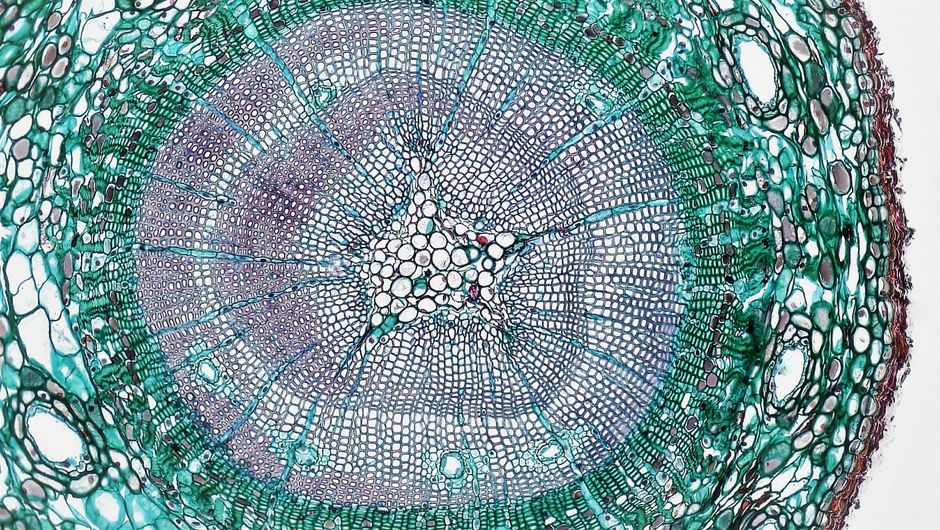
Photo by Fayette Reynolds M.S. on Pexels
Xylem and phloem are the plant's vascular tissues, forming a continuous network throughout the plant body.
2.2.1 Xylem
Xylem is responsible for transporting water and dissolved minerals from the roots up to the rest of the plant. Think of it as the "up" pipe. It also provides structural support. Xylem is composed of four main types of cells:
* Tracheids: Long, narrow, dead cells with tapered ends. Water moves between them through pits.
* Vessels (or Vessel Elements): Shorter, wider, dead cells stacked end-to-end to form continuous tubes. They have perforations (openings) at their ends for efficient water flow.
* Xylem Parenchyma: Living cells that store food (starch, fats) and assist in short-distance transport of water.
* Xylem Fibers: Dead, thick-walled cells that provide mechanical support.
2.2.2 Phloem
Phloem transports sugars (produced during photosynthesis in the leaves) to other parts of the plant where they're needed for energy or storage (e.g., roots, fruits, growing tips). Think of it as the "down and sideways" pipe, distributing food. Phloem is also composed of four main types of cells:
* Sieve Tubes (or Sieve Elements): Living cells, but they lack a nucleus at maturity. They are arranged end-to-end to form long tubes, with porous sieve plates between them that allow sap to flow.
* Companion Cells: Living cells intimately associated with sieve tubes. They have a nucleus and control the activities of the sieve tube elements, assisting with loading and unloading sugars.
* Phloem Parenchyma: Living cells that store food and assist in lateral transport of sugars.
* Phloem Fibers: Dead, thick-walled cells that provide structural support.
graph TD
    A["Plant Tissues"] --> B["Meristematic Tissues"]
    A --> C["Permanent Tissues"]

    C --> D["Simple Permanent Tissues"]
    C --> E["Complex Permanent Tissues"]

    E --> F["Xylem (Water & Minerals Up)"]
    E --> G["Phloem (Sugars All Over)"]

    F --> F1["Tracheids"]
    F --> F2["Vessels"]
    F --> F3["Xylem Parenchyma"]
    F --> F4["Xylem Fibers"]

    G --> G1["Sieve Tubes"]
    G --> G2["Companion Cells"]
    G --> G3["Phloem Parenchyma"]
    G --> G4["Phloem Fibers"]
3. Worked Example
Imagine you're observing a tall oak tree. Its leaves are performing photosynthesis, producing glucose. This glucose needs to get to the roots for growth and storage. Simultaneously, the roots are absorbing water and minerals from the soil, which need to reach the leaves for photosynthesis and other cellular processes.
The xylem is actively pulling water and minerals up from the roots to the leaves. This movement is primarily driven by transpiration (evaporation of water from leaves), creating a negative pressure that draws the water column upwards. The phloem is then transporting the freshly made glucose down from the leaves to the roots (and other growing parts like developing acorns). This movement is driven by a pressure gradient, where sugar is actively loaded into the sieve tubes at the source (leaves), causing water to follow, building pressure that pushes the sap to areas of lower sugar concentration (sinks like roots).
Without these two complex permanent tissues, the tree couldn't transport the necessary resources and would quickly wither.
4. Key Takeaways
- Plant tissues are organized into meristematic (growing) and permanent (specialized) types.
- Complex permanent tissues, xylem and phloem, are crucial for long-distance transport in plants.
- Xylem primarily moves water and minerals from roots to leaves.
- Phloem primarily moves sugars (food) from leaves to other plant parts.
- Both xylem and phloem are made up of multiple cell types working together.
- Xylem provides significant structural support to the plant.
- The cells in xylem are mostly dead, while sieve tube elements in phloem are living but lack a nucleus.
Common Mistakes to Avoid:

Photo by KATRIN BOLOVTSOVA on Pexels
- Don't confuse the direction of flow: xylem is mainly up, phloem is both up and down, but predominantly from source to sink.
- Don't assume all cells in complex tissues are the same type; they're mixtures.
- Don't think permanent tissues are inactive; they're specialized and carry out vital functions.
- Don't forget the role of companion cells in assisting sieve tubes in phloem.
5. Now Try It
Take a look at a plant in your home or outside. Imagine you have tiny microscopes showing you the internal structure. Trace the path of water from the roots to the leaves, identifying which tissue (xylem or phloem) would be responsible. Then, trace the path of sugars from the leaves to a developing flower or fruit, again identifying the responsible tissue. What would happen if either of these transport systems were blocked? Write down a few sentences describing the immediate and long-term effects. Success looks like correctly identifying xylem for water/minerals and phloem for sugars, and understanding the consequences of a system failure.
Frequently asked about Introduction to Plant Tissues and Complex Permanent Tissues
Get the full complex permanent tissues curriculum
Clone the complete plan to your dashboard for unlimited AI-generated notes, practice quizzes, and a personalised revision schedule.
Create Free Account