Tissues: Grouping of Specialized Cells
From the biolgyu curriculum
TL;DR
Your body is built from specialized cells that work together in organized groups called tissues. There are four main types of tissues—epithelial, connective, muscle, and nervous—each with unique structures and functions. Understanding tissues helps explain how different parts of your body perform their specific jobs.
1. The Mental Model
Think of tissues like a team of specialized workers. Each worker (cell) has a particular skill, and when they group up, they form a team (tissue) capable of doing a bigger, more complex job that individual cells couldn't do alone.
2. The Core Material
Your body is organized in a hierarchy: cells form tissues, tissues form organs, and organs form organ systems. Tissues are the crucial intermediate step, acting as functional units. They're collections of similar cells, often with a shared origin, working together to perform a specific function.
There are four primary types of tissues in your body:
2.1 Epithelial Tissue
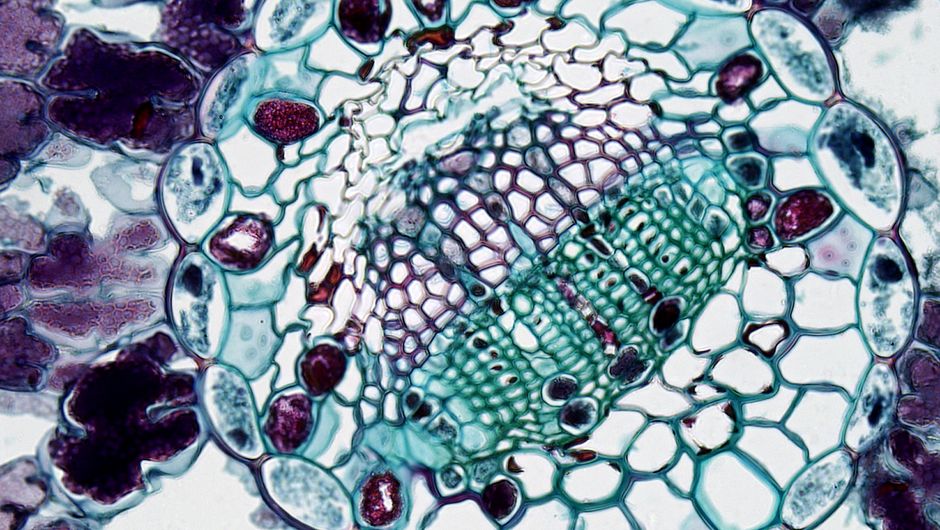
Photo by Fayette Reynolds M.S. on Pexels
This tissue acts as a covering or lining for all body surfaces, both internal and external. It also forms glands. Think of your skin (epidermis), the lining of your digestive tract, or the cells that form sweat glands.
- Structure: Cells are tightly packed, forming continuous sheets. They have an apical surface (free surface) and a basal surface (attached to underlying tissue).
- Function: Protection, secretion (e.g., hormones, mucus), absorption (e.g., nutrients), filtration, and sensory reception.
2.2 Connective Tissue

Photo by Leo Freire on Pexels
As the name suggests, this tissue connects, supports, binds, and protects organs. It's the most abundant and widely distributed tissue type. Examples include bone, cartilage, blood, tendons, and fat.
- Structure: Characterized by a sparse population of cells surrounded by an abundant extracellular matrix. This matrix, made of protein fibers (collagen, elastic, reticular) and ground substance (a gel-like material), is what gives connective tissue its varied properties.
- Function: Support, protection, insulation, transport (blood), storing energy (fat).
2.3 Muscle Tissue
Photo by Fayette Reynolds M.S. on Pexels
This tissue is specialized for contraction, generating force and movement.
- Structure: Cells (muscle fibers) contain contractile proteins (actin and myosin).
- Types:
- Skeletal muscle: Attached to bones, responsible for voluntary movement.
- Cardiac muscle: Found in the heart, responsible for pumping blood (involuntary).
- Smooth muscle: Found in walls of internal organs (e.g., digestive tract, blood vessels), responsible for involuntary movements like pushing food or regulating blood flow.
- Function: Movement, maintaining posture, producing heat.
2.4 Nervous Tissue
Photo by Fayette Reynolds M.S. on Pexels
This tissue is the main component of your nervous system (brain, spinal cord, nerves). It specializes in transmitting electrical signals.
- Structure: Composed of two main cell types:
- Neurons: Nerve cells that transmit electrical impulses. They have a cell body, dendrites (receive signals), and an axon (transmits signals).
- Neuroglia (glial cells): Support, protect, insulate, and nourish neurons.
- Function: Communication, controlling body functions, processing information.
Here's how these tissues work together:
graph TD
    A["Individual Cells"] --> B["Grouped into Tissues"]
    B --> C1("Epithelial Tissue")
    B --> C2("Connective Tissue")
    B --> C3("Muscle Tissue")
    B --> C4("Nervous Tissue")
    C1 --> D["Forms linings, coverings, glands (e.g., skin)"]
    C2 --> D["Supports, connects, protects (e.g., bone, blood)"]
    C3 --> D["Enables movement (e.g., heart, biceps)"]
    C4 --> D["Transmits signals, controls (e.g., brain, nerves)"]
    D --> E["Form Organs (e.g., Stomach)"]
    E --> F["Form Organ Systems (e.g., Digestive System)"]
3. Worked Example
Let's consider the stomach. It's an organ made of all four tissue types working in concert:
- Epithelial tissue: Lines the inner surface, protecting it from stomach acid and secreting digestive juices.
- Connective tissue: Forms the outer covering, binding the different layers together and providing support. Blood vessels within the connective tissue supply nutrients.
- Muscle tissue: Smooth muscle layers churn and mix food, propelling it through the digestive tract.
- Nervous tissue: Controls the muscle contractions and gland secretions, allowing for proper digestion.
Without any one of these tissue types, the stomach wouldn't be able to perform its complex digestive function effectively.
4. Key Takeaways
- Tissues are groups of similar, specialized cells working together for a specific function.
- There are four main types of tissues: epithelial, connective, muscle, and nervous.
- Epithelial tissue covers surfaces, lines cavities, and forms glands for protection, secretion, and absorption.
- Connective tissue supports, protects, and binds other tissues together, characterized by its extracellular matrix.
- Muscle tissue is specialized for contraction, allowing for movement of the body and internal organs.
- Nervous tissue transmits electrical signals, enabling communication and control throughout the body.
- Different tissue types cooperate to form organs and organ systems, demonstrating a higher level of organization.
Common mistakes to avoid:
- Confusing a cell with a tissue; a tissue is a collection of cells.
- Thinking all connective tissues are rigid; blood is a liquid connective tissue.
- Believing muscle tissue only controls voluntary movement; cardiac and smooth muscle are involuntary.
- Forgetting the importance of neuroglia; they are crucial support cells for neurons.
5. Now Try It
Take any organ in your body (e.g., the lung, a bone, your small intestine) and try to identify which of the four main tissue types you'd expect to find in it. For each tissue type you identify, briefly explain what specific role it would play in that organ's function.
Success looks like: Naming at least three tissue types for your chosen organ and giving a plausible, distinct function for each in the context of that organ.
Frequently asked about Tissues: Grouping of Specialized Cells
Study this next
Get the full biolgyu curriculum
Clone the complete plan to your dashboard for unlimited AI-generated notes, practice quizzes, and a personalised revision schedule.
Save this course free