Comparison of Plant and Animal Tissues
From the bio curriculum
TL;DR
Plant and animal tissues are the building blocks of their respective organisms, but they've evolved differently to suit their lifestyles. Plants have rigid cell walls and grow throughout their lives, while animals are more flexible and have fixed body plans. Understanding these differences helps explain how each type of organism functions.
1. The Mental Model
Think of plants as built for stability and growth, like a skyscraper that keeps adding floors. Animals, on the other hand, are built for movement and quick responses, like a high-performance car.
2. The Core Material
You've probably noticed that plants and animals are quite different from each other. These differences start at the tissue level, which is a group of similar cells working together to perform a specific function. While both have tissues, their structure, function, and organization vary significantly.
Cell Walls and Rigidity
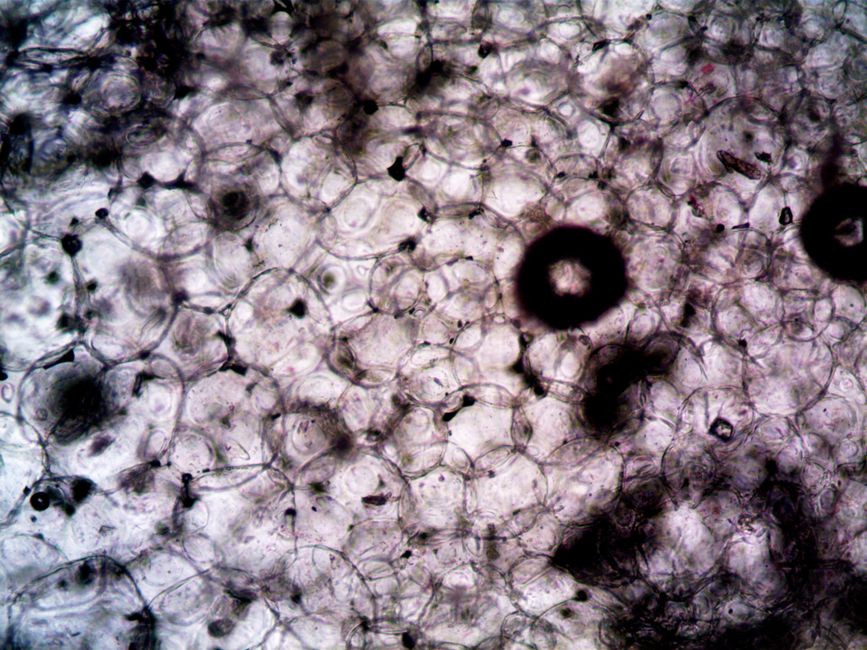
Photo by turek on Pexels
One of the most striking differences is the presence of cell walls in plant cells. This rigid outer layer provides structural support and protection, which is why plants don't need a skeletal system like animals do. Animal cells lack cell walls, allowing for greater flexibility and movement. This difference directly impacts their tissue structure; plant tissues are generally more rigid, while animal tissues are more pliable.
Growth Patterns

Photo by Luca Dross on Pexels
Plants exhibit indeterminate growth, meaning they can grow throughout their entire lives thanks to specialized tissues called meristems. These are like perpetual growth zones. Animals, however, generally have determinate growth, meaning they grow to a certain size and then stop. While some tissues (like skin or bone marrow) regenerate, the overall body plan becomes fixed.
Locomotion and Support

Photo by Manfred Langpap on Pexels
Animals often need to move to find food, escape predators, or reproduce. This requires specialized tissues like muscle tissue for movement and connective tissue (like bone and cartilage) for support. Plants, being stationary, don't need muscles. Their support comes from their cell walls, turgor pressure within cells, and sturdy woody tissues.
Energy Storage and Nutrition

Photo by Markus Spiske on Pexels
Plants are autotrophs, meaning they produce their own food through photosynthesis. Their tissues, like parenchyma cells, are often involved in storing starches. Animals are heterotrophs, obtaining food by consuming other organisms. Their tissues are geared towards digestion, absorption, and storing energy in forms like glycogen or fat.
Levels of Organization
Both have similar levels of organization (cells -> tissues -> organs -> organ systems -> organism), but the specific types and arrangements differ. For instance, animals have well-defined organ systems for circulation, respiration, and nervous control, which are more diffuse or absent in plants.
Here's a comparison of key tissue types:
graph TD
    A["Plant Tissues"] --> B["Meristematic (Growth)"];
    A --> C["Permanent (Mature)"];
    C --> C1["Dermal (Protection)"];
    C --> C2["Ground (Storage, Photosynthesis, Support)"];
    C --> C3["Vascular (Transport - Xylem, Phloem)"];

    X["Animal Tissues"] --> Y["Epithelial (Covering, Lining, Secretion)"];
    X --> Z["Connective (Support, Protection, Binding)"];
    X --> W["Muscular (Movement)"];
    X --> V["Nervous (Communication, Control)"];
Tissue Functions Summary
- Plant Dermal Tissue: Protection, regulation of gas exchange, absorption (roots).
- Plant Ground Tissue: Photosynthesis (leaves), storage (stems, roots), support.
- Plant Vascular Tissue: Transport of water and nutrients (xylem) and sugars (phloem).
- Animal Epithelial Tissue: Covers surfaces, lines cavities, forms glands, protection, secretion, absorption.
- Animal Connective Tissue: Supports, binds, protects, insulates, stores energy (e.g., bone, blood, fat, cartilage).
- Animal Muscular Tissue: Generates force for movement (skeletal, smooth, cardiac).
- Animal Nervous Tissue: Transmits electrical signals for communication and control.
3. Worked Example
Let's compare how a tall tree and a running deer handle support and movement.
A tall tree stands upright thanks to its vascular tissue (specifically, xylem cells with thick, lignified walls providing rigidity) and the ground tissue in its stem. Its permanent dermal tissue (bark) protects it. It doesn't move its whole body but can grow taller and spread its branches, thanks to meristematic tissue at its tips and circumference.
A running deer, conversely, uses its skeletal muscle tissue to contract and pull on its bones, which are a type of connective tissue, providing support and leverage for movement. Its body is covered by epithelial tissue (skin) for protection, and its movements are coordinated by its nervous tissue. It grew to its adult size and then stopped, meaning its body plan is fixed for speed and agility.
4. Key Takeaways
- Plant cells have rigid cell walls; animal cells do not, leading to fundamental differences in tissue structure and flexibility.
- Plants exhibit indeterminate growth via meristems, while animals typically have determinate growth and fixed body plans.
- Plant tissues are adapted for photosynthesis, support without locomotion, and nutrient transport.
- Animal tissues are specialized for movement, rapid response, digestion, and complex internal communication.
- Both organisms use specialized tissues to achieve support, but plants rely on cell walls and turgor, while animals use skeletal and muscular systems.
- The absence of muscle and nervous tissue in plants reflects their sessile (non-moving) lifestyle.
- The presence of complex organ systems for circulation, respiration, and nervous control is characteristic of animals.
Common mistakes you should avoid:
- Confusing the functions of plant vascular tissue (xylem/phloem) with animal circulatory systems – they transport different things and operate differently.
- Assuming all plant tissues are rigid; some, like parenchyma, are quite soft.
- Forgetting that even though animals have determinate growth, many of their tissues (like skin, blood) still regenerate.
- Thinking that plants lack any form of communication or response, just because they don't have nervous tissue like animals.
- Overlooking the importance of the cell wall in defining plant tissue characteristics.
5. Now Try It
Imagine you're designing a new organism that needs to be both extremely tall and capable of swift, coordinated movement. Spend 15 minutes jotting down how you would combine or adapt features of plant and animal tissues to achieve these two seemingly conflicting goals. Think about what structures you'd include for support, how you'd enable movement, and how you'd manage growth.
Success looks like: You've listed at least two tissue adaptations for height and at least two for swift movement, clearly explaining why those tissues would work.
Frequently asked about Comparison of Plant and Animal Tissues
Study this next
Get the full bio curriculum
Clone the complete plan to your dashboard for unlimited AI-generated notes, practice quizzes, and a personalised revision schedule.
Save this course free