Introduction to Plant Histology and Tissues
From the plant biology curriculum
TL;DR
Plants have specialized cells organized into tissues, which are grouped into tissue systems. These tissues perform essential functions like growth, support, and transport. Understanding them helps explain how plants survive and thrive.
1. The Mental Model
Think of a plant like a building. Just as a building has different components (walls, plumbing, electrical) made of various materials, a plant has different parts (roots, stems, leaves) built from specific tissues. Each tissue has a unique job that contributes to the plant's overall function.
2. The Core Material
Plant histology is the study of plant tissues. A tissue is a group of cells that are structurally similar and work together to perform a specific function. We can broadly categorize plant tissues into two main types: meristematic tissues and permanent (or mature) tissues.
Meristematic Tissues

Photo by Fayette Reynolds M.S. on Pexels
These are the growth tissues of a plant. Meristematic cells are actively dividing, totipotent (meaning they can differentiate into various cell types), and responsible for the plant's continuous growth throughout its life.
- Apical Meristems: Located at the tips of roots and shoots, they're responsible for primary growth – increasing the length of the plant.
- Lateral Meristems: Found in the stems and roots of woody plants, these are responsible for secondary growth – increasing the girth (width) of the plant. Examples include the vascular cambium (produces xylem and phloem) and cork cambium (produces cork, part of the bark).
- Intercalary Meristems: Found at the bases of leaves and nodes in some plants (like grasses), allowing for regrowth after grazing or cutting.
Permanent Tissues
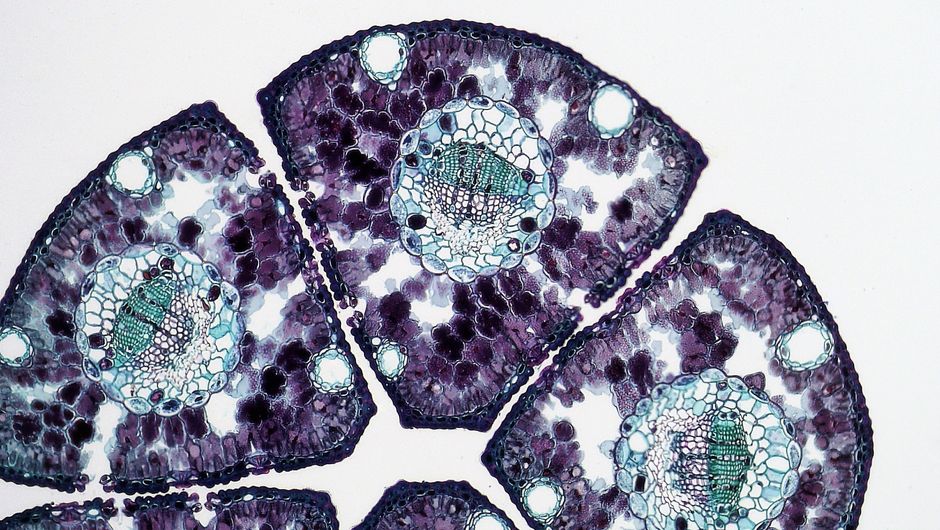
Photo by Fayette Reynolds M.S. on Pexels
Once meristematic cells differentiate, they mature into permanent tissues, which have specialized functions and typically don't divide further. These are grouped into three main tissue systems:
-
Dermal Tissue System: This is the plant's outer protective layer, like skin.
- Epidermis: The outermost layer of cells covering the plant body. It protects against water loss, pathogens, and physical damage. It often has specialized cells like guard cells (which regulate stomata for gas exchange) and trichomes (hair-like structures for protection or absorption).
- Periderm: In woody plants, the epidermis is replaced by the periderm, which includes the cork cambium, cork, and phelloderm.
-
Ground Tissue System: This system makes up the bulk of the plant, filling spaces between the dermal and vascular tissues. It's involved in photosynthesis, storage, and support.
- Parenchyma: The most common type. Cells are generally loosely packed, thin-walled, and involved in photosynthesis (in leaves), storage (in roots/stems), and secretion.
- Collenchyma: Provides flexible support to growing parts of the plant, like young stems and petioles. Cells have unevenly thickened primary cell walls.
- Sclerenchyma: Provides strong, rigid support to mature plant parts. Cells have thick, lignified secondary cell walls and are often dead at maturity. Examples include fibers (long, slender) and sclereids (irregularly shaped, found in fruit pits).
-
Vascular Tissue System: This is the plant's transport system, like veins and arteries.
- Xylem: Transports water and dissolved minerals from the roots up to the rest of the plant. Composed of tracheids and vessel elements (water-conducting cells), as well as parenchyma and fibers.
- Phloem: Transports sugars (produced during photosynthesis) from leaves to other parts of the plant where they're needed for growth or storage. Composed of sieve tube elements (sugar-conducting cells) and companion cells (support sieve tube elements), along with parenchyma and fibers.
Here's a diagram illustrating the hierarchy:
graph TD
    A["Plant Organism"] --> B["Tissue Systems"];
    B --> C1["Dermal Tissue System"];
    B --> C2["Ground Tissue System"];
    B --> C3["Vascular Tissue System"];
    C1 --> D1a["Epidermis"];
    C1 --> D1b["Periderm (in woody plants)"];
    C2 --> D2a["Parenchyma"];
    C2 --> D2b["Collenchyma"];
    C2 --> D2c["Sclerenchyma"];
    C3 --> D3a["Xylem"];
    C3 --> D3b["Phloem"];
    A --> E["Meristematic Tissues"];
    E --> F1["Apical Meristems"];
    E --> F2["Lateral Meristems"];
    E --> F3["Intercalary Meristems"];
3. Worked Example
Imagine you're examining a cross-section of a young sunflower stem under a microscope.
- Outermost layer: You'd see the epidermis, a single layer of tightly packed cells. You might spot a few trichomes (hairs) or stomata. This is part of the dermal tissue system.
- Just inside the epidermis: You'd find layers of parenchyma cells, likely involved in storage, and perhaps some collenchyma cells providing flexible support, especially at the corners of the stem. These belong to the ground tissue system.
- Arranged in bundles (vascular bundles): You'd clearly see the vascular tissue system. Each bundle would contain xylem towards the center of the stem (larger cells, often with thick walls) and phloem towards the outside (smaller cells, typically associated with companion cells).
- At the very tip of a growing shoot: If you were looking at the tip, not the mature stem, you'd see the apical meristem – a region of small, densely packed, actively dividing cells, responsible for elongating the stem.
This observation shows how different tissues are organized within an organ to perform various functions.
4. Key Takeaways
- Meristematic tissues are responsible for plant growth, while permanent tissues perform specialized functions.
- The dermal tissue system provides protection and regulates gas exchange.
- The ground tissue system handles storage, photosynthesis, and support.
- The vascular tissue system transports water, minerals, and sugars throughout the plant.
- Parenchyma, collenchyma, and sclerenchyma are the primary types of ground tissues, each with distinct cell wall characteristics and functions.
- Xylem moves water and minerals, while phloem moves sugars.
Common Mistakes to Avoid:
- Confusing primary growth (length) with secondary growth (girth).
- Mixing up the roles of xylem and phloem (water vs. sugar).
- Thinking that all permanent tissues are dead; many are alive (e.g., parenchyma, collenchyma, sieve tube elements).
- Forgetting that meristematic cells are undifferentiated and actively dividing.
5. Now Try It
Take a common houseplant leaf (like a Ficus or Pothos). Imagine or sketch its internal structure, identifying where you'd expect to find the dermal tissue (epidermis), ground tissue (parenchyma for photosynthesis), and vascular tissue (xylem and phloem in veins). Think about how each tissue contributes to the leaf's primary function of photosynthesis. Success looks like being able to label these main tissue systems and briefly describe their role in the leaf.
Frequently asked about Introduction to Plant Histology and Tissues
Study this next
Get the full plant biology curriculum
Clone the complete plan to your dashboard for unlimited AI-generated notes, practice quizzes, and a personalised revision schedule.
Save this course free