Introduction to Plant Tissues and Classification
From the complex permanent tissues curriculum
Introduction to Plant Tissues and Classification
TL;DR
Plants are made of different types of tissues that work together, similar to how your body has organs. These tissues are broadly classified into two main groups: meristematic (growing) and permanent (specialized). Understanding this basic classification helps you see how plants grow and function.
1. The Mental Model
Think of a plant like a house. Some parts are actively being built (like new walls or rooms), while other parts are finished and serve specific functions (like the foundation, roof, or plumbing). Plant tissues work in a similar way.
2. The Core Material
Plants are complex organisms, and their ability to grow and survive depends on specialized groups of cells called tissues. Just like in animals, these tissues are collections of cells that perform specific functions. We primarily divide plant tissues into two big categories: meristematic tissues and permanent tissues.
Meristematic Tissues (The Builders)
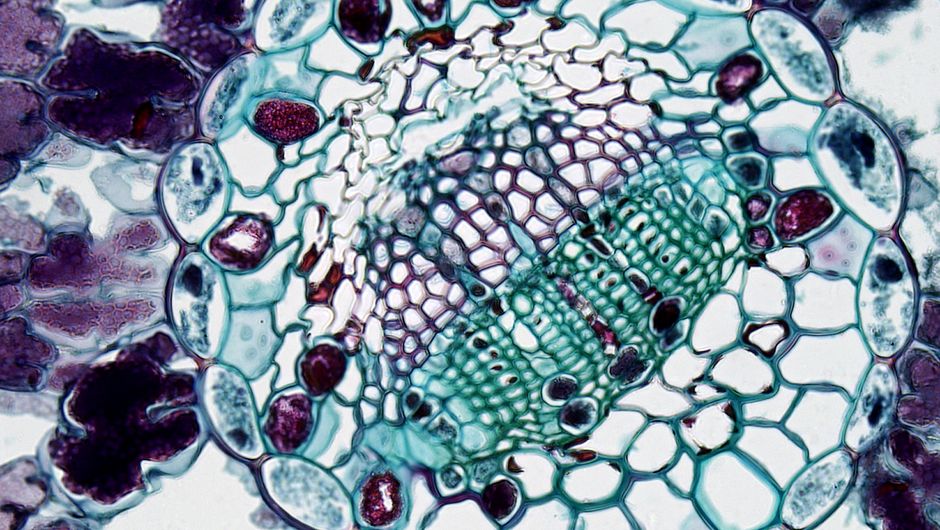
Photo by Fayette Reynolds M.S. on Pexels
Meristematic tissues are like the stem cells of a plant. They're composed of actively dividing cells responsible for the plant's growth. They help the plant increase in length (primary growth) and girth (secondary growth).
- Apical Meristems: Found at the tips of roots and shoots, they cause the plant to grow longer.
- Lateral Meristems: Found in the sides of stems and roots, they increase the plant's diameter. Examples include the vascular cambium and cork cambium.
- Intercalary Meristems: Found in some plants (like grasses) at the base of leaves and internodes, allowing for regrowth after grazing.
Permanent Tissues (The Specialists)

Photo by Fayette Reynolds M.S. on Pexels
Once meristematic cells divide and mature, they lose their ability to divide and become specialized to perform specific tasks. These are called permanent tissues. They form the bulk of the plant body. Permanent tissues are further divided into simple and complex types.
- Simple Permanent Tissues: Made up of only one type of cell.
- Parenchyma: Most common, involved in storage, photosynthesis, and secretion.
- Collenchyma: Provides flexible support to growing parts like young stems and leaf stalks.
- Sclerenchyma: Provides strong, rigid support to mature plant parts, often dead at maturity (e.g., fibers, sclereids).
- Complex Permanent Tissues: Made up of more than one type of cell working together to perform a common function. These are what we'll dive deeper into later.
- Xylem: Transports water and dissolved minerals from roots to the rest of the plant.
- Phloem: Transports sugars (food) from leaves to other parts of the plant where it's needed or stored.
Here’s a diagram showing this classification:
graph TD
    A["Plant Tissues"] --> B["Meristematic Tissues"]
    A["Plant Tissues"] --> C["Permanent Tissues"]

    B --> B1["Apical Meristem"]
    B --> B2["Lateral Meristem"]
    B --> B3["Intercalary Meristem"]

    C --> C1["Simple Permanent Tissues"]
    C --> C2["Complex Permanent Tissues"]

    C1 --> C1a["Parenchyma"]
    C1 --> C1b["Collenchyma"]
    C1 --> C1c["Sclerenchyma"]

    C2 --> C2a["Xylem"]
    C2 --> C2b["Phloem"]
3. Worked Example
Imagine you're looking at a cross-section of a young sunflower stem.
You'd see:
1. Apical meristem (if it's the very tip): These cells would be small, actively dividing, and contribute to the stem lengthening.
2. Parenchyma cells: Abundant throughout the stem, forming the pith and cortex, storing starch and water.
3. Collenchyma cells: Just under the epidermis, providing flexible support so the young stem doesn't snap in the wind.
4. Xylem and Phloem: Arranged in vascular bundles, with xylem on the inside transporting water up, and phloem on the outside transporting sugars down from the leaves.
5. Lateral meristem (vascular cambium): Between xylem and phloem, ready to divide and produce more xylem and phloem, increasing the stem's girth over time.
Each tissue has a distinct appearance under a microscope and a specific job, working together to keep the sunflower growing and standing.
4. Key Takeaways
- Plant tissues are groups of cells with a shared structure and function.
- Meristematic tissues are responsible for plant growth, containing actively dividing cells.
- Permanent tissues are specialized, mature cells that have lost their division capacity and perform specific roles.
- Permanent tissues are divided into simple (one cell type) and complex (multiple cell types) categories.
- Xylem and phloem are the two main types of complex permanent tissues, handling water/mineral and sugar transport, respectively.
- Understanding tissue types helps explain how plants grow, support themselves, and transport substances.
Common Mistakes to Avoid

Photo by KATRIN BOLOVTSOVA on Pexels
- Don't confuse meristematic with permanent tissues; remember meristematic cells divide, permanent cells specialize.
- Don't think of "simple" permanent tissues as less important; they perform crucial functions like storage and basic support.
- Don't mix up the functions of xylem and phloem; xylem is for water, phloem is for food (sugars).
- Don't forget that complex tissues like xylem and phloem are made of several cell types, not just one.
5. Now Try It
Take a moment to describe, in your own words, the primary difference between meristematic and permanent tissues. Then, list one example of a simple permanent tissue and one example of a complex permanent tissue, briefly explaining their main function. You should be able to do this in about 5 minutes without looking at your notes. Success looks like clearly articulating the division ability and specialization as the key differentiator, and correctly naming and assigning functions to your chosen tissue examples.
Frequently asked about Introduction to Plant Tissues and Classification
Get the full complex permanent tissues curriculum
Clone the complete plan to your dashboard for unlimited AI-generated notes, practice quizzes, and a personalised revision schedule.
Create Free Account