Introduction to Environmental Geography & Key Concepts
From the Geography curriculum
TL;DR
Environmental geography studies how humans interact with the natural world, focusing on both the impacts we have and the ways the environment affects us. It brings together ideas from physical geography and human geography to understand complex issues. Key concepts like sustainability, resilience, and the human-environment system help us analyze these relationships.
1. The Mental Model
Think of environmental geography as a bridge. On one side is the natural environment – mountains, rivers, climate. On the other side are humans – our cities, cultures, and economies. This field explores how these two sides connect, influence each other, and can ideally exist in harmony.
2. The Core Material
Environmental geography is a fascinating field that sits at the intersection of human geography (how humans organize themselves and interact with their spaces) and physical geography (the natural processes of the Earth). It's all about understanding the dynamic and often complex relationships between people and their environments.
What is Environmental Geography?
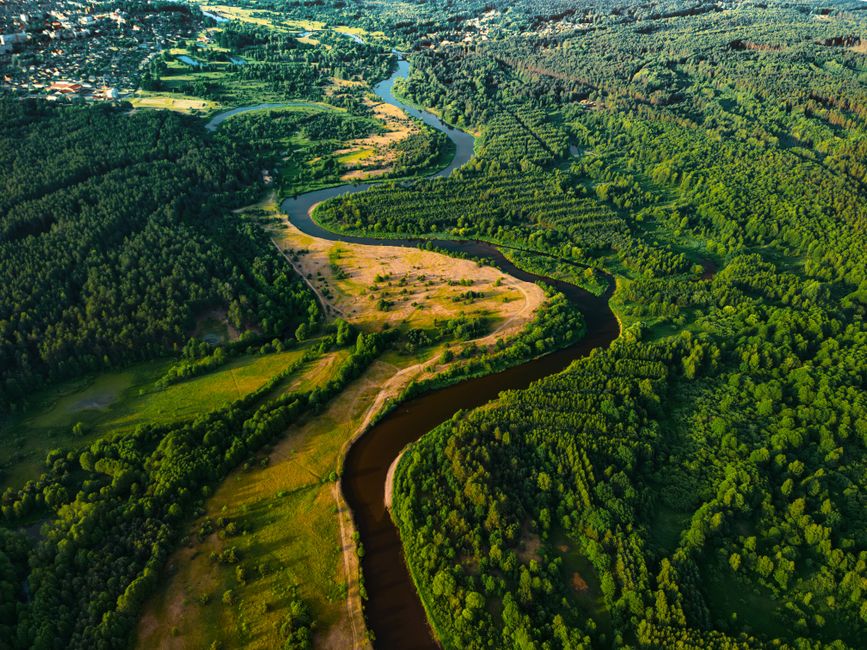
Photo by Siarhei Nester on Pexels
It's the study of spatial aspects of interactions between humans and the natural world. This means looking at how human activities modify the environment (like pollution or deforestation) and how environmental factors influence human life (like climate affecting agriculture or natural hazards impacting communities).
Core Concepts

Photo by Nataliya Vaitkevich on Pexels
- Human-Environment System (HES): This is a key way to think about things. It views humans and the environment not as separate entities, but as interconnected parts of a single, integrated system. Changes in one part affect the other.
- Sustainability: This concept is about meeting the needs of the present generation without compromising the ability of future generations to meet their own needs. It often involves balancing environmental protection, social equity, and economic viability.
- Resilience: This refers to the capacity of a system (like an ecosystem or a community) to absorb disturbance and reorganize while undergoing change so as to retain essentially the same function, structure, identity, and feedbacks. Think of a forest recovering after a fire.
- Vulnerability: This describes the degree to which a system (like a community) is susceptible to, and unable to cope with, adverse effects of environmental changes or hazards. A low-lying coastal community is vulnerable to sea-level rise.
- Anthropocene: This proposed geological epoch suggests that human activities have become so significant that they are now the dominant influence on Earth's geology and ecosystems. It highlights the scale of human impact.
- Ecological Footprint: This is a measure of human demand on the Earth's ecosystems. It quantifies the amount of biologically productive land and sea area required to provide the resources a human population consumes and to absorb its wastes.
Here's a simple way to visualize the Human-Environment System and its components:
graph TD
    A["Human-Environment System (HES)"] --> H["Human Subsystem"]
    A --> E["Environmental Subsystem"]

    H --> H1["Population & Culture"]
    H --> H2["Economy & Technology"]
    H --> H3["Politics & Governance"]

    E --> E1["Atmosphere & Climate"]
    E --> E2["Hydrosphere & Water"]
    E --> E3["Lithosphere & Land"]
    E --> E4["Biosphere & Life"]

    H1 --> I1("Impacts on Environment")
    H2 --> I1
    H3 --> I1

    E1 --> F1("Feedback to Humans")
    E2 --> F1
    E3 --> F1
    E4 --> F1

    I1 --> E
    F1 --> H
Approaches in Environmental Geography
Photo by Siarhei Nester on Pexels
- Political Ecology: Focuses on how political and economic forces (power relations) influence human-environment interactions and environmental change. It often highlights social inequality.
- Cultural Ecology: Examines how human societies adapt to their environment and how their cultural practices are shaped by and, in turn, shape their environments.
- Hazards Geography: Studies the perception, occurrence, and mitigation of natural and technological hazards and their impacts on human societies.
3. Worked Example
Let's consider the issue of deforestation in the Amazon rainforest.
- Human-Environment System: The human subsystem involves local farmers needing land for agriculture, logging companies extracting timber for profit, and governments setting policies (or failing to enforce them). The environmental subsystem is the rainforest itself, providing biodiversity, regulating climate, and producing oxygen.
- Sustainability: Deforestation is clearly unsustainable. It meets short-term economic needs but destroys biodiversity, contributes to climate change, and removes resources essential for future generations. Finding sustainable alternatives for economic development is key.
- Vulnerability: Indigenous communities living in the Amazon are highly vulnerable to deforestation as it destroys their traditional way of life, food sources, and cultural heritage.
- Political Ecology perspective: This approach would analyze how global demand for beef or soy drives large-scale agricultural expansion, how powerful corporations lobby governments, and how these economic and political forces marginalize local communities and accelerate forest loss.
4. Key Takeaways
- Environmental geography analyzes the complex, two-way relationship between human societies and the natural world.
- The Human-Environment System views people and nature as interconnected, influencing each other constantly.
- Sustainability is about balancing current needs with the ability of future generations to meet their own needs.
- Resilience refers to a system's ability to bounce back from disturbances and maintain its function.
- The Anthropocene highlights the profound and dominant impact humans now have on Earth's systems.
- Ecological footprint measures human demand on the planet's resources.
Common Mistakes to Avoid:
- Don't see humans and the environment as completely separate entities; they are deeply intertwined.
- Avoid thinking that environmental problems have simple, single causes or solutions.
- Don't confuse "environmentalism" (a social movement) with "environmental geography" (an academic field of study).
- Don't forget that social, economic, and political factors are crucial in understanding environmental issues.
5. Now Try It
Choose a local environmental issue you're familiar with (e.g., local pollution, urban sprawl, a specific natural hazard). For this issue, try to identify:
1. Which components of the Human-Environment System are involved?
2. How the concepts of sustainability, resilience, or vulnerability apply to it.
What you should aim for is to identify at least two human components (e.g., local industry, city council, residents) and two environmental components (e.g., a river, air quality, a specific ecosystem), and explain how at least one of the core concepts helps you understand the issue better.
Frequently asked about Introduction to Environmental Geography & Key Concepts
Study this next
Get the full Geography curriculum
Clone the complete plan to your dashboard for unlimited AI-generated notes, practice quizzes, and a personalised revision schedule.
Save this course free