Electrifying Adventures: Static Charges to Circuit Power!
From the physics fa 1 curriculum
TL;DR
Get ready to explore the exciting world of electricity, starting with the invisible forces of static charge and building up to how circuits actually power your devices. We'll uncover how tiny particles create big effects and how we harness their movement to do work. Understanding these basics will make circuits seem way less mysterious and much more fun!
1. The Mental Model
Imagine electricity as water: static charge is like water held in a tank, ready to flow. When it does flow, that's current, like water moving through a pipe. Voltage is the "push" making the water flow, and resistance is anything blocking its path.
2. The Core Material
What is Charge? (It's Elementary!)

Photo by Reinhard Bruckner on Pexels
Everything is made of atoms, and atoms have tiny parts called protons (positive charge), electrons (negative charge), and neutrons (no charge). Normally, atoms have an equal number of protons and electrons, so they're neutral. But when you rub things together (like socks on a carpet or a balloon on your hair), you can transfer electrons. The object that gains electrons becomes negatively charged, and the one that loses them becomes positively charged. This imbalance is static charge – charge that's just hanging out!
Think of it:
* Like charges repel: Two negatives push each other away, two positives push each other away.
* Opposite charges attract: A positive and a negative pull towards each other.
This is why your hair sticks to a balloon after rubbing it – the balloon picks up electrons, becomes negative, and attracts the positive charges in your hair. Zap!
Let's Get Moving: Current and Voltage

Photo by Alexey Demidov on Pexels
When static charges decide to get moving, that's where the real action happens!
- Electric Current (I): This is the flow of electric charge (usually electrons) through a conductor. Think of it as the number of electrons passing a point in a wire per second. We measure it in Amperes (A). More electrons flowing = more current.
- Voltage (V): Also called "potential difference," this is the "push" or "pressure" that makes charges move. It's the amount of energy available per unit of charge. Think of it like the height difference in a waterfall – the higher the fall, the more energy the water has. We measure voltage in Volts (V). A bigger voltage means a stronger push.
What's Slowing Us Down? Resistance!

Photo by Brett Sayles on Pexels
- Resistance (R): Not everything lets charge flow easily. Resistance is the opposition to the flow of electric current. Some materials (like metals) are good conductors (low resistance), while others (like rubber or plastic) are insulators (high resistance). We measure resistance in Ohms (Ω).
Ohm's Law: The Golden Rule of Circuits!
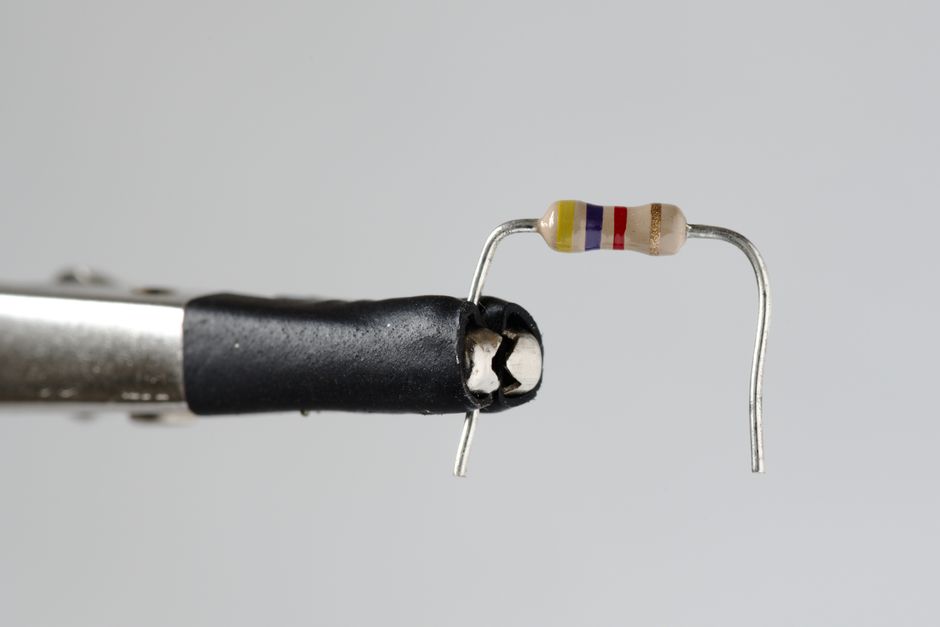
Photo by Zacharias Korsalka on Pexels
These three buddies – Voltage, Current, and Resistance – are all connected by a super important rule called Ohm's Law:
V = I * R
- Voltage (V) = Current (I) multiplied by Resistance (R).
- This means if you increase the voltage, more current flows (if resistance stays the same).
- If you increase resistance, less current flows (if voltage stays the same).
- It's like trying to push water through a narrow pipe (high resistance) vs. a wide pipe (low resistance) with the same pump (voltage).
Powering Up: Electric Power
Power is how fast energy is being used or produced. In electricity, Electric Power (P) is the rate at which electrical energy is converted into other forms of energy (like light, heat, or motion).
P = V * I
- Power (P) = Voltage (V) multiplied by Current (I).
- We measure power in Watts (W). A 100W light bulb uses more power (and gives off more light/heat) than a 60W bulb.
Putting It All Together: Simple Circuits
A basic circuit needs three things to work:
1. A power source: Like a battery, providing the voltage (the "push").
2. A load: Something that uses the electrical energy, like a light bulb or a motor.
3. Conductors: Wires to carry the current from the source, through the load, and back to the source, forming a complete loop.
Here's how electricity flows through a simple circuit:
graph TD
    A["Battery (+)"] --> B["Wire (Path for electrons)"]
    B --> C["Light Bulb (Load / Resistance)"]
    C --> D["Wire (Path for electrons)"]
    D --> E["Battery (-)"]
    E --> A
In a series circuit, components are connected one after another, like beads on a string. If one component breaks, the whole circuit breaks.
In a parallel circuit, components are connected across the same two points, like rungs on a ladder. Each component gets the full voltage, and if one breaks, the others can still work.
3. Worked Example
Let's say you have a small flashlight. It uses two AA batteries, which together provide 3 Volts (V). The tiny bulb in the flashlight has a resistance of 10 Ohms (Ω).
-
What is the current (I) flowing through the bulb?
Using Ohm's Law: V = I * R
We know V = 3V and R = 10Ω.
So, 3V = I * 10Ω
To find I, divide voltage by resistance: I = 3V / 10Ω = 0.3 Amperes (A) -
How much power (P) does the bulb use?
Using the Power formula: P = V * I
We know V = 3V and we just found I = 0.3A.
So, P = 3V * 0.3A = 0.9 Watts (W)
So, your flashlight bulb draws 0.3 Amperes of current and uses 0.9 Watts of power to light up! Pretty neat, right?
4. Key Takeaways
- Static charge is an imbalance of protons (+) and electrons (-) on an object.
- Voltage (V) is the "push" that makes electric charges move, measured in Volts.
- Current (I) is the flow of electric charge, measured in Amperes.
- Resistance (R) is the opposition to charge flow, measured in Ohms.
- Ohm's Law (V = I * R) connects voltage, current, and resistance.
- Electric Power (P = V * I) is the rate at which electrical energy is used, measured in Watts.
- A complete circuit needs a power source, a load, and conductors to allow current to flow in a loop.
Common Mistakes to Avoid:
- Confusing voltage with current: Voltage is the potential to make charge move, current is the actual movement of charge.
- Forgetting that circuits need to be closed for current to flow – no breaks in the path!
- Ignoring resistance: Even wires have a tiny bit of resistance, but loads are designed to have significant resistance to convert electrical energy.
- Thinking that more voltage always means more power; you need both voltage and current for power.
5. Now Try It
Imagine you have a toy car that needs 6V to run. You know it draws a current of 0.5A.
1. Calculate the resistance of the toy car's motor.
2. Calculate the power consumed by the toy car's motor.
3. If you accidentally put 9V batteries in (don't do this in real life!), assuming the resistance stays the same, what would the new current be? (This is why higher voltage can burn out devices!)
What success looks like: You'll have calculated R and P for the toy car correctly using Ohm's Law and the power formula, and then found the increased current with the higher voltage. You should also be able to explain why higher voltage with the same resistance would increase current.
Frequently asked about Electrifying Adventures: Static Charges to Circuit Power!
Study this next
Get the full physics fa 1 curriculum
Clone the complete plan to your dashboard for unlimited AI-generated notes, practice quizzes, and a personalised revision schedule.
Save this course free