Magnetism Magic & Paper 1 Review Extravaganza!
From the physics fa 1 curriculum
TL;DR
You're diving into the enchanting world of magnetism and reviewing key Paper 1 topics, so get ready to nail those fundamental concepts and calculations. We'll explore how magnets work, the forces they exert, and how they relate to electricity. This review will boost your confidence for tomorrow's paper by focusing on essential ideas and common pitfalls.
1. The Mental Model
Think of magnetism as an invisible force, like a super-strong, super-picky hug or push that certain materials and moving charges can feel. It's all about tiny domains lining up or electricity flowing, creating these magical fields.
2. The Core Material
Alright, let's unlock some magnetism magic and breeze through that Paper 1 review!
2.1 Magnets & Fields
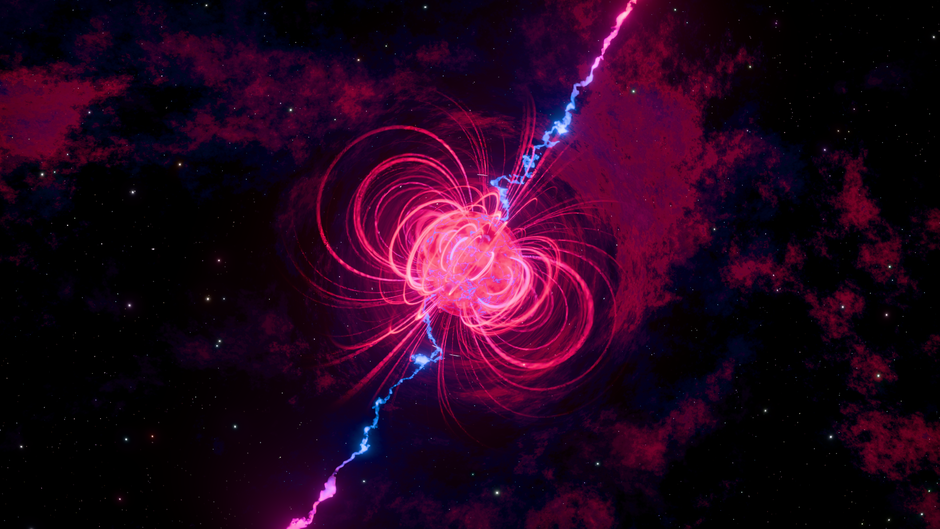
Photo by Nicola Narracci on Pexels
Permanent magnets, like the ones on your fridge, have tiny regions called magnetic domains that are all lined up, creating a strong magnetic field. This field is represented by magnetic field lines that always go from the North pole to the South pole outside the magnet, and South to North inside (forming closed loops!). The closer the lines, the stronger the field.
2.2 Electromagnetism: Electricity's Magnetic Cousin

Photo by Nicola Narracci on Pexels
This is where it gets really cool! Moving electric charges (currents) create magnetic fields. This is why you can make an electromagnet by coiling wire around an iron core and running current through it.
- Right-Hand Grip Rule (for current in a wire): Point your right thumb in the direction of conventional current (positive to negative). Your curled fingers show the direction of the magnetic field lines around the wire.
- Solenoids: A coil of wire (solenoid) acts like a bar magnet when current flows through it. You can use the Right-Hand Grip Rule again: curl your fingers in the direction of the current in the coils, and your thumb points to the North pole of the electromagnet.
2.3 Magnetic Force on a Current-Carrying Wire
Photo by Nicola Narracci on Pexels
When a current-carrying wire is placed in an external magnetic field, it experiences a force. This is the principle behind electric motors!
- Fleming's Left-Hand Rule: This is your best friend here!
- Thumb: Direction of Force (Motion)
- Forefinger: Direction of Field (North to South)
- Middle Finger: Direction of Current (positive to negative)
- Important: All three must be at right angles to each other.
- The magnitude of this force is given by $F = BIL \sin\theta$, where $B$ is magnetic field strength (Tesla, T), $I$ is current (Amps, A), $L$ is length of wire in the field (meters, m), and $\theta$ is the angle between the wire and the field. For Paper 1, it's often perpendicular, so $\sin\theta = 1$.
2.4 Magnetic Force on Moving Charges
Photo by Nicola Narracci on Pexels
Individual moving charges (like electrons in a beam) also experience a force when moving through a magnetic field. This is the same principle as the force on a wire, just applied to individual charges.
- Fleming's Left-Hand Rule applies here too! Just remember "current" now means the direction of motion of a positive charge. If it's an electron, reverse the direction for "current".
- The magnitude of this force is $F = qvB \sin\theta$, where $q$ is the charge (Coulombs, C), $v$ is its velocity (m/s), and $B$ is the magnetic field strength (T). Again, for Paper 1, $\sin\theta$ is often 1.
2.5 Paper 1 Review Extravaganza - Key Concepts Flow
Here's a quick map of how some key Paper 1 topics link up:
graph LR
    A["Energy (Forms, Conservation)"] --> B["Work Done (F x d)"];
    A --> C["Power (W/t)"];
    B --> D["Kinetic Energy (0.5mv^2)"];
    B --> E["Gravitational Potential Energy (mgh)"];
    F["Waves (Transverse/Longitudinal)"] --> G["Wave Properties (Amplitude, Wavelength, Freq, Speed)"];
    G --> H["Sound Waves"];
    G --> I["Light Waves (EM Spectrum)"];
    J["Electricity (Current, Voltage, Resistance)"] --> K["Ohm's Law (V=IR)"];
    J --> L["Circuit Types (Series/Parallel)"];
    L --> M["Resistance Calculations"];
    M --> N["Power in Circuits (P=IV, I^2R, V^2/R)"];
    K --> O["Heating Effect (I^2Rt)"];
    J --> P["Electromagnetism (linking to magnetism!)"];
    P --> Q["Motors & Generators"];
Focus on:
* Energy: Conservation of energy, calculations involving KE, GPE, and work done.
* Waves: Definitions of amplitude, wavelength, frequency, wave speed equation ($v = f\lambda$), properties of sound and light.
* Electricity: Ohm's Law, series/parallel circuits, calculating total resistance, power calculations, the heating effect of current ($E=I^2Rt$).
3. Worked Example
Let's say an electron (charge $q = -1.6 \times 10^{-19}$ C) enters a uniform magnetic field of strength $B = 0.50$ T with a velocity $v = 2.0 \times 10^6$ m/s, perpendicular to the field. What is the magnitude and direction of the magnetic force on the electron?
- Identify givens: $q = -1.6 \times 10^{-19}$ C, $v = 2.0 \times 10^6$ m/s, $B = 0.50$ T. Perpendicular, so $\sin\theta = 1$.
- Calculate magnitude: Use $F = |q|vB$.
$F = (1.6 \times 10^{-19} \text{ C}) \times (2.0 \times 10^6 \text{ m/s}) \times (0.50 \text{ T})$
$F = 1.6 \times 10^{-13}$ N. - Determine direction: Use Fleming's Left-Hand Rule.
- Imagine the magnetic field (Forefinger) points right.
- The electron is moving, say, upwards. However, because it's a negative charge, the direction for "current" (Middle Finger) is actually downwards.
- Point your forefinger right, middle finger down. Your thumb will point into the page.
- So, the force is $1.6 \times 10^{-13}$ N, directed perpendicular to both velocity and field, into the page (or whatever direction your setup had).
4. Key Takeaways
- Magnetic field lines always go from North to South outside a magnet.
- Moving charges and currents create magnetic fields; use the Right-Hand Grip rule for direction.
- A current-carrying wire or moving charge in a magnetic field experiences a force, described by Fleming's Left-Hand Rule.
- Memorize and understand the formulas for magnetic force: $F=BIL$ (for wires) and $F=qvB$ (for charges).
- Crucial Paper 1 topics include energy conservation, wave properties ($v = f\lambda$), and electrical calculations ($V=IR$, $P=IV$).
Common Mistakes to Avoid:
- Confusing Fleming's Left-Hand Rule with the Right-Hand Grip Rule.
- Forgetting to reverse the "current" direction for electrons when using Fleming's Left-Hand Rule.
- Mixing up series and parallel circuit rules for resistance and current/voltage.
- Not checking units and converting them to SI units (e.g., cm to m).
- Assuming $\sin\theta = 1$ when the problem doesn't state the angle is 90 degrees.
5. Now Try It
Pick one of the Paper 1 topics from our diagram (like "Power in Circuits" or "Wave Properties"). Spend 15 minutes trying to recall all the formulas, definitions, and relationships related to it without looking at your notes. Then, check your understanding against your textbook or notes. For success, you should be able to write down at least three key formulas/definitions and explain one common application (e.g., how fuses work for electricity, or how sound travels for waves).
Frequently asked about Magnetism Magic & Paper 1 Review Extravaganza!
Study this next
Get the full physics fa 1 curriculum
Clone the complete plan to your dashboard for unlimited AI-generated notes, practice quizzes, and a personalised revision schedule.
Save this course free