Introduction to Reaction Rates
From the chemical kinetics curriculum
TL;DR
Reaction rates tell us how fast reactants turn into products, which is crucial for understanding and controlling chemical processes. We measure this speed by looking at how the concentration of a substance changes over time. Factors like concentration, temperature, and catalysts significantly influence how quickly a reaction proceeds.
1. The Mental Model
Imagine you're baking a cake: the reaction rate is how fast your ingredients (reactants) turn into a finished cake (product). If you bake at a higher temperature or use more leavening agent, the cake might bake faster, just like chemical reactions can speed up or slow down.
2. The Core Material
Chemical kinetics is all about how fast reactions happen. The reaction rate is essentially the change in concentration of a reactant or product per unit of time.
How We Define Rate
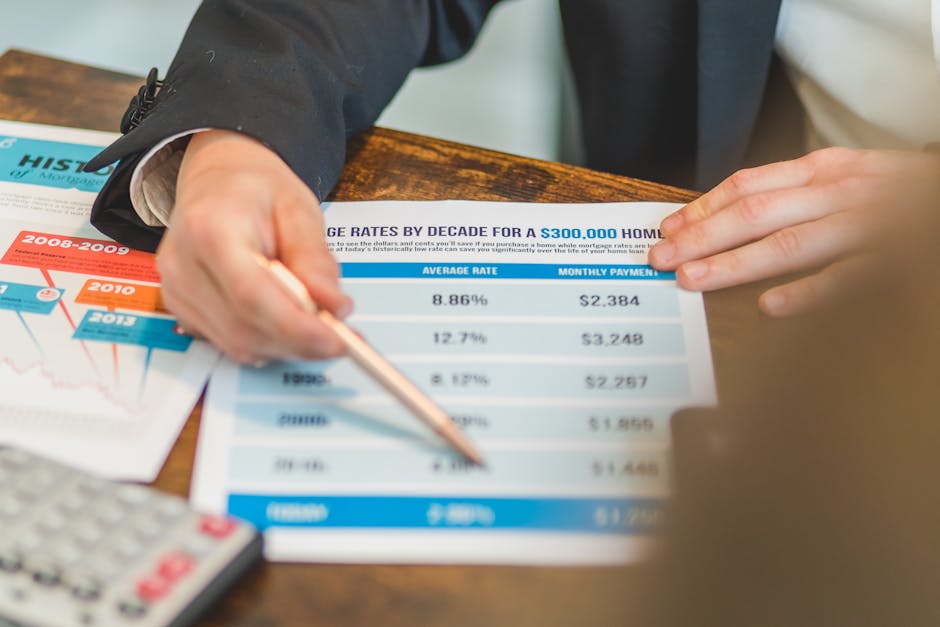
Photo by RDNE Stock project on Pexels
For a generic reaction: A → B, the rate can be expressed in terms of either the disappearance of reactant A or the appearance of product B.
Rate = -Δ[A]/Δt = Δ[B]/Δt
The negative sign for reactants indicates that their concentration is decreasing over time. The brackets [ ] denote molar concentration (moles per liter, or M). The Δ means "change in."
For a more complex reaction like: aA + bB → cC + dD, where a, b, c, and d are stoichiometric coefficients, the rate is defined as:
Rate = -1/a * Δ[A]/Δt = -1/b * Δ[B]/Δt = 1/c * Δ[C]/Δt = 1/d * Δ[D]/Δt
This ensures the rate is independent of which reactant or product you're monitoring and accounts for the stoichiometry.
Factors Affecting Reaction Rates
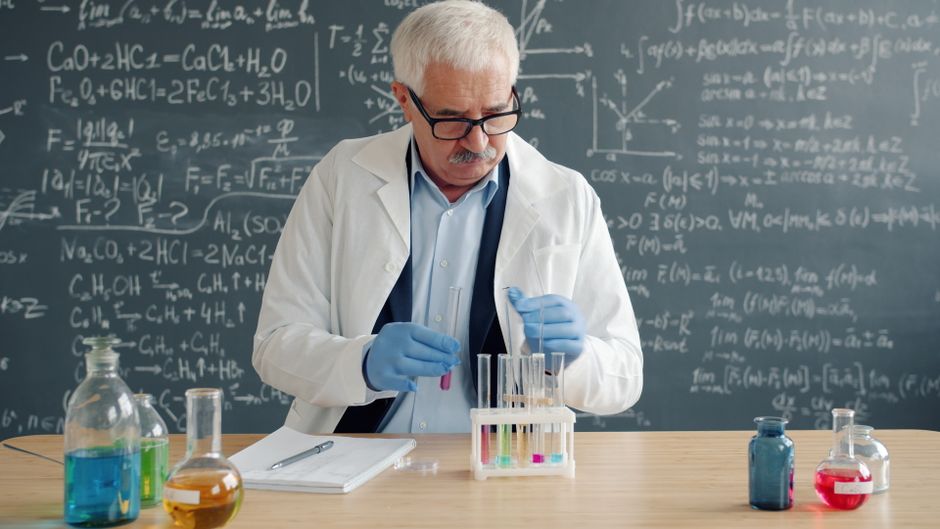
Photo by Vitaly Gariev on Pexels
Several key factors influence how fast a reaction proceeds:
- Concentration of Reactants: Generally, increasing the concentration of reactants leads to more frequent collisions between reactant molecules, thus increasing the reaction rate.
- Temperature: Higher temperatures usually mean molecules have more kinetic energy, leading to more energetic and effective collisions, and a faster reaction rate.
- Presence of a Catalyst: A catalyst speeds up a reaction without being consumed itself. It does this by providing an alternative reaction pathway with a lower activation energy.
- Surface Area (for heterogeneous reactions): For reactions involving solids, increasing the surface area allows for more contact points between reactants, speeding up the reaction.
- Pressure (for gaseous reactants): Increasing the pressure of gaseous reactants is equivalent to increasing their concentration, leading to a faster rate.
graph TD
    A["Factors Affecting Reaction Rate"] --> B["Reactant Concentration"]
    A --> C["Temperature"]
    A --> D["Catalyst Presence"]
    A --> E["Surface Area (for solids)"]
    A --> F["Pressure (for gases)"]

    B --> G["More collisions → Faster rate"]
    C --> H["Higher energy collisions → Faster rate"]
    D --> I["Lower activation energy → Faster rate"]
    E --> J["More contact points → Faster rate"]
    F --> K["Higher effective concentration → Faster rate"]
3. Worked Example
Consider the decomposition of dinitrogen pentoxide:
2N₂O₅(g) → 4NO₂(g) + O₂(g)
Suppose that over a 100-second interval, the concentration of N₂O₅ decreases from 0.80 M to 0.50 M. Let's calculate the average rate of reaction.
First, calculate the change in concentration of N₂O₅:
Δ[N₂O₅] = [N₂O₅]final - [N₂O₅]initial = 0.50 M - 0.80 M = -0.30 M
The time interval is Δt = 100 s.
Now, use the rate expression, including the stoichiometric coefficient:
Rate = -1/2 * Δ[N₂O₅]/Δt
Rate = -1/2 * (-0.30 M / 100 s)
Rate = -1/2 * (-0.0030 M/s)
Rate = 0.0015 M/s
So, the average rate of reaction over this interval is 0.0015 M/s.
4. Key Takeaways
- Reaction rate quantifies how quickly reactants are consumed or products are formed.
- The rate is typically expressed as the change in concentration per unit time.
- Stoichiometric coefficients are used to normalize the rate so it's consistent regardless of which species is monitored.
- Increased reactant concentration generally leads to a faster reaction due to more collisions.
- Higher temperatures usually accelerate reactions by increasing molecular kinetic energy and collision effectiveness.
- Catalysts speed up reactions by lowering the activation energy without being used up.
- Surface area and pressure are important factors for heterogeneous and gaseous reactions, respectively.
Common mistakes to avoid:

Photo by KATRIN BOLOVTSOVA on Pexels
- Forgetting to include the negative sign when calculating the rate based on a reactant's disappearance.
- Not dividing by the stoichiometric coefficient when determining the overall reaction rate from an individual species' rate.
- Confusing average rate with instantaneous rate (we've focused on average rate here).
- Ignoring the units for rate, which are typically M/s or mol/(L·s).
5. Now Try It
You have a reaction: A + 2B → C.
At the beginning of an experiment, [A] is 1.2 M. After 60 seconds, [A] has decreased to 0.9 M. Calculate the average rate of reaction in M/s during this period.
What to do:
1. Determine the change in concentration of A (Δ[A]).
2. Determine the change in time (Δt).
3. Use the general rate expression, accounting for the stoichiometry of A.
What success looks like: You'll arrive at a single numerical value with the correct units (M/s) representing the average reaction rate.
Frequently asked about Introduction to Reaction Rates
Study this next
Get the full chemical kinetics curriculum
Clone the complete plan to your dashboard for unlimited AI-generated notes, practice quizzes, and a personalised revision schedule.
Save this course free