Rates of Reaction and Energy Changes
From the sec chemistry curriculum
TL;DR
Understanding reaction rates means knowing how fast reactants turn into products, which is influenced by factors like concentration and temperature. Energy changes tell you if a reaction releases heat (exothermic) or absorbs it (endothermic), determining its overall energy profile. Activation energy is the minimum energy needed for a reaction to start, like a tiny hurdle reactants must jump over.
1. The Mental Model
Think of a reaction like climbing a hill. The height of the hill is the activation energy – you need enough energy to get over it. Once over, you might roll down a long slope (exothermic, releasing energy) or barely make it to a higher plateau (endothermic, needing energy input). How quickly you climb that hill depends on things like how many people are pushing (concentration) or how much coffee everyone's had (temperature).
2. The Core Material
When we talk about the rate of reaction, we're measuring how quickly the concentration of reactants decreases or the concentration of products increases over time. It's essentially the speed of a chemical process.
Factors Affecting Reaction Rate
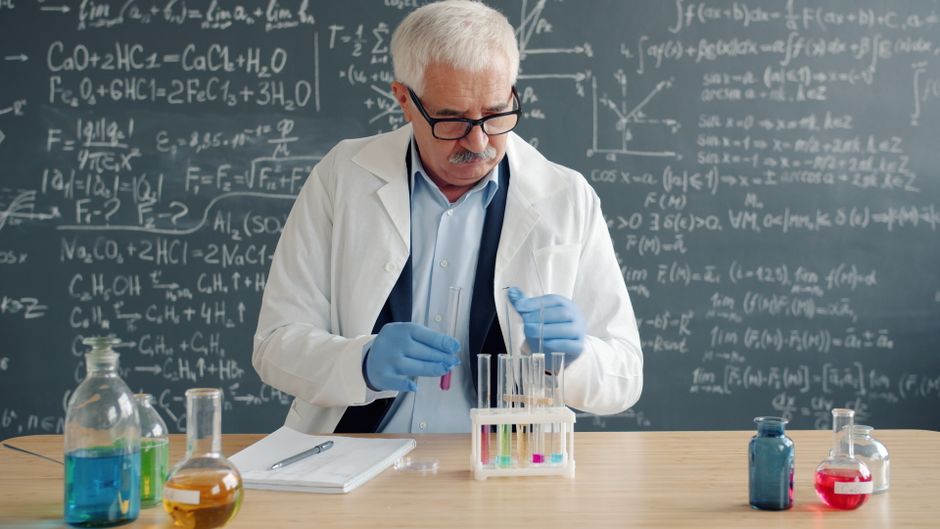
Photo by Vitaly Gariev on Pexels
Several factors can speed up or slow down a reaction:
- Concentration: More reactant particles in the same space mean more frequent collisions, leading to more successful reactions. Think of it like a crowded dance floor – more people, more bumping into each other.
- Temperature: Higher temperatures give particles more kinetic energy, making them move faster and collide more often and with greater force. This increases the chance of collisions having enough energy to overcome the activation energy.
- Surface Area: For solids, increasing the surface area (e.g., crushing a lump into powder) exposes more particles to react, leading to more frequent collisions.
- Pressure (for gases): Increasing the pressure of gases forces the particles closer together, increasing their concentration and thus collision frequency.
- Catalysts: A catalyst is a substance that speeds up a reaction without being used up itself. It does this by providing an alternative reaction pathway with a lower activation energy.
- Light: Some reactions are initiated or accelerated by light energy (photochemical reactions).
Energy Changes in Reactions

Photo by Jahra Tasfia Reza on Pexels
Chemical reactions involve breaking and forming bonds, which either absorb or release energy.
- Exothermic Reactions: These reactions release energy, usually as heat, to the surroundings. The products have lower energy than the reactants. You'd feel the reaction vessel get warm. Think of combustion or neutralization. The overall energy change ($\Delta H$) is negative.
- Endothermic Reactions: These reactions absorb energy, usually as heat, from the surroundings. The products have higher energy than the reactants. You'd feel the reaction vessel get cold. Think of dissolving ammonium nitrate in water or photosynthesis. The overall energy change ($\Delta H$) is positive.
Activation Energy ($E_a$)
Photo by Tara Winstead on Pexels
This is the minimum amount of energy that reacting particles must possess for a collision to result in a chemical reaction. Imagine two molecules needing to crash into each other hard enough to break their existing bonds and form new ones. If they just "nudge" each other, nothing happens. They need a forceful, energetic collision. Catalysts lower this activation energy hurdle, making it easier for reactions to occur.
graph TD
    A["Reactants (High Energy)"] --> B{{"Energy Input (Activation Energy $E_a$)"}};
    B --> C["Transition State (Highest Energy)"];
    C --> D["Products (Lower Energy)"];

    subgraph Exothermic Reaction
        D --"Energy Released"--> Heat["Surroundings (Heat Released)"];
    end

    style A fill:#f9f,stroke:#333,stroke-width:2px
    style D fill:#bbf,stroke:#333,stroke-width:2px
    style C fill:#afa,stroke:#333,stroke-width:2px
    style Heat fill:#fcc,stroke:#333,stroke-width:2px
3. Worked Example
Let's consider the decomposition of hydrogen peroxide ($H_2O_2$) into water ($H_2O$) and oxygen gas ($O_2$):
$2H_2O_2(aq) \rightarrow 2H_2O(l) + O_2(g)$
This reaction occurs naturally but very slowly.
- Observation: If you just leave a bottle of hydrogen peroxide open, it will slowly bubble as oxygen is released. The rate is very low.
- Adding a Catalyst: If you add a small amount of manganese(IV) oxide ($MnO_2$) or even a piece of potato (which contains the enzyme catalase), the reaction speeds up dramatically. You'll see vigorous fizzing as oxygen gas is rapidly produced.
- Why it works: The catalyst ($MnO_2$ or catalase) provides an alternative reaction pathway with a lower activation energy, allowing many more $H_2O_2$ molecules to react successfully at the same temperature, increasing the reaction rate. This reaction is exothermic – you might feel the test tube get slightly warmer as it proceeds quickly.
4. Key Takeaways
- Reaction rate is how fast reactants are consumed or products are formed.
- Higher concentration, temperature, surface area (for solids), and pressure (for gases) generally increase reaction rates.
- Catalysts speed up reactions by lowering the activation energy without being used up.
- Exothermic reactions release energy (get hot, negative $\Delta H$), while endothermic reactions absorb energy (get cold, positive $\Delta H$).
- Activation energy is the minimum energy needed for a reaction to occur.
Common Mistakes to Avoid:
* Confusing catalysts with reactants; catalysts aren't consumed.
* Thinking that all fast reactions are exothermic or all slow reactions are endothermic – energy change and rate are distinct concepts.
* Forgetting that activation energy is always required, even for very exothermic reactions.
* Mixing up the effects of concentration and surface area; they're similar but apply to different states of matter.
5. Now Try It
Take two effervescent (fizzing) tablets (like Alka-Seltzer). Place one whole tablet in a glass of room temperature water and time how long it takes to completely dissolve. For the second tablet, crush it into a powder and then add it to another glass of room temperature water, timing its dissolution. Compare the times and explain which factor influenced the reaction rate and why.
What success looks like: You should observe the crushed tablet dissolving much faster. Your explanation should correctly identify "surface area" as the influencing factor and describe how increasing it leads to more frequent successful collisions, thus increasing the reaction rate.
Frequently asked about Rates of Reaction and Energy Changes
Study this next
Get the full sec chemistry curriculum
Clone the complete plan to your dashboard for unlimited AI-generated notes, practice quizzes, and a personalised revision schedule.
Create Free Account