Electromagnetic Induction
From the CAPE physics kirchoff's law potential difference electromagnetism curriculum
TL;DR
Electromagnetic induction is how a changing magnetic field creates an electric current. This phenomenon is described by Faraday's Law, which relates the induced electromotive force (e.m.f.) to the rate of change of magnetic flux. Lenz's Law further explains the direction of this induced current, stating it will always oppose the change that caused it.
1. The Mental Model
Imagine you have a coil of wire. If you move a magnet near it, or change the strength of a magnetic field passing through it, an electric current will magically appear in the wire. This "magic" is electromagnetic induction: changing magnetism makes electricity.
2. The Core Material
What is Magnetic Flux?
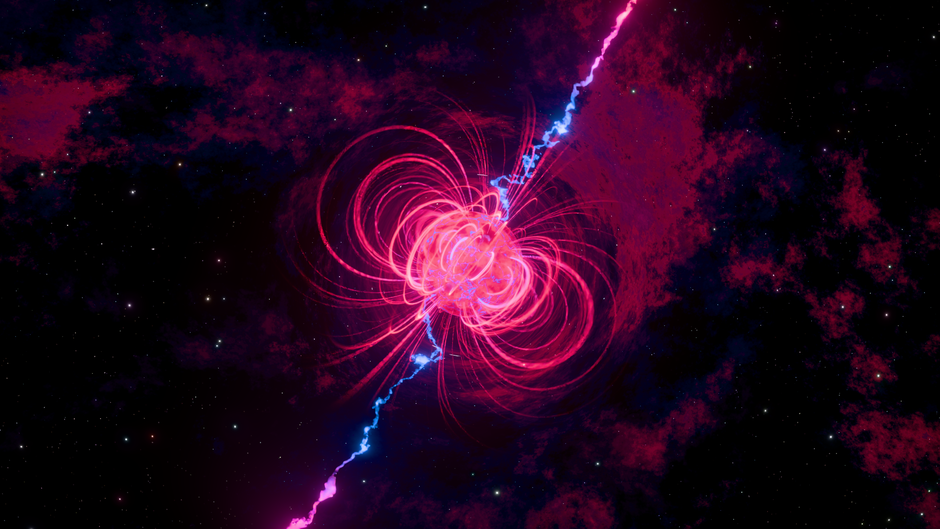
Photo by Nicola Narracci on Pexels
Before we talk about change, let's define magnetic flux ($\Phi_B$). It's a measure of the total number of magnetic field lines passing through a given area. Think of it as how much magnetic field "flows" through a loop.
$\Phi_B = B \cdot A \cdot \cos(\theta)$
Where:
* $B$ is the magnetic field strength (magnetic flux density) in Tesla (T).
* $A$ is the area through which the field lines pass, in square meters ($m^2$).
* $\theta$ is the angle between the magnetic field lines and the normal (a line perpendicular) to the area.
If the magnetic field is perpendicular to the area, $\cos(0^\circ) = 1$, so $\Phi_B = B \cdot A$. The unit for magnetic flux is the Weber (Wb).
Faraday's Law of Induction

Photo by Pixabay on Pexels
Faraday's Law is the core principle. It states that an electromotive force (e.m.f.) is induced in a conductor whenever the magnetic flux linking the conductor changes. The magnitude of this induced e.m.f. is directly proportional to the rate at which the magnetic flux changes.
$\mathcal{E} = -N \frac{\Delta\Phi_B}{\Delta t}$
Where:
* $\mathcal{E}$ is the induced e.m.f. in Volts (V).
* $N$ is the number of turns in the coil (if it's a coil).
* $\frac{\Delta\Phi_B}{\Delta t}$ is the rate of change of magnetic flux in Webers per second (Wb/s).
The negative sign? That's Lenz's Law in action!
Lenz's Law
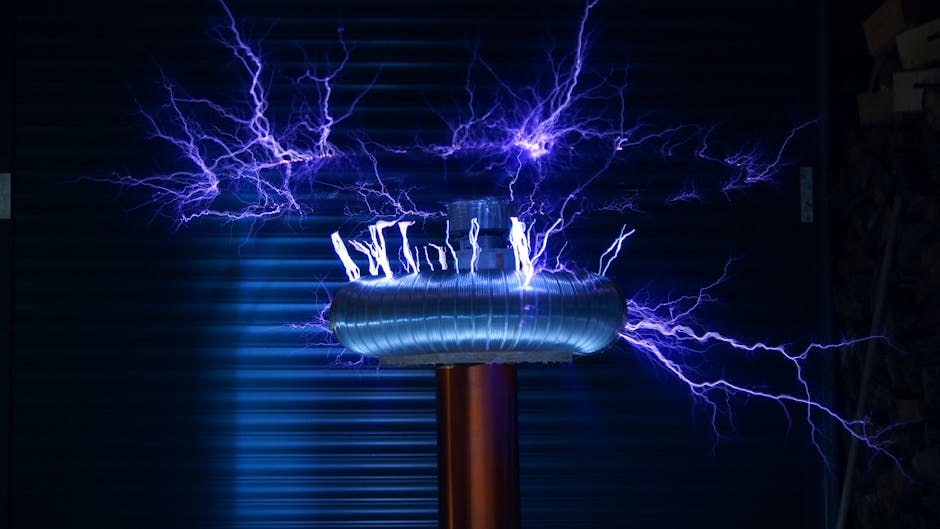
Photo by Killian Eon on Pexels
Lenz's Law tells us the direction of the induced current (and thus the induced e.m.f.). It states that the induced current will flow in a direction that creates a magnetic field that opposes the change in magnetic flux that produced it.
Think of it as nature's way of resisting change. If you try to increase the magnetic flux through a coil, the induced current will create a magnetic field that tries to decrease it. If you try to decrease the flux, the induced current will create a field that tries to increase it.
Here's how these concepts link together:
graph TD
    A["Change in Magnetic Field (B)"] --> B["Change in Magnetic Flux (Φ_B)"]
    B --> C["Induced e.m.f. (Faraday's Law)"]
    C --> D{"Is the circuit closed?"}
    D -- Yes --> E["Induced Current (I)"]
    D -- No --> F["No Current"]
    E --> G["Induced Magnetic Field"]
    G --> H["Opposes Original Change (Lenz's Law)"]
Factors Affecting Induced e.m.f.

Photo by Pixabay on Pexels
From Faraday's Law, you can see that a larger induced e.m.f. will occur if:
* The rate of change of magnetic flux is greater (i.e., you move the magnet faster, or change the field more quickly).
* The number of turns in the coil ($N$) is greater.
* The strength of the magnetic field ($B$) is greater.
* The area ($A$) of the coil is larger.
3. Worked Example
Imagine a coil with 50 turns and a cross-sectional area of $0.02 \ m^2$. A magnetic field of $0.5 \ T$ passes perpendicularly through the coil. The field is then uniformly reduced to $0.1 \ T$ in $0.1 \ s$. Calculate the induced e.m.f.
-
Initial Magnetic Flux ($\Phi_{B1}$):
Since the field is perpendicular, $\cos(\theta) = \cos(0^\circ) = 1$.
$\Phi_{B1} = B_1 \cdot A = 0.5 \ T \cdot 0.02 \ m^2 = 0.01 \ Wb$ -
Final Magnetic Flux ($\Phi_{B2}$):
$\Phi_{B2} = B_2 \cdot A = 0.1 \ T \cdot 0.02 \ m^2 = 0.002 \ Wb$ -
Change in Magnetic Flux ($\Delta\Phi_B$):
$\Delta\Phi_B = \Phi_{B2} - \Phi_{B1} = 0.002 \ Wb - 0.01 \ Wb = -0.008 \ Wb$ -
Time taken ($\Delta t$):
$\Delta t = 0.1 \ s$ -
Calculate Induced e.m.f. ($\mathcal{E}$):
$\mathcal{E} = -N \frac{\Delta\Phi_B}{\Delta t} = -50 \times \frac{-0.008 \ Wb}{0.1 \ s}$
$\mathcal{E} = -50 \times (-0.08 \ V)$
$\mathcal{E} = 4 \ V$
The induced e.m.f. is $4 \ V$. The positive sign indicates its direction relative to the initial flux decrease, but the magnitude is what we're usually most interested in.
4. Key Takeaways
- Magnetic flux is the amount of magnetic field passing through an area, measured in Webers.
- Faraday's Law states that a changing magnetic flux induces an electromotive force (e.m.f.).
- The magnitude of the induced e.m.f. is proportional to the rate of change of magnetic flux and the number of turns in the coil.
- Lenz's Law dictates that the induced current will create a magnetic field that opposes the change in flux that caused it.
- Moving a magnet near a coil or changing the current in a nearby coil are common ways to induce an e.m.f.
- The faster the change in flux, the greater the induced e.m.f.
Common Mistakes to Avoid:
* Forgetting the number of turns ($N$) in Faraday's Law.
* Confusing magnetic field ($B$) with magnetic flux ($\Phi_B$).
* Ignoring Lenz's Law and the direction of the induced current; it's always about opposing the change.
* Not ensuring consistent units (e.g., area in $m^2$, time in $s$).
5. Now Try It
You have a single loop of wire (N=1) with an area of $0.05 \ m^2$. A uniform magnetic field perpendicular to the loop changes from $0.8 \ T$ to $0.2 \ T$ in $0.5 \ s$. Calculate the magnitude of the induced e.m.f. What would happen if the field increased from $0.2 \ T$ to $0.8 \ T$ in the same time?
Frequently asked about Electromagnetic Induction
Study this next
Get the full CAPE physics kirchoff's law potential difference electromagnetism curriculum
Clone the complete plan to your dashboard for unlimited AI-generated notes, practice quizzes, and a personalised revision schedule.
Save this course free