Electromagnetic Devices and Applications
From the CAPE physics kirchoff's law potential difference electromagnetism curriculum
TL;DR
Electromagnetic devices use the interaction between electricity and magnetism to convert energy, like in motors (electrical to mechanical) and generators (mechanical to electrical), or to transmit information. Transformers efficiently change AC voltage levels using electromagnetic induction, and relays act as electrically controlled switches. These principles are fundamental to almost all modern technology.
1. The Mental Model
Think of electromagnetism as a two-way street: electricity can create magnetism, and magnetism can create electricity. Devices leverage this fundamental relationship to make things move, generate power, or send signals.
2. The Core Material
Electromagnetic devices are all around us, from tiny cell phone components to massive power plant equipment. They fundamentally rely on two key principles:
- A current-carrying wire produces a magnetic field. (This is the basis for electromagnets, motors, and relays.)
- A changing magnetic field induces an electromotive force (e.m.f.) in a conductor. (This is Faraday's Law, the basis for generators and transformers.)
Electric Motors
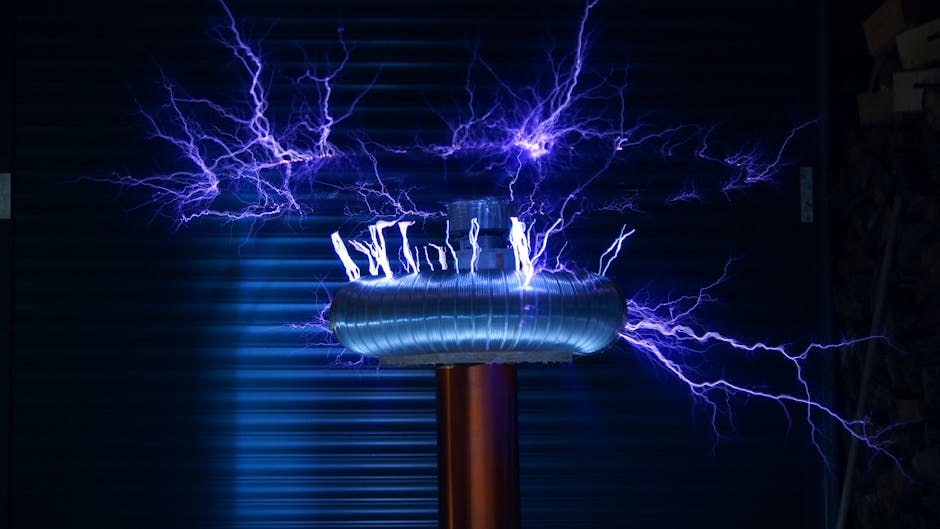
Photo by Killian Eon on Pexels
An electric motor converts electrical energy into mechanical energy. It works because a current-carrying coil placed in a magnetic field experiences a force (Lorentz force). By continually reversing the direction of the current in the coil (using a commutator for DC motors or the alternating nature of AC for AC motors), the direction of the force keeps the coil rotating.
Electric Generators
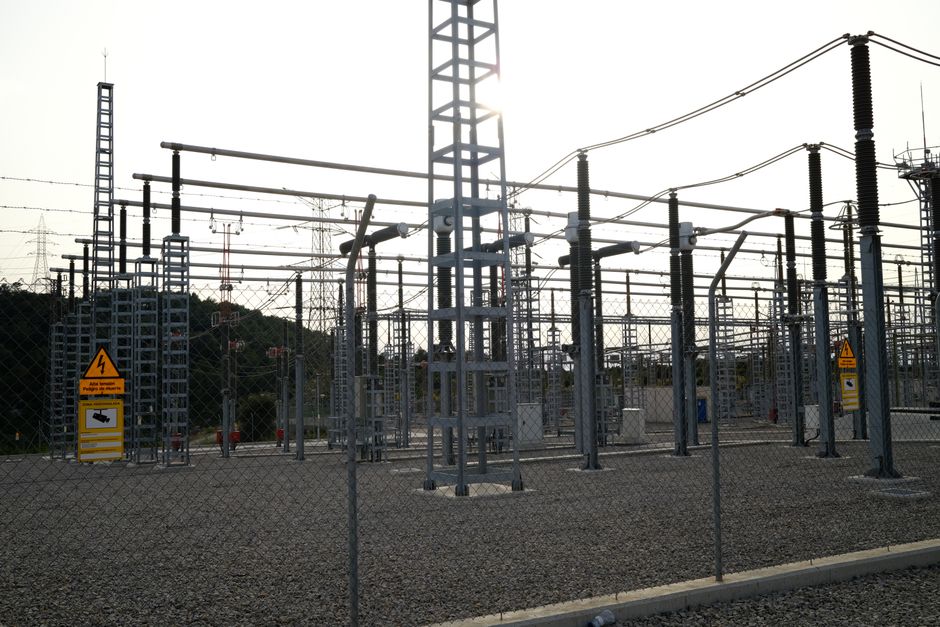
Photo by Enric Cruz López on Pexels
A generator does the opposite of a motor: it converts mechanical energy into electrical energy. When a coil rotates within a magnetic field, the magnetic flux through the coil changes, inducing an e.m.f. (and thus a current if the circuit is closed). The direction of the induced current reverses as the coil rotates, producing alternating current (AC).
Transformers
Transformers are crucial for transmitting electricity efficiently. They use electromagnetic induction to change AC voltage levels (step-up or step-down) without significant power loss. A changing current in the primary coil creates a changing magnetic field that passes through a soft iron core to the secondary coil, inducing an e.m.f. in the secondary coil. The ratio of turns in the coils determines the voltage change.
Relays
An electromagnetic relay is essentially an electrically operated switch. A small current through a coil creates an electromagnet, which then attracts a movable armature, closing or opening a separate set of contacts. This allows a low-power circuit to control a high-power circuit safely.
graph TD
    A["Electrical Energy In (e.g., from battery)"] --> B{Coil in Magnetic Field};
    B --> C["Current in Coil Creates Magnetic Field"];
    C --> D["Magnetic Field Interacts with Permanent Magnet's Field"];
    D --> E["Force on Coil (Lorentz Force)"];
    E --> F["Coil Rotates (Mechanical Energy Out)"];
    F --> G{"Commutator/AC Supply Reverses Current"};
    G --> C;
3. Worked Example
Let's consider a step-down transformer used to convert a mains voltage of 240 V AC to 12 V AC for a small electronic device. If the primary coil has 2000 turns:
To find the number of turns needed in the secondary coil, we use the transformer equation:
$ \frac{V_p}{V_s} = \frac{N_p}{N_s} $
Where:
$V_p$ = primary voltage = 240 V
$V_s$ = secondary voltage = 12 V
$N_p$ = primary turns = 2000 turns
$N_s$ = secondary turns = ?
Rearranging to solve for $N_s$:
$ N_s = N_p \times \frac{V_s}{V_p} $
$ N_s = 2000 \times \frac{12 \text{ V}}{240 \text{ V}} $
$ N_s = 2000 \times \frac{1}{20} $
$ N_s = 100 \text{ turns} $
So, the secondary coil needs to have 100 turns.
4. Key Takeaways
- Electric motors convert electrical energy into mechanical energy using the force on a current-carrying conductor in a magnetic field.
- Electric generators convert mechanical energy into electrical energy by inducing an e.m.f. from a changing magnetic flux.
- Transformers efficiently change AC voltage levels based on the turns ratio of their primary and secondary coils.
- Relays are electrically operated switches, using a small current to control a larger current.
- The principle of electromagnetic induction (Faraday's Law) is fundamental to generators and transformers.
- The Lorentz force on current-carrying wires in a magnetic field is key to motors.
Common Mistakes to Avoid:
- Don't confuse motors (electrical to mechanical) with generators (mechanical to electrical).
- Remember transformers only work with AC, not DC, because they rely on a changing magnetic field.
- Don't forget that step-up transformers increase voltage but decrease current (and vice-versa) to conserve power.
- Don't assume a transformer creates energy; it simply transforms it.
5. Now Try It
Imagine you need to design a simple relay circuit. You have a 9 V battery, a small coil, and you want to use it to switch on a 24 V lamp (which requires its own 24 V power supply). Draw a simple circuit diagram showing how you would connect the coil, the 9 V battery, the lamp, and the 24 V power supply to make this work. Label the main components and show the current paths for both the control and switched circuits.
What success looks like: You've drawn two distinct circuits (control and switched) with the relay's coil in the 9V circuit and the relay's contacts in the 24V lamp circuit, showing how the 9V current energises the coil to close the contacts and light the lamp.
Frequently asked about Electromagnetic Devices and Applications
Study this next
Get the full CAPE physics kirchoff's law potential difference electromagnetism curriculum
Clone the complete plan to your dashboard for unlimited AI-generated notes, practice quizzes, and a personalised revision schedule.
Save this course free