Introduction to Electromagnetism
From the CAPE physics kirchoff's law potential difference electromagnetism curriculum
TL;DR
Electromagnetism explains how electricity and magnetism are fundamentally linked, showing that changing electric fields produce magnetic fields and vice versa. This interaction is described by forces on charges and currents, leading to many technologies. Understanding these concepts helps you grasp how devices like motors and generators work.
1. The Mental Model
Think of electricity and magnetism not as separate phenomena, but as two sides of the same coin. When you move an electric charge, it creates a magnetic effect, and when a magnetic field changes, it can influence electric charges. They're intertwined, constantly affecting each other.
2. The Core Material
Electromagnetism is the study of the interaction between electric currents (moving charges) and magnetic fields. It unifies electricity and magnetism into a single theory.
2.1 Electric Current and Magnetic Fields
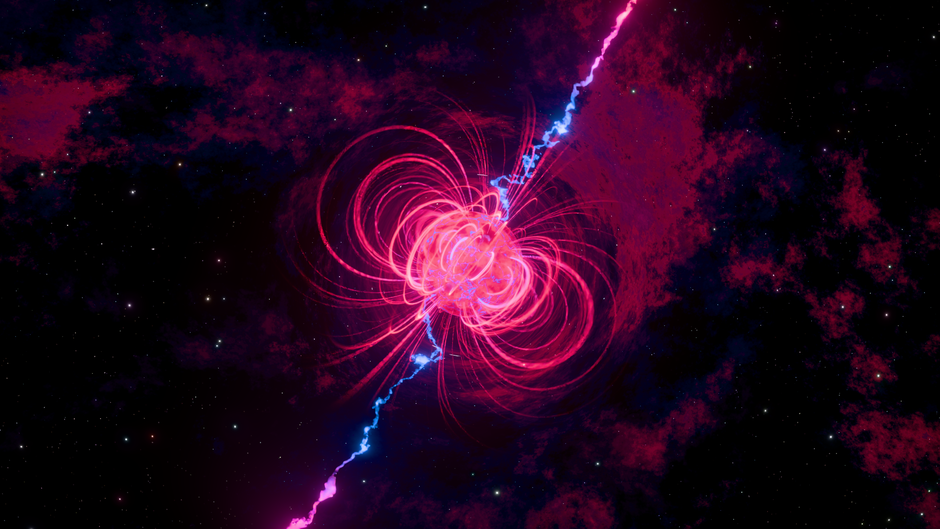
Photo by Nicola Narracci on Pexels
A fundamental principle is that moving electric charges create magnetic fields.
* Current in a straight wire: Produces a circular magnetic field around the wire. You can determine the direction of this field using the right-hand grip rule: point your right thumb in the direction of conventional current (positive charge flow), and your fingers will curl in the direction of the magnetic field lines.
* Current in a coil (solenoid): Creates a magnetic field similar to that of a bar magnet. The strength of the field inside the coil is proportional to the current and the number of turns per unit length. You can use the right-hand grip rule here too: curl your fingers in the direction of the current flow around the coil, and your thumb points towards the North pole of the induced magnetic field.
2.2 Magnetic Force on a Current-Carrying Conductor

Photo by Nicola Narracci on Pexels
When a current-carrying wire is placed in an external magnetic field, it experiences a force. This is the basis of electric motors.
* The direction of this force is given by Fleming's Left-Hand Rule:
* Thumb: Direction of Force (Motion)
* Forefinger: Direction of Magnetic Field (North to South)
* Middle Finger: Direction of Current (Positive to Negative)
* The magnitude of the force ($F$) is given by $F = BIL \sin\theta$, where:
* $B$ is the magnetic field strength (magnetic flux density) in Tesla (T).
* $I$ is the current in Amperes (A).
* $L$ is the length of the conductor in the field in meters (m).
* $\theta$ is the angle between the current direction and the magnetic field direction. The force is maximum when $\theta = 90^\circ$ ($\sin 90^\circ = 1$) and zero when $\theta = 0^\circ$ or $180^\circ$ ($\sin 0^\circ = 0$).
2.3 Magnetic Force on a Moving Charge
Photo by Nicola Narracci on Pexels
A charged particle moving through a magnetic field also experiences a force. This is related to the force on a current-carrying wire, as current is simply a flow of charges.
* The magnitude of the force ($F$) on a single charge is $F = qvB \sin\theta$, where:
* $q$ is the magnitude of the charge in Coulombs (C).
* $v$ is the velocity of the charge in meters per second (m/s).
* $B$ is the magnetic field strength in Tesla (T).
* $\theta$ is the angle between the velocity vector and the magnetic field vector.
* The direction of the force is again given by Fleming's Left-Hand Rule (for positive charges) or the right-hand rule (for positive charges, thumb points to velocity, fingers point to field, palm points to force). For negative charges, the force direction is opposite.
Here's how these concepts link:
graph TD
    A["Electric Current (Moving Charges)"] --> B["Creates Magnetic Field"]
    B --> C["Exerts Force on Other Moving Charges/Currents"]
    D["Changing Magnetic Field"] --> E["Induces Electric Field (and Current)"]
    E --> A
2.4 Applications of Electromagnetism
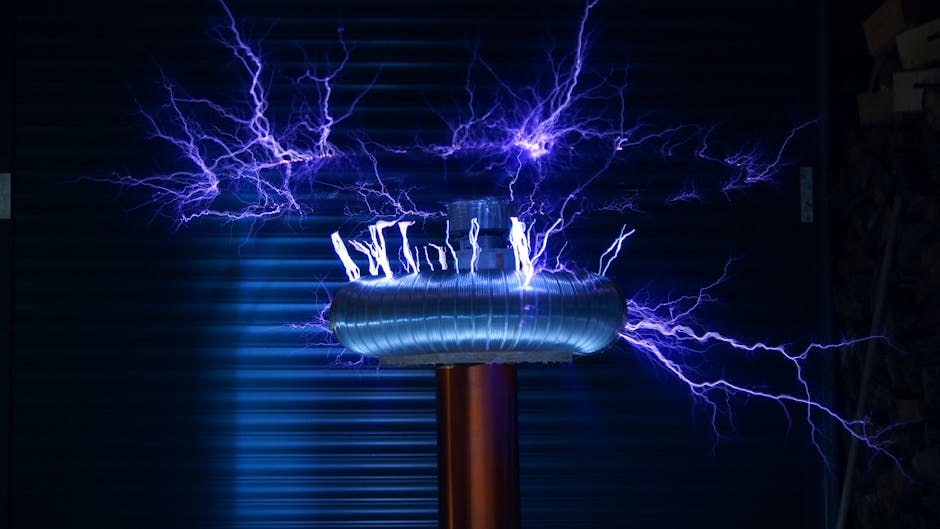
Photo by Killian Eon on Pexels
- Electric Motors: Convert electrical energy into mechanical energy using the force on a current-carrying wire in a magnetic field.
- Generators: Convert mechanical energy into electrical energy based on electromagnetic induction (the reverse of motors).
- Transformers: Use changing magnetic fields to change voltage levels in AC circuits.
- Speakers: Use the force on a current coil in a magnetic field to produce sound.
3. Worked Example
A straight wire 0.5 m long carries a current of 2.0 A perpendicular to a uniform magnetic field of 0.4 T. Calculate the magnetic force acting on the wire.
Given:
* Length of wire, $L = 0.5$ m
* Current, $I = 2.0$ A
* Magnetic field strength, $B = 0.4$ T
* Angle, $\theta = 90^\circ$ (since the current is perpendicular to the field)
Formula: $F = BIL \sin\theta$
Calculation:
$F = (0.4 \text{ T}) \times (2.0 \text{ A}) \times (0.5 \text{ m}) \times \sin(90^\circ)$
$F = 0.4 \times 2.0 \times 0.5 \times 1$
$F = 0.4 \text{ N}$
The magnetic force acting on the wire is 0.4 Newtons. The direction would be determined by Fleming's Left-Hand Rule.
4. Key Takeaways
- Moving electric charges (currents) always produce magnetic fields.
- Magnetic fields exert a force on moving charges and current-carrying conductors.
- Fleming's Left-Hand Rule helps determine the direction of force on a current in a magnetic field.
- The magnitude of the force on a current-carrying wire is $F = BIL \sin\theta$.
- The magnitude of the force on a moving charge is $F = qvB \sin\theta$.
- Electromagnetism is the foundation for technologies like motors, generators, and transformers.
Common Mistakes to Avoid:
- Mixing up Fleming's Left-Hand Rule (motor effect/force) with Fleming's Right-Hand Rule (generator effect/induction).
- Forgetting that the force is zero if the charge/current moves parallel to the magnetic field.
- Incorrectly applying the right-hand grip rule for field direction around a wire or coil.
- Not converting units (e.g., length in cm) to SI units before calculation.
5. Now Try It
Imagine you have an electron ($q = -1.6 \times 10^{-19}$ C) moving at a speed of $3.0 \times 10^6$ m/s horizontally to the East. It enters a uniform magnetic field of 0.5 T directed vertically downwards. Calculate the magnitude of the magnetic force acting on the electron and determine its direction. You'll need to remember that for a negative charge, the force is opposite to what Fleming's Left-Hand Rule predicts for a positive charge. What will happen to the electron's path?
Frequently asked about Introduction to Electromagnetism
Study this next
Get the full CAPE physics kirchoff's law potential difference electromagnetism curriculum
Clone the complete plan to your dashboard for unlimited AI-generated notes, practice quizzes, and a personalised revision schedule.
Save this course free