Introduction to Historical Study and Ancient Civilizations
From the history curriculum
TL;DR
Studying history means understanding the past using evidence to explain why things happened, not just what happened. It involves critically analyzing primary and secondary sources to build a narrative. Ancient civilizations laid foundations for many aspects of our modern world, from writing to law.
1. The Mental Model
Think of a historian as a detective: you're given clues (evidence) and you need to piece together a coherent story that explains a past event or period. You're not just reporting facts; you're interpreting them to understand human actions and their consequences.
2. The Core Material
What is History?

Photo by Ann H on Pexels
History isn't just a collection of dates and names. It's the study of change over time. Historians try to understand the human experience by examining past events, societies, cultures, and individuals. It's about asking "why?" and "how?" as much as "what?" and "when?".
Primary vs. Secondary Sources

Photo by RDNE Stock project on Pexels
Understanding these two types of sources is crucial:
* Primary Sources: These are first-hand accounts or original materials from the time period being studied. Think diaries, letters, government records, artifacts, photographs, or eyewitness testimonies. They offer direct evidence.
* Secondary Sources: These are interpretations or analyses of primary sources, created after the event by someone who didn't experience it directly. Examples include textbooks, scholarly articles, biographies, or documentaries. They provide context and broader perspectives.
You need to evaluate both types for their reliability, bias, and context.
The Historian's Process

Photo by Tima Miroshnichenko on Pexels
Historians follow a general process to construct historical narratives:
graph TD
    A["Identify Research Question"] --> B["Locate & Gather Sources"];
    B --> C["Analyze & Evaluate Sources"];
    C --> D["Formulate Argument/Thesis"];
    D --> E["Construct Narrative/Explanation"];
    E --> F["Review & Refine"];
    F --> G["Share Findings"];
Why Study Ancient Civilizations?
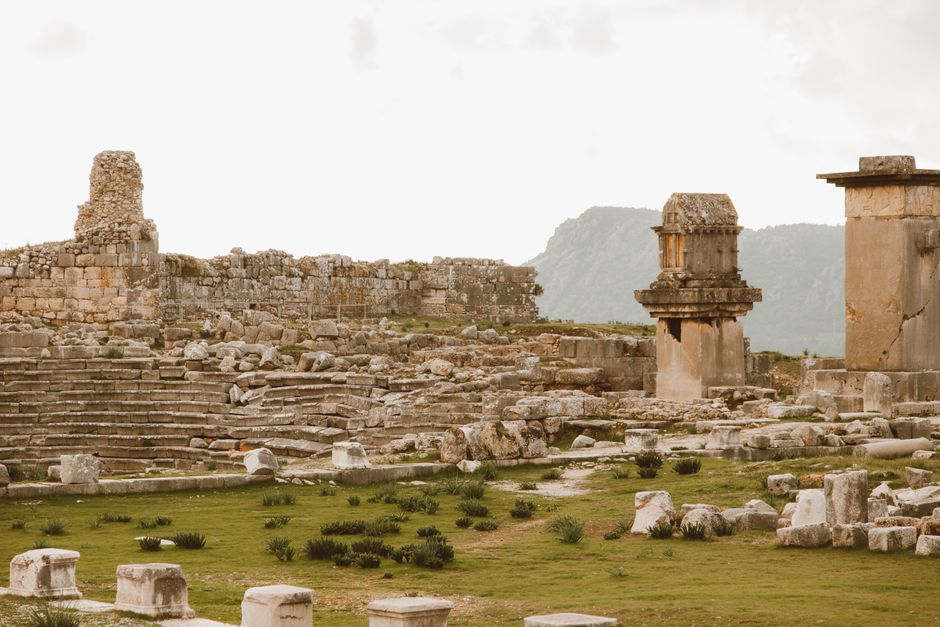
Photo by ROMAN ODINTSOV on Pexels
Ancient civilizations (like Mesopotamia, Egypt, Indus Valley, China, Mesoamerica) are important because they developed many foundational elements of human society we still use today. These include:
* Writing Systems: Cuneiform, hieroglyphs.
* Organized Governments & Laws: Hammurabi's Code.
* Agriculture & Urban Planning: Cities like Ur, Mohenjo-Daro.
* Science & Mathematics: Astronomy, geometry, basic medicine.
* Art, Architecture, & Religion: Pyramids, ziggurats, early belief systems.
Studying them helps us understand the roots of our present world and appreciate the long human journey of innovation and societal development.
3. Worked Example
Let's say you're researching daily life in ancient Egypt.
- Identify Question: "What was a typical day like for a common farmer in the New Kingdom?"
- Sources: You'd look for primary sources like hieroglyphic inscriptions describing farming tasks, archaeological finds of farming tools, or depictions on tomb walls. For secondary sources, you'd consult books by Egyptologists interpreting these finds.
- Analyze: You find an inscription detailing seasonal agricultural work. You also find a secondary source discussing crop rotation based on multiple primary texts. You compare these.
- Argument: You might argue that "A farmer's day was dictated by the agricultural calendar and the Nile's flooding, involving tasks like plowing, sowing, and harvesting, with family labor being central."
- Narrative: You then build a description of their day, weaving together the details from your sources.
4. Key Takeaways
- History is about understanding change over time and the causes behind events.
- Primary sources are direct evidence, while secondary sources are interpretations of that evidence.
- Always critically evaluate sources for bias, reliability, and context.
- Ancient civilizations developed crucial innovations like writing, law, and organized government.
- Studying ancient societies provides context for understanding modern global structures.
- Historians act like detectives, piecing together evidence to form coherent narratives.
Common Mistakes to Avoid:
* Treating all sources as equally reliable; always question where information comes from.
* Assuming history is just memorizing dates; it's about interpretation and analysis.
* Applying modern values or ideas directly to ancient societies without understanding their context.
* Ignoring the "why" and "how" questions, and only focusing on the "what."
5. Now Try It
Choose one ancient civilization (e.g., Roman, Greek, Maya, Mesopotamian). Spend 15 minutes researching a specific aspect you find interesting (e.g., their government structure, a specific invention, their religious beliefs). Identify at least one primary source (even if it's an image of an artifact) and one secondary source that describes it. What can you learn from each, and how do they complement or challenge each other?
Frequently asked about Introduction to Historical Study and Ancient Civilizations
Study this next
Get the full history curriculum
Clone the complete plan to your dashboard for unlimited AI-generated notes, practice quizzes, and a personalised revision schedule.
Save this course free