Foundations: Prehistory to Ancient Civilizations
From the complete world history curriculum
TL;DR
You'll learn how early humans developed from simple tool-users to complex urban societies. This journey covers vast periods, marked by key innovations like agriculture and writing. Understanding this foundation helps you grasp the roots of modern civilization.
1. The Mental Model
Think of human history as a building being constructed. Prehistory is the groundwork and foundations, while ancient civilizations are the initial, grand structures built upon them. Each step builds on the last, adding complexity and sophistication.
2. The Core Material
You're diving into the longest period of human history. It stretches from the appearance of early humans millions of years ago up to about 500 CE (Common Era). We break this into two main parts: Prehistory and Ancient Civilizations.
Prehistory: The Long Beginning
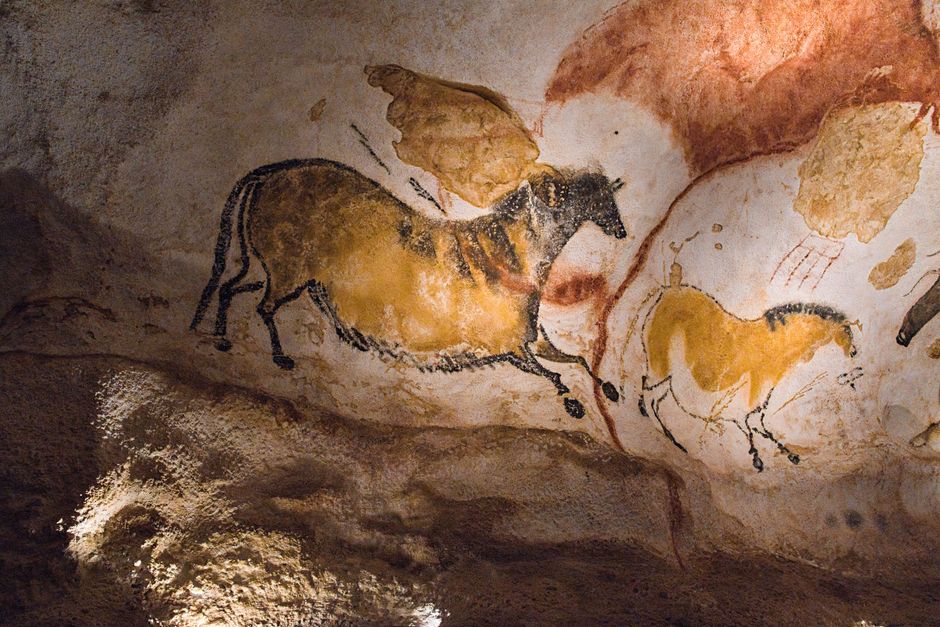
Photo by Reinhard Bruckner on Pexels
Prehistory is the time before written records. We learn about it through archaeology (studying artifacts) and anthropology (studying human culture and development).
The Stone Age (Paleolithic, Mesolithic, Neolithic)
This incredibly long period is defined by the tools humans used.
- Paleolithic (Old Stone Age): Roughly 2.5 million years ago to 10,000 BCE.
- Humans were nomadic hunter-gatherers, constantly moving to find food.
- Simple stone tools (choppers, hand axes), use of fire, cave art, development of spoken language.
- Small, egalitarian (relatively equal) social groups.
- Mesolithic (Middle Stone Age): Around 10,000 BCE to 8,000 BCE.
- Transitional period as ice ages ended.
- More refined stone tools (microliths), specialized hunting, beginning of settled camps.
- Neolithic (New Stone Age): Approximately 8,000 BCE to 3,000 BCE.
- Agricultural Revolution: The monumental shift from hunting/gathering to farming and domestication of animals. This is the single most important event in prehistory.
- Led to sedentism (permanent settlements), population growth, more complex social structures, new tools (plow, pottery).
- Early villages and towns emerged.
Rise of Metal Ages (Chalcolithic, Bronze, Iron)
As metalworking developed, tools became stronger and more versatile.
- Chalcolithic (Copper Age): Copper tools alongside stone.
- Bronze Age (c. 3300-1200 BCE): Bronze (copper + tin alloy) allowed for stronger tools and weapons. Rise of early city-states and kingdoms.
- Iron Age (c. 1200 BCE onwards): Iron became the dominant metal, leading to even more widespread use of metal tools due to iron's abundance.
Ancient Civilizations: The Dawn of Complex Societies
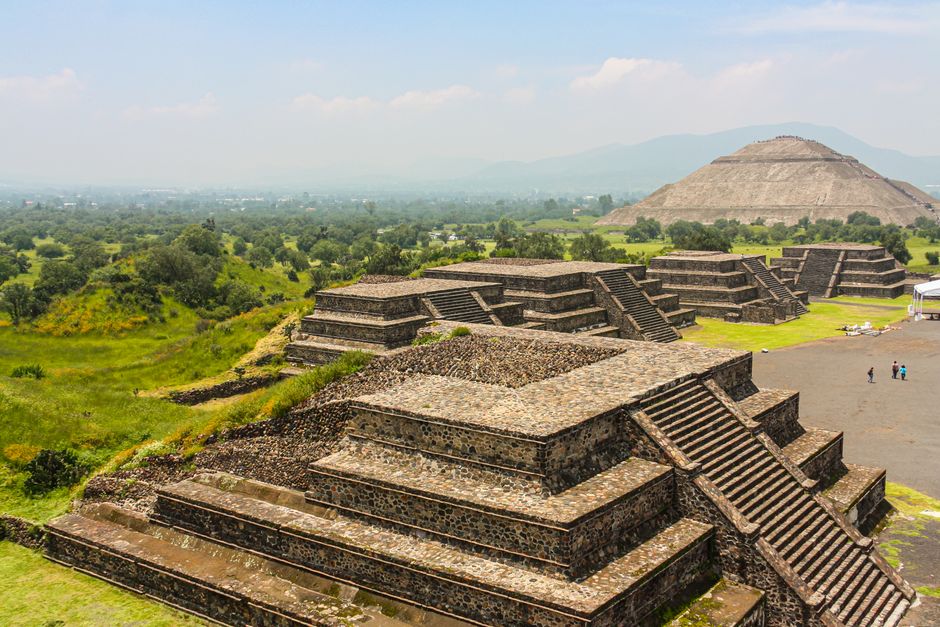
Photo by Maciej Cisowski on Pexels
A civilization is a complex society characterized by cities, organized government, job specialization, social hierarchy, public works, and often, written language. They typically emerged in river valleys.
Key Characteristics of Ancient Civilizations
- Cities: Large, dense populations.
- Organized Government: Centralized authority (kings, pharaohs).
- Job Specialization: People did specific jobs (farmers, artisans, priests, soldiers).
- Social Hierarchy: Clear class distinctions (rulers, nobles, commoners, slaves).
- Public Works: Large-scale projects (irrigation systems, temples, defensive walls).
- Writing: Record-keeping, literature, laws.
- Art and Architecture: Monumental structures, complex artistic expressions.
Major Early Civilizations:
graph TD
    A["Pre-Neolithic (Hunter-Gatherers)"] --> B["Neolithic Revolution (Farming)"]
    B --> C["Surplus Food & Population Growth"]
    C --> D["Job Specialization (Not everyone farms)"]
    D --> E["Development of Villages & Towns"]
    E --> F["Need for Organization & Management"]
    F --> G["Emergence of Government & Laws"]
    G --> H["Large-Scale Public Works (Irrigation, Temples)"]
    H --> I["Writing & Record Keeping"]
    I --> J["Social Stratification (Classes)"]
    J --> K["Urbanization (Cities)"]
    K --> L["Ancient Civilizations"]
- Mesopotamia (Fertile Crescent, between Tigris & Euphrates rivers):
- Sumerians, Akkadians, Babylonians, Assyrians.
- First cities (Ur, Uruk), cuneiform writing, ziggurats, Code of Hammurabi.
- Ancient Egypt (Nile River Valley):
- Pharaohs, hieroglyphics, pyramids, advanced astronomy and medicine, belief in afterlife.
- Indus Valley Civilization (Indus River Valley):
- Harappa, Mohenjo-Daro.
- Urban planning (grid-like cities), sophisticated drainage, undeciphered writing.
- Ancient China (Yellow and Yangtze River valleys):
- Shang Dynasty (first verified), oracle bones, bronze metallurgy, Mandate of Heaven concept.
These civilizations developed independently but sometimes interacted through trade, migration, and conflict, leading to cultural exchange and innovation.
3. Worked Example
Let's look at the Neolithic Revolution as a turning point.
Before (Paleolithic): You're part of a small band of 30 hunter-gatherers, constantly migrating. You spend most of your day finding food—berries, roots, hunting animals. You have few possessions because you can't carry much. Your social structure is simple; leadership might be informal. Life expectancy is short, and disease can wipe out entire bands. There's no permanent shelter or concept of fixed land ownership.
After (Neolithic/Early Civilization): Your ancestors discovered farming. Now, you live in a village of 500 people. You might not even be a farmer; perhaps you're a potter making storage jars for the surplus grain, or a weaver. Food is stored, so you have more security. You live in a mud-brick house that your family owns. There's a village chief who settles disputes and organizes communal work, like building an irrigation ditch. Life is more settled, but also more complex, with laws, property, and clearer social roles. Disease can spread faster in dense populations, but there's also more innovation.
4. Key Takeaways
- Prehistory is the vast period before written records, understood through archaeological finds.
- The Neolithic Revolution (adoption of farming) was history's most critical turning point, leading to sedentary life and population growth.
- Ancient Civilizations are defined by key characteristics like cities, organized government, writing, and social hierarchies.
- Major early civilizations arose in river valleys (Nile, Tigris/Euphrates, Indus, Yellow) due to fertile land and water for irrigation.
- The shift from small, nomadic hunter-gatherer bands to large, complex urban societies was gradual but transformative.
- Metalworking, starting with copper and then bronze and iron, significantly advanced tool technology and societal complexity.
- No single factor caused civilization; it was a complex interplay of environmental factors, technological innovation, and social organization.
Common Mistakes to Avoid:
- Don't assume all early humans lived exactly the same way across all regions; cultural diversity was always present.
- Don't confuse "prehistory" with "primitive" in a derogatory sense; early humans were incredibly ingenious.
- Avoid thinking of history as a linear march of progress; there were setbacks, collapses, and regional variations.
- Don't underestimate the sheer amount of time involved; the Paleolithic alone spans millions of years.
5. Now Try It
Imagine you are an archaeologist uncovering a new site. Based on the artifacts you find—a polished stone axe, a fragment of pottery, and evidence of a permanent hearth—would you classify this site as primarily Paleolithic, Mesolithic, or Neolithic? Explain why, focusing on which artifact(s) indicate your answer and what that period signifies for human development. Success means you can clearly link the artifacts to a specific Stone Age period and explain what that period represents in terms of human lifestyle.
Frequently asked about Foundations: Prehistory to Ancient Civilizations
Study this next
Get the full complete world history curriculum
Clone the complete plan to your dashboard for unlimited AI-generated notes, practice quizzes, and a personalised revision schedule.
Save this course free