Ancient Civilizations: Foundations of Society
From the history curriculum
Ancient Civilizations: Foundations of Society
TL;DR
Ancient civilizations developed complex societies with organized structures, often emerging from agricultural advancements. These early societies laid the groundwork for many aspects of our modern world. You'll see how things like government, writing, and cities first took shape.
1. The Mental Model
Think of ancient civilizations as giant puzzle boxes where each piece – like farming, leadership, or religion – had to fit together perfectly for the whole society to function and grow. Each new innovation changed how people lived, worked, and interacted, leading to more complex ways of organizing themselves.
2. The Core Material
Ancient civilizations weren't just big groups of people; they were sophisticated societies that shared key characteristics. These characteristics developed over thousands of years, primarily driven by the Neolithic Revolution.
2.1 The Neolithic Revolution: The Starting Point

Photo by Sami Aksu on Pexels
Before about 10,000 BCE, most humans were nomadic hunter-gatherers. They moved constantly, following food sources. The Neolithic Revolution marked a huge shift: the development of agriculture (farming and animal domestication). This change was revolutionary because:
- Sedentary Lifestyle: People no longer needed to move; they could stay in one place to tend crops and animals.
- Food Surplus: Farming often produced more food than immediately needed, leading to a surplus.
- Population Growth: A stable food supply supported larger populations.
These three factors created the conditions necessary for civilizations to emerge.
2.2 Key Characteristics of Civilizations
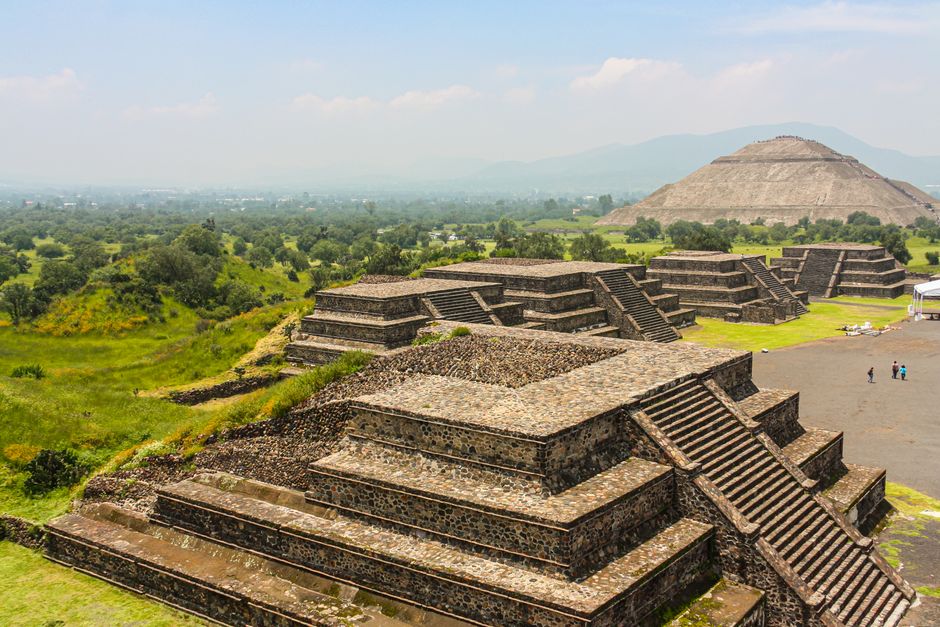
Photo by Maciej Cisowski on Pexels
Once agriculture allowed for settled life and food surpluses, societies started to develop more complex features. Here are the main ones:
- Large Cities: Settlements grew into urban centers, distinct from rural agricultural areas. These cities became hubs for trade, religion, and government.
- Organized Government: With more people and resources, a system was needed to manage things like irrigation, defense, and justice. This led to kings, pharaohs, and other forms of centralized authority.
- Complex Religions: Belief systems became more elaborate, often involving priests, temples, and rituals to explain the world and ensure prosperity.
- Job Specialization: Not everyone needed to farm. Food surpluses allowed some people to become artisans (potters, weavers, metalworkers), scribes, soldiers, or priests.
- Social Hierarchy: As jobs specialized, societies developed distinct social classes. Rulers, priests, and nobles were often at the top, while farmers and laborers were at the bottom.
- Public Works: Governments organized large-scale projects like irrigation systems, roads, temples, and defensive walls.
- Writing and Record-Keeping: To manage complex economies, laws, and history, systems of writing developed (e.g., cuneiform, hieroglyphics).
- Art and Architecture: Civilizations produced monumental art and architecture, often for religious or governmental purposes, showcasing their power and beliefs.
These characteristics often developed in a cause-and-effect chain. Here's a simplified view of that progression:
graph TD
    A["Nomadic Hunter-Gatherers"] --> B["Development of Agriculture"]
    B --> C["Sedentary Lifestyle & Food Surplus"]
    C --> D["Population Growth"]
    D --> E["Emergence of Villages & Towns"]
    E --> F{"Need for Organization & Management"}
    F --> G["Development of Organized Government"]
    F --> H["Job Specialization (not everyone farms)"]
    G --> I["Public Works & Defense"]
    H --> J["Social Hierarchy"]
    H --> K["Complex Religions"]
    K --> L["Art & Architecture"]
    J --> L
    G --> M["Writing & Record-Keeping"]
    E --> N["Growth into Large Cities"]
    M --> N
2.3 Major Early Civilizations

Photo by François Bucaioni on Pexels
You'll typically learn about several key "cradles of civilization," areas where these developments first occurred:
- Mesopotamia: (Tigris and Euphrates rivers, modern-day Iraq) — Sumerians, Akkadians, Babylonians. Known for cuneiform, ziggurats, and the Code of Hammurabi.
- Ancient Egypt: (Nile River) — Pharaohs, pyramids, hieroglyphics, mummification.
- Indus Valley Civilization: (Indus River, modern-day Pakistan and India) — Harappa and Mohenjo-Daro, highly planned cities, enigmatic writing.
- Ancient China: (Yellow and Yangtze rivers) — Shang and Zhou dynasties, early writing, bronze metallurgy, Mandate of Heaven.
- Mesoamerica: (Central Mexico, Yucatan Peninsula) — Olmec, Maya. Developed independently much later, known for advanced calendars and monumental architecture.
These civilizations weren't isolated; they often interacted through trade, warfare, and cultural exchange.
3. Worked Example
Imagine an ancient Mesopotamian city-state, like Ur.
- Neolithic Foundation: Farmers in the fertile crescent developed irrigation systems to grow abundant barley and wheat. This created a food surplus.
- Population & City Growth: The surplus allowed more people to live together, forming a large city like Ur.
- Job Specialization: Not everyone had to farm. Some became priests, others scribes, some artisans making pottery or tools, and others soldiers guarding the city.
- Organized Government & Religion: A Lugal (king) ruled Ur, claiming his power came from the gods. Priests managed the massive ziggurat (temple) in the city center, which was crucial for religious life and also a center for storing surplus grain.
- Writing & Records: Scribes used cuneiform on clay tablets to record grain transactions, laws, and myths, essential for managing the complex economy and administration of Ur.
- Public Works: The king organized the construction and maintenance of irrigation canals and defensive walls around the city.
- Social Hierarchy: The king and priests were at the top, followed by nobles and scribes, then merchants and artisans, with farmers and laborers at the base.
This example shows how all the pieces fit together to create a functioning, complex society.
4. Key Takeaways
- The development of agriculture (the Neolithic Revolution) was the fundamental shift enabling civilization.
- Civilizations are defined by characteristics like cities, organized government, job specialization, and writing.
- Food surpluses are crucial because they free people from full-time farming, allowing for other specialized roles.
- Early civilizations often developed in river valleys because rivers provided fertile land for agriculture and transport.
- The need to manage resources, people, and beliefs led to the invention of systems like writing and codified laws.
- Different early civilizations developed unique cultural features but shared core societal structures.
Common Mistakes:
- Don't confuse "ancient" with "primitive" – these societies were highly complex and innovative.
- Don't assume all civilizations developed at the same pace or in the exact same way.
- Avoid thinking that hunter-gatherers were "failed" civilizations; they were just a different, successful way of life.
- Don't overlook the role of geography (like rivers) in the location and success of early civilizations.
5. Now Try It
Choose one of the major early civilizations (Mesopotamia, Egypt, Indus Valley, China, or Mesoamerica). Spend 15 minutes researching a specific innovation or characteristic of that civilization (e.g., the invention of the wheel in Mesopotamia, the Egyptian calendar, the planned cities of the Indus Valley).
Success looks like: You can explain what the innovation was, why it was important for that civilization, and how it demonstrates at least two of the key characteristics of civilization we discussed (e.g., writing and organized government).
Frequently asked about Ancient Civilizations: Foundations of Society
Study this next
Get the full history curriculum
Clone the complete plan to your dashboard for unlimited AI-generated notes, practice quizzes, and a personalised revision schedule.
Create Free Account