Introduction to Electromagnetism and Key Concepts
From the elektromagnetism curriculum
TL;DR
Electromagnetism explains how electric and magnetic forces are two sides of the same coin, affecting charged particles and creating waves like light. It's built on fundamental concepts such as charge, fields, and forces, which you'll use to understand everything from motors to radio. Mastering these basics will give you the tools to analyze and predict electromagnetic phenomena.
1. The Mental Model
Think of electromagnetism as the unified rulebook for how electricity and magnetism interact. It's about how charged particles create invisible "fields" around them, and how these fields push or pull other charged particles. This interaction is fundamental to nearly all technology and natural phenomena you experience daily.
2. The Core Material
Electromagnetism is the study of electric and magnetic fields and their interaction with electric charges. These two forces, once thought separate, are actually deeply intertwined. You'll often encounter charges, forces, and fields as the building blocks.
Electric Charge

Photo by Reinhard Bruckner on Pexels
Electric charge is a fundamental property of matter. It comes in two types: positive (like protons) and negative (like electrons).
* Like charges repel, meaning two positive charges push each other away, as do two negative charges.
* Unlike charges attract, so a positive and a negative charge pull towards each other.
* Charge is quantized, meaning it exists in discrete units (multiples of the elementary charge, $e \approx 1.602 \times 10^{-19}$ Coulombs).
* Charge is conserved, meaning the total amount of charge in an isolated system remains constant.
Electric Fields

Photo by Михаил Крамор on Pexels
An electric field is a region around a charged particle where another charged particle would experience a force. Think of it as an invisible influence.
* Electric field lines originate from positive charges and terminate on negative charges.
* The density of the field lines indicates the strength of the field.
* The direction of the field lines shows the direction a positive test charge would move.
* The force on a charge $q$ in an electric field $E$ is given by $\mathbf{F} = q\mathbf{E}$.
Magnetic Fields
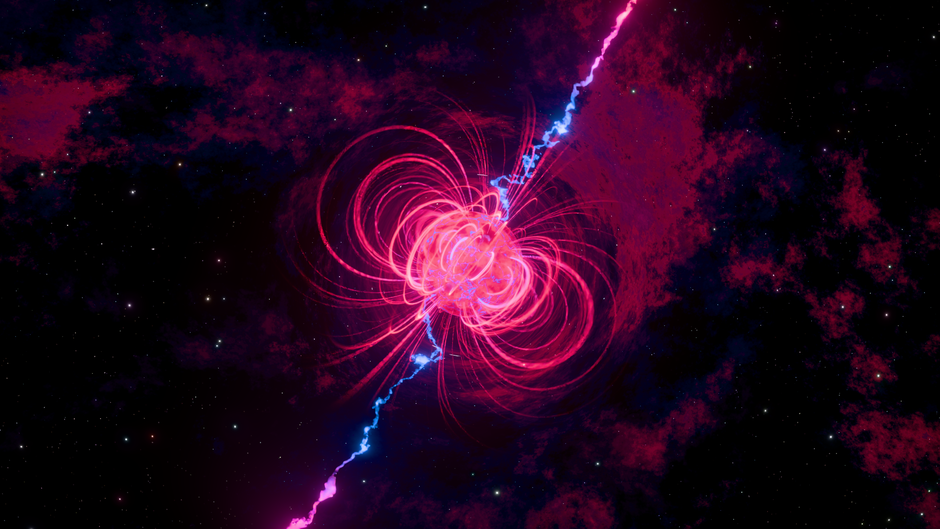
Photo by Nicola Narracci on Pexels
A magnetic field is a region around a magnet or a moving electric charge where magnetic forces are exerted.
* Magnetic field lines form closed loops; they don't start or end anywhere (unlike electric field lines).
* They emerge from the North pole and enter the South pole of a magnet.
* Moving charges create magnetic fields, and magnetic fields exert forces on moving charges.
* The force on a charge $q$ moving with velocity $\mathbf{v}$ in a magnetic field $\mathbf{B}$ is given by the Lorentz force: $\mathbf{F} = q(\mathbf{v} \times \mathbf{B})$.
Relationship Between Electric and Magnetic Fields
Photo by Nicola Narracci on Pexels
The really cool part is that these aren't separate. A changing electric field produces a magnetic field, and a changing magnetic field produces an electric field. This fundamental relationship is captured by Maxwell's equations and is what allows electromagnetic waves (like light, radio waves, X-rays) to exist.
Here's a simple way to visualize the core concepts and their relationships:
graph TD
    A["Electric Charge"] --> B["Creates Electric Field (E)"];
    B --> C["Exerts Force on Other Charges"];
    A --> D["Moving Charge"];
    D --> E["Creates Magnetic Field (B)"];
    E --> F["Exerts Force on Other Moving Charges"];
    B -- "Changing E" --> G["Induces Magnetic Field"];
    E -- "Changing B" --> H["Induces Electric Field"];
    G & H --> I["Electromagnetic Waves"];
3. Worked Example
Let's say you have a tiny positive charge, $q = +2 \times 10^{-9}$ Coulombs, placed in an electric field pointing directly to the right with a strength of $E = 500$ N/C (Newtons per Coulomb). What is the force experienced by this charge?
Using the formula $\mathbf{F} = q\mathbf{E}$:
$\mathbf{F} = (2 \times 10^{-9} \text{ C}) \times (500 \text{ N/C})$
$\mathbf{F} = 1000 \times 10^{-9} \text{ N}$
$\mathbf{F} = 1 \times 10^{-6} \text{ N}$
Since the charge is positive and the electric field points right, the force on the charge will also be to the right, with a magnitude of $1 \times 10^{-6}$ Newtons. If the charge were negative, the force would be to the left.
4. Key Takeaways
- Electric and magnetic phenomena are two parts of a single unified force: electromagnetism.
- Electric charge is a fundamental property of matter, existing as positive or negative units, and is conserved.
- Electric fields are created by charges and exert forces on other charges, originating from positive and ending on negative charges.
- Magnetic fields are created by moving charges (or magnets) and exert forces on other moving charges, forming closed loops.
- Changing electric fields produce magnetic fields, and changing magnetic fields produce electric fields, enabling electromagnetic waves.
- The direction of force on a positive charge in an electric field is the same as the field's direction.
Common Mistakes to Avoid:
- Confusing the source of electric fields (static charges) with magnetic fields (moving charges).
- Forgetting that magnetic field lines always form closed loops, unlike electric field lines.
- Assuming a magnetic field exerts a force on a stationary charge (it only acts on moving charges).
- Mixing up repulsion (like charges/poles) with attraction (unlike charges/poles).
5. Now Try It
Imagine you have two scenarios:
1. A stationary electron (negative charge) in a uniform electric field pointing upwards.
2. The same electron now moving to the right, through a uniform magnetic field pointing into the page.
For each scenario, describe (in words) the direction of the force experienced by the electron. Explain why the force is in that direction, referencing the core concepts we just discussed. Your success will be showing you understand how charge, fields, and motion dictate the force's direction.
Frequently asked about Introduction to Electromagnetism and Key Concepts
Study this next
Get the full elektromagnetism curriculum
Clone the complete plan to your dashboard for unlimited AI-generated notes, practice quizzes, and a personalised revision schedule.
Create Free Account