Magnetism and Electromagnetism
From the Applied electricity curriculum
TL;DR
Magnets create invisible fields that exert forces, and moving electric charges (currents) also create these magnetic fields, which is electromagnetism. We can use coils of wire to make strong, controllable electromagnets that are essential for many electrical devices. Understanding these principles helps explain how motors, generators, and transformers work.
1. The Mental Model
Imagine magnetism like an invisible "force field" around certain materials or moving electricity. This field can pull or push other magnetic materials or electric currents, even without touching them.
2. The Core Material
Magnets are materials that produce a magnetic field. This field is an area around the magnet where magnetic forces can be felt. You can't see it, but you can see its effects (like paperclips jumping to a magnet). Every magnet has two poles: a North pole and a South pole.
Here's how they behave:
* Opposite poles attract: North attracts South.
* Like poles repel: North repels North, and South repels South.
The Earth itself is a giant magnet, which is why compasses work!
Electromagnetism: Magnets from Electricity

Photo by Nicola Narracci on Pexels
This is where it gets super interesting for applied electricity! It turns out that moving electric charges (an electric current) also create a magnetic field. This is the core idea of electromagnetism.
The strength and direction of this magnetic field depend on:
1. Current strength: More current means a stronger magnetic field.
2. Direction of current: Reversing the current reverses the direction of the magnetic field (and thus its poles).
3. Shape of the conductor:
* A straight wire creates a weak circular magnetic field around it. You can figure out its direction using the Right-Hand Rule: point your right thumb in the direction of conventional current, and your fingers curl in the direction of the magnetic field lines.
* A coil of wire (a solenoid) makes a much stronger and more useful magnetic field. When current flows through a coil, each loop contributes to the overall field, making a strong field inside the coil, similar to a bar magnet.
How to Make a Strong Electromagnet
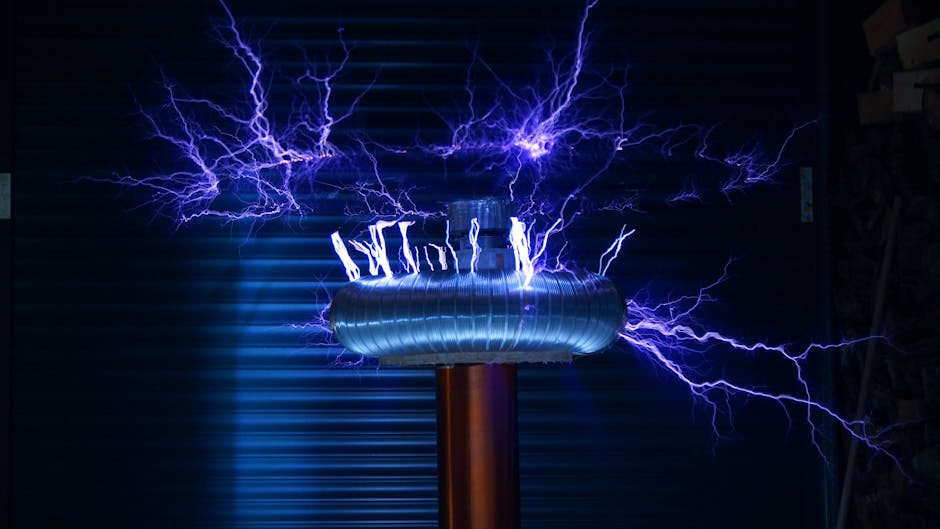
Photo by Killian Eon on Pexels
To make a really strong electromagnet, you typically:
* Use more turns of wire: Each turn adds to the magnetic field.
* Increase the current: A larger current produces a stronger field.
* Add an iron core: Placing a piece of ferromagnetic material (like iron or steel) inside the coil significantly concentrates and strengthens the magnetic field. This is because the iron itself becomes temporarily magnetized by the field from the coil.
The great thing about electromagnets is that you can turn them on and off, and control their strength by changing the current. This makes them incredibly useful in many devices.
Here's a quick flow of how an electromagnet works:
graph TD
    A["Electric Current Flows"] --> B["Creates Magnetic Field Around Wire"]
    B --> C{"Wire is Coiled?"}
    C -- Yes --> D["Magnetic Fields Combine & Strengthen Inside Coil"]
    C -- No --> E["Weak Field Around Straight Wire"]
    D --> F{"Iron Core Present?"}
    F -- Yes --> G["Iron Core Magnetized, Field Greatly Strengthened"]
    F -- No --> H["Strong Electromagnet (No Core)"]
    G --> I["Powerful, Controllable Electromagnet"]
Applications of Electromagnetism

Photo by Gergő on Pexels
Electromagnetism is fundamental to how many electrical devices work:
* Electric Motors: Use magnetic fields to create motion.
* Generators: Use motion to create electricity via magnetic fields.
* Transformers: Use changing magnetic fields to change voltage levels.
* Relays: Electrically controlled switches.
* Loudspeakers: Convert electrical signals into sound waves using magnets.
3. Worked Example
Let's say you want to lift a small metal object using an electromagnet.
What you need:
* A length of insulated copper wire (e.g., 20 gauge).
* A large iron nail (e.g., 3 inches long).
* A low-voltage DC power supply (e.g., 6V battery pack).
* Small paperclips or staples.
Steps:
1. Wrap the wire: Tightly wrap the copper wire around the iron nail, starting from about an inch from the head and winding towards the point. Make sure the coils are neat and close together. Aim for about 50-100 turns. Leave about 6 inches of wire free at both ends.
2. Connect to power: Strip a small amount of insulation from the free ends of the wire. Connect one end to the positive terminal of your battery pack and the other end to the negative terminal.
3. Test the electromagnet: Hold the nail close to the paperclips. When the current flows, you should see the paperclips jump and stick to the nail.
4. Disconnect: Disconnect one of the wires from the battery. The magnetic field will collapse, and the paperclips should fall off.
Observation: When current flows through the coiled wire, it creates a magnetic field. The iron nail inside the coil gets temporarily magnetized, concentrating this field and making it strong enough to attract the paperclips. When the current stops, the magnetism disappears.
4. Key Takeaways
- Magnetic fields are invisible force fields produced by magnets or moving electric charges.
- Opposite magnetic poles attract, while like poles repel.
- Electric currents create magnetic fields, a phenomenon called electromagnetism.
- The strength of an electromagnet depends on the number of wire turns, the current flowing, and the presence of an iron core.
- You can turn electromagnets on and off and control their strength, making them highly versatile.
- Electromagnetism is crucial for the operation of motors, generators, transformers, and many other electrical devices.
Common mistakes to avoid:
- Forgetting that current direction affects magnetic field direction (Right-Hand Rule is key).
- Thinking that all metals can be easily magnetized (only ferromagnetic materials like iron, nickel, cobalt).
- Confusing a permanent magnet with an electromagnet; electromagnets are temporary and controllable.
- Not considering insulation; bare wires touching can short circuit your power source.
5. Now Try It
Take a small DC motor (you can often find these in old toys or small fans). Open it up carefully if possible, or look up a diagram of its internal structure. Identify the permanent magnets (if present) and the coils of wire (armature). Based on what you've learned, explain how the interaction between the magnetic field of the permanent magnets (or electromagnets) and the magnetic field created by current flowing through the coils causes the motor's shaft to rotate. Describe what happens if you reverse the current direction in the coils.
Try it yourself: Electric and magnetic field lines in 3D
Frequently asked about Magnetism and Electromagnetism
Study this next
Get the full Applied electricity curriculum
Clone the complete plan to your dashboard for unlimited AI-generated notes, practice quizzes, and a personalised revision schedule.
Save this course free