Introduction to Electrostatics and Electric Charge
From the physics curriculum
Introduction to Electrostatics and Electric Charge
TL;DR
Electrostatics is the study of stationary electric charges and the forces they exert. Electric charge is a fundamental property of matter, coming in two types: positive and negative. Like charges repel, and opposite charges attract.
1. The Mental Model
Think of electric charge like tiny magnets: some push away, others pull together. These forces happen even when the charges aren't moving. It's all about how these unseen properties of particles interact.
2. The Core Material
Electrostatics focuses on charges that aren't moving, unlike electric current where charges flow. The forces we're talking about are "action at a distance" forces, meaning they don't need to touch to affect each other.
2.1 What is Electric Charge?

Photo by Mike Bird on Pexels
Electric charge is an intrinsic property of subatomic particles. Protons have a positive charge, electrons have a negative charge, and neutrons have no charge (they're neutral). The SI unit for electric charge is the coulomb (C).
- Positive Charge: Carried by protons.
- Negative Charge: Carried by electrons.
- Neutral: Has an equal number of protons and electrons, or consists of uncharged particles like neutrons.
2.2 Quantization of Charge

Photo by Reinhard Bruckner on Pexels
Charge isn't continuous; it comes in discrete packets. The smallest unit of charge is called the elementary charge (e), which is the magnitude of charge on a single proton or electron:
$e \approx 1.602 \times 10^{-19} C$
Any observable charge ($Q$) is always an integer multiple of this elementary charge: $Q = ne$, where 'n' is an integer (e.g., -2, -1, 0, 1, 2...). You can't have half an electron's charge.
2.3 Conservation of Charge
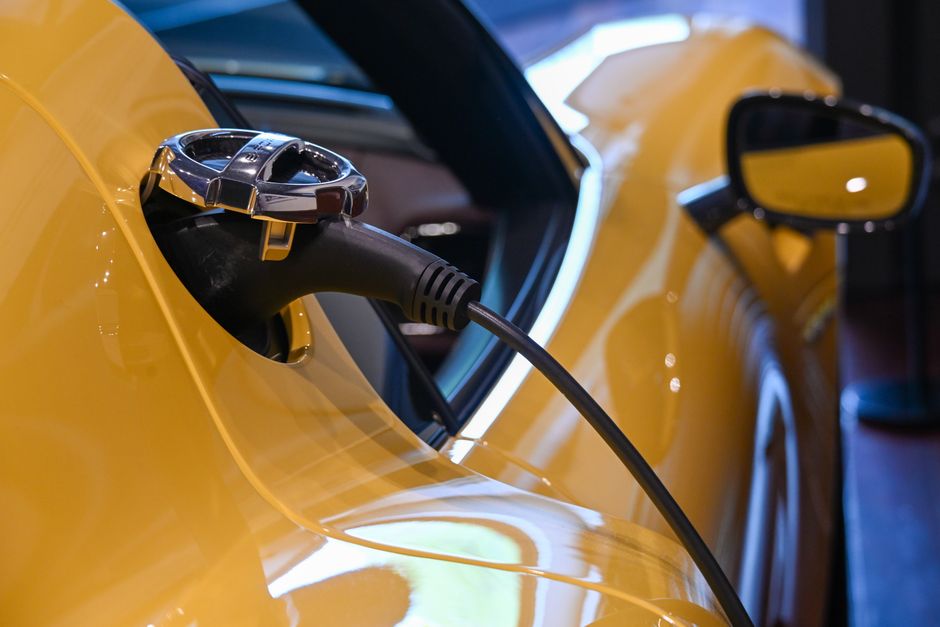
Photo by Beth Fitzpatrick on Pexels
In any isolated system, the total electric charge remains constant. Charge cannot be created or destroyed, only transferred from one object to another. For example, if you rub a balloon on your hair, charge moves between them, but the total charge of the hair + balloon system stays the same.
2.4 Interactions Between Charges (Coulomb's Law, conceptually)

Photo by Ron Lach on Pexels
The fundamental rule for charge interaction is simple:
* Like charges repel: Positive repels positive, negative repels negative.
* Opposite charges attract: Positive attracts negative.
The strength of this force depends on the magnitude of the charges and the distance between them. Larger charges mean stronger forces, and greater distances mean weaker forces. We'll delve into the specifics of Coulomb's Law later, but for now, just grasp the qualitative interaction.
graph TD
    A["Object 1 acquires charge"] --> B{"Is it Positive or Negative?"}
    B -- "Positive" --> C["Positive Charge"]
    B -- "Negative" --> D["Negative Charge"]
    E["Object 2 acquires charge"] --> F{"Is it Positive or Negative?"}
    F -- "Positive" --> G["Positive Charge"]
    F -- "Negative" --> H["Negative Charge"]

    C --> I{"Interaction with G or H?"}
    G --> I
    H --> I

    D --> J{"Interaction with G or H?"}
    G --> J
    H --> J

    I -- "C and G (Like Charges)" --> K["Repulsion"]
    I -- "C and H (Opposite Charges)" --> L["Attraction"]
    J -- "D and G (Opposite Charges)" --> M["Attraction"]
    J -- "D and H (Like Charges)" --> N["Repulsion"]
3. Worked Example
Imagine you have two small, identical metal spheres. Sphere A has a charge of $+3e$ and Sphere B has a charge of $-5e$. If you bring them into contact and then separate them, what's the final charge on each sphere?
- Find the total charge: Add the charges: $+3e + (-5e) = -2e$.
- Distribute the total charge evenly: Since the spheres are identical, the total charge will be shared equally when they separate.
- Calculate final charge per sphere: $-2e / 2 = -1e$.
So, after contact and separation, each sphere will have a charge of $-1e$. This demonstrates the conservation of charge and how charge can be transferred and redistributed.
4. Key Takeaways
- Electrostatics studies electric charges that aren't moving.
- Electric charge comes in two types: positive (protons) and negative (electrons).
- All electric charge is a multiple of the elementary charge, 'e'.
- The total electric charge in an isolated system always stays the same.
- Like charges push each other away, and opposite charges pull each other together.
- The strength of the force between charges depends on their magnitudes and distance.
Common Mistakes to Avoid:
- Don't confuse stationary charges with moving charges (electric current).
- Remember that charge is conserved; it doesn't just disappear.
- Never forget the basic rule: like repels, opposite attracts.
- Don't think charge is continuous; it's always in discrete packets of 'e'.
5. Now Try It
Take a balloon and rub it vigorously on your hair or a wool sweater. Try to stick the balloon to a wall or pick up small pieces of paper with it. Explain what's happening in terms of charge transfer and electrostatic attraction. What kind of charge do you think the balloon acquired? What kind of charge do you think the wall or paper had? What does this tell you about the net charge of the wall/paper before you brought the balloon close?
Success means you can explain that rubbing causes charge transfer (e.g., electrons move from hair to balloon), making the balloon negatively charged. This negative charge then induces a positive charge on the wall/paper (or attracts pre-existing positive charges), leading to attraction. The wall/paper were likely neutral initially.
Frequently asked about Introduction to Electrostatics and Electric Charge
Get the full physics curriculum
Clone the complete plan to your dashboard for unlimited AI-generated notes, practice quizzes, and a personalised revision schedule.
Create Free Account