Foundations of Matter and Measurement
From the chemistry curriculum
Foundations of Matter and Measurement
TL;DR
Chemistry starts with understanding what matter is and how we measure it. You'll learn to classify matter, distinguish its changes, and confidently use measurements with proper units and significant figures. This foundational knowledge is crucial for everything else you'll do in chemistry.
1. The Mental Model
Imagine chemistry as a kitchen. You need to know your ingredients (matter) and how to precisely measure them. Understanding the basic types of matter and how to accurately measure amounts is your starting point for any "recipe" in chemistry.
2. The Core Material
Chemistry is the study of matter and its changes. Matter is anything that has mass and takes up space.
2.1 Classifying Matter
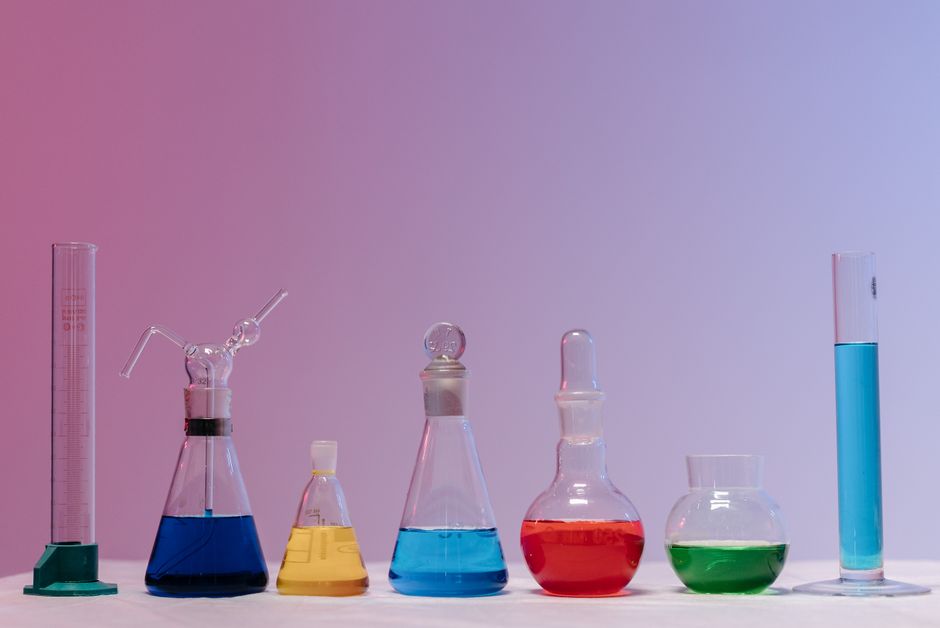
Photo by Pavel Danilyuk on Pexels
We can break down matter into different categories. It's a hierarchy:
graph TD
    A["Matter"] --> B["Pure Substances"]
    A --> C["Mixtures"]

    B --> D["Elements"]
    B --> E["Compounds"]

    C --> F["Homogeneous Mixtures (Solutions)"]
    C --> G["Heterogeneous Mixtures"]
- Pure Substances: Have a fixed chemical composition and distinct properties.
- Elements: Can't be broken down into simpler substances by chemical means (e.g., Oxygen, Gold). Think of them as the basic building blocks.
- Compounds: Formed when two or more elements are chemically bonded in fixed proportions (e.g., Water H₂O, Table Salt NaCl). They have different properties than their constituent elements.
- Mixtures: Combinations of two or more substances (elements or compounds) that are NOT chemically bonded. Their proportions can vary.
- Homogeneous Mixtures (Solutions): Have a uniform composition throughout; you can't see the individual components (e.g., saltwater, air).
- Heterogeneous Mixtures: Have a non-uniform composition; you can see distinct parts (e.g., sand and water, salad dressing).
2.2 Physical vs. Chemical Properties and Changes

Photo by Vitaly Gariev on Pexels
- Physical Properties: Can be observed or measured without changing the substance's identity (e.g., color, melting point, density, state of matter).
- Physical Changes: Alter a substance's appearance but not its chemical composition (e.g., ice melting into water, cutting paper, dissolving sugar).
- Chemical Properties: Describe a substance's ability to undergo a chemical change (e.g., flammability, reactivity with acid).
- Chemical Changes (Reactions): Transform a substance into a different substance with a new chemical identity (e.g., burning wood, rusting iron, baking a cake).
2.3 Measurements and Units
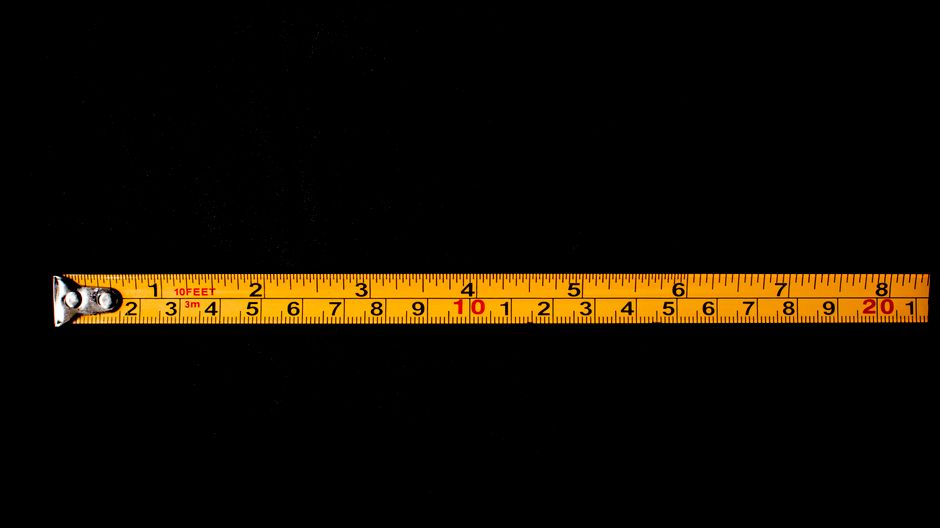
Photo by Nothing Ahead on Pexels
Science relies on accurate measurements. We use the International System of Units (SI units) primarily.
| Quantity | SI Unit | Symbol |
|---|---|---|
| Length | meter | m |
| Mass | kilogram | kg |
| Time | second | s |
| Temperature | Kelvin | K |
| Amount of substance | mole | mol |
You'll also frequently use derived units like:
* Volume (m³ or L, mL)
* Density (g/mL or g/cm³)
2.4 Uncertainty in Measurement & Significant Figures

Photo by Ann H on Pexels
Every measurement has some uncertainty. Significant figures (sig figs) tell us which digits in a measurement are reliable.
Rules for Counting Sig Figs:
1. Non-zero digits are always significant (e.g., 234.5 has 4 sig figs).
2. Zeros between non-zero digits are significant (e.g., 2005 has 4 sig figs).
3. Leading zeros (zeros before non-zero digits) are NOT significant (e.g., 0.0023 has 2 sig figs). They just hold the decimal place.
4. Trailing zeros (zeros at the end of a number) are:
* Significant if the number contains a decimal point (e.g., 2.00 has 3 sig figs, 100. has 3 sig figs).
* NOT significant if the number does not contain a decimal point (e.g., 200 has 1 sig fig).
* Exact numbers (like counts, or definitions: 12 inches in 1 foot) have infinite sig figs and don't limit calculations.
Rules for Calculations with Sig Figs:
* Multiplication/Division: The answer should have the same number of sig figs as the measurement with the fewest sig figs.
* Example: 2.5 cm (2 sig figs) * 1.25 cm (3 sig figs) = 3.125 cm² becomes 3.1 cm² (2 sig figs).
* Addition/Subtraction: The answer should have the same number of decimal places as the measurement with the fewest decimal places.
* Example: 10.1 g (1 decimal place) + 2.34 g (2 decimal places) = 12.44 g becomes 12.4 g (1 decimal place).
3. Worked Example
Let's say you measure the mass of an unknown liquid as 15.3 g and its volume as 17.0 mL. You want to calculate its density and determine if it's a pure substance or a mixture.
-
Calculate Density: Density = Mass / Volume
Density = 15.3 g / 17.0 mL- 15.3 g has 3 significant figures.
- 17.0 mL has 3 significant figures (the trailing zero after the decimal point is significant).
- So, our answer should have 3 significant figures.
15.3 / 17.0 = 0.900 g/mL (keeping 3 sig figs).
-
Classify Matter: Suppose you look up the density of pure ethanol, and it's 0.789 g/mL. Your calculated density is 0.900 g/mL.
Since your measured density (0.900 g/mL) is different from the known density of a pure substance (ethanol), and assuming your measurements are accurate, it's highly likely your liquid is a mixture. Pure substances have fixed properties like density; mixtures have variable properties depending on their composition.
4. Key Takeaways
- Matter is anything with mass and volume, classified as pure substances (elements, compounds) or mixtures (homogeneous, heterogeneous).
- Physical changes alter appearance but not chemical identity, while chemical changes form new substances.
- Accurate measurements rely on SI units (meter, kilogram, second, Kelvin, mole).
- Significant figures reflect the precision of your measurements; follow specific rules for counting and calculations.
- Density is a key physical property often used to identify substances or determine purity.
- Pure substances have consistent properties; mixtures have properties that vary with composition.
- Always consider the uncertainty in your measurements when reporting results.
Common Mistakes to Avoid:
- Confusing an element with a compound (e.g., thinking H₂ is a compound, not an element).
- Misclassifying a homogeneous mixture (like air) as a pure substance.
- Forgetting to include units with your measurements and calculations.
- Incorrectly applying significant figure rules, especially with trailing zeros or in calculations.
- Assuming a physical change (like boiling) is a chemical change.
5. Now Try It
Take three common household items (e.g., sugar, water, air in a balloon, a wooden spoon, salad dressing). For each item:
1. Classify it as an element, compound, homogeneous mixture, or heterogeneous mixture. Explain your reasoning.
2. List two physical properties and (if applicable) one chemical property.
3. Describe one physical change and (if applicable) one chemical change it could undergo.
You've succeeded if you can clearly classify each item, identify its properties, and distinguish between physical and chemical changes for all three, demonstrating a solid grasp of the foundational concepts.
Frequently asked about Foundations of Matter and Measurement
Study this next
Get the full chemistry curriculum
Clone the complete plan to your dashboard for unlimited AI-generated notes, practice quizzes, and a personalised revision schedule.
Create Free Account