Foundational Concepts of Matter
From the Chemistry curriculum
Foundational Concepts of Matter
TL;DR
Matter is anything that has mass and takes up space, existing primarily as solids, liquids, or gases. It's made of tiny particles called atoms, which combine to form molecules and compounds with distinct properties. Understanding matter's classification and changes is crucial for grasping all of chemistry.
1. The Mental Model
Think of matter as Lego bricks. Individual bricks are atoms, different colors/shapes are different elements. You can combine them to build structures (molecules), and these structures can be organized loosely or tightly, explaining states of matter.
2. The Core Material
You encounter matter every second of your life. Everything you can touch, taste, or see is matter. To understand chemistry, you first need to grasp what matter is and how it's organized.
What is Matter?

Photo by Ann H on Pexels
Matter is anything that has mass and occupies space. This means it has a certain amount of "stuff" (mass) and takes up some volume.
States of Matter
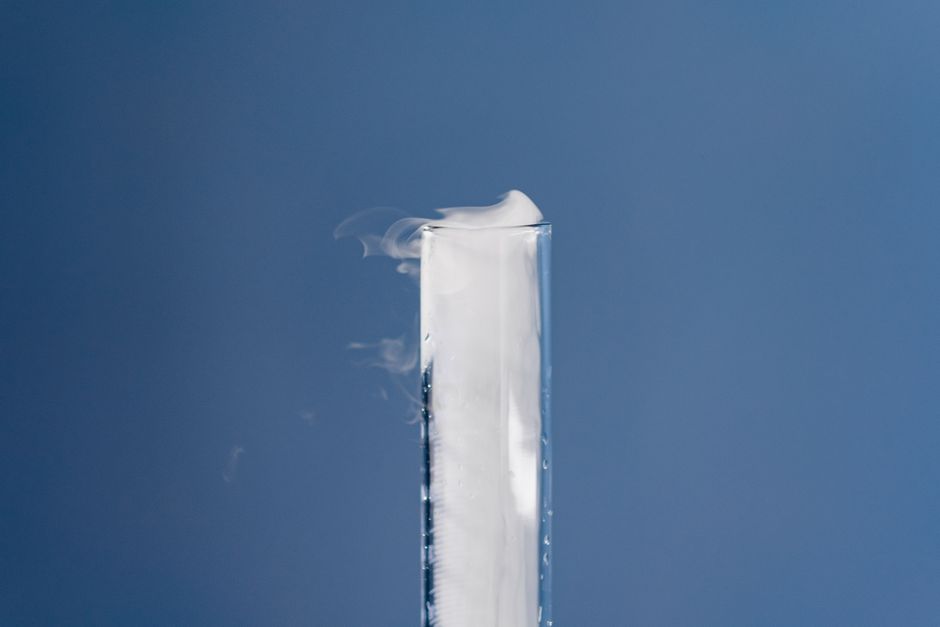
Photo by Ron Lach on Pexels
Matter commonly exists in three main states:
- Solids: Have a definite shape and a definite volume. Their particles are packed tightly together and vibrate in fixed positions. Think of an ice cube or a rock.
- Liquids: Have a definite volume but an indefinite shape. They take the shape of their container. Their particles are close together but can move past one another. Think of water or oil.
- Gases: Have an indefinite shape and an indefinite volume. They expand to fill their container. Their particles are far apart and move randomly and rapidly. Think of air or steam.
Classification of Matter
Photo by Brett Jordan on Pexels
We can break down matter into different categories based on its composition.
graph TD
    A["Matter"] --> B["Pure Substances"]
    A --> C["Mixtures"]

    B --> D["Elements"]
    B --> E["Compounds"]

    C --> F["Homogeneous Mixtures (Solutions)"]
    C --> G["Heterogeneous Mixtures"]
- Pure Substances: Have a uniform and definite composition. This means every sample of the substance is identical.
- Elements: The simplest form of matter that cannot be broken down into simpler substances by chemical means. Each element is made of only one type of atom (e.g., gold, oxygen, hydrogen).
- Compounds: Formed when two or more different elements are chemically combined in a fixed ratio. They have properties distinct from their constituent elements (e.g., water (H₂O), salt (NaCl)).
- Mixtures: Composed of two or more substances that are physically combined but not chemically bonded. The components retain their individual properties and can often be separated by physical means.
- Homogeneous Mixtures (Solutions): Have a uniform composition throughout. You can't see the different components (e.g., saltwater, air, brass).
- Heterogeneous Mixtures: Have a non-uniform composition. You can usually see the different components or distinct regions (e.g., sand and water, salad, granite).
Physical and Chemical Properties & Changes

Photo by Vitaly Gariev on Pexels
- Physical Properties: Characteristics that can be observed or measured without changing the substance's chemical identity (e.g., color, density, melting point, boiling point).
- Physical Changes: Alter a substance's appearance but not its chemical composition (e.g., melting ice, dissolving sugar, boiling water, cutting paper).
- Chemical Properties: Describe how a substance reacts to form new substances (e.g., flammability, reactivity with acid).
- Chemical Changes (Reactions): Result in the formation of new substances with different chemical compositions and properties (e.g., burning wood, rusting iron, baking a cake).
3. Worked Example
Let's classify a few everyday items:
- Sugar (C₁₂H₂₂O₁₁): This is a pure substance. Specifically, it's a compound because it's made of carbon, hydrogen, and oxygen chemically combined in a fixed ratio.
- Air: This is a mixture. Since its composition is generally uniform (you can't see distinct layers of nitrogen and oxygen), it's a homogeneous mixture (a solution of gases).
- Pizza: This is a mixture. You can clearly see different components (crust, cheese, pepperoni), so it's a heterogeneous mixture.
- Melting an ice cube: This is a physical change. The water is still H₂O, just in a different state (liquid instead of solid).
- Baking soda reacting with vinegar: This is a chemical change. New substances like carbon dioxide gas are formed, which weren't present before the reaction.
4. Key Takeaways
- Matter has mass and occupies space, existing commonly as solids, liquids, or gases.
- Pure substances are either elements (one type of atom) or compounds (two or more elements chemically bonded).
- Mixtures combine substances physically; homogeneous mixtures are uniform, heterogeneous are not.
- Physical changes alter appearance but not chemical identity, like melting ice.
- Chemical changes form new substances, like burning wood.
- Understanding matter's classification helps predict its behavior and interactions.
- All matter is made of atoms and their combinations.
Common Mistakes to Avoid:
- Don't confuse an element with an atom; an element is a type of matter, an atom is the smallest particle of an element.
- Don't think that a mixture always implies visible components; homogeneous mixtures look uniform.
- Don't confuse a physical change (like dissolving) with a chemical change (like reacting).
- Don't forget that compounds have properties different from their constituent elements.
5. Now Try It
Take five random objects around your room (e.g., a glass of water, a coin, a wooden pencil, a bottle of soda, a pile of dust). For each object, identify its state of matter, classify it as an element, compound, homogeneous mixture, or heterogeneous mixture, and describe one physical property and one chemical property it might have.
Success looks like correctly classifying each item and identifying appropriate properties without mixing up physical and chemical descriptions.
Frequently asked about Foundational Concepts of Matter
More from Chemistry
Get the full Chemistry curriculum
Clone the complete plan to your dashboard for unlimited AI-generated notes, practice quizzes, and a personalised revision schedule.
Create Free Account