Energy Changes in Chemical Reactions: Exo- and Endothermic Processes
From the chemical reactions (chemistry in biology) curriculum
Energy Changes in Chemical Reactions: Exo- and Endothermic Processes
TL;DR
Chemical reactions always involve energy changes, either releasing energy as exothermic or absorbing energy as endothermic. Understanding these energy shifts helps explain why some reactions feel hot and others feel cold. The energy difference between reactants and products determines the reaction type.
1. The Mental Model
Think of chemical reactions like financial transactions. Sometimes you gain money (energy released), and sometimes you spend money (energy absorbed). The "money" here is enthalpy, which is a measure of the heat content in a system.
2. The Core Material
When chemicals react, bonds break in the starting materials (reactants) and new bonds form to create products. Breaking bonds requires energy, while forming bonds releases energy. The overall energy change of the reaction, called the enthalpy change (represented as ΔH, pronounced "delta H"), depends on the balance between these two processes.
Exothermic Reactions

Photo by Tima Miroshnichenko on Pexels
In an exothermic reaction, more energy is released when new bonds form than was absorbed to break old bonds. This means there's a net release of energy, usually as heat, into the surroundings. You'll feel the surroundings get warmer.
- Key characteristic: The products have less stored chemical energy (enthalpy) than the reactants.
- ΔH value: Negative (ΔH < 0), because the system loses energy.
Endothermic Reactions
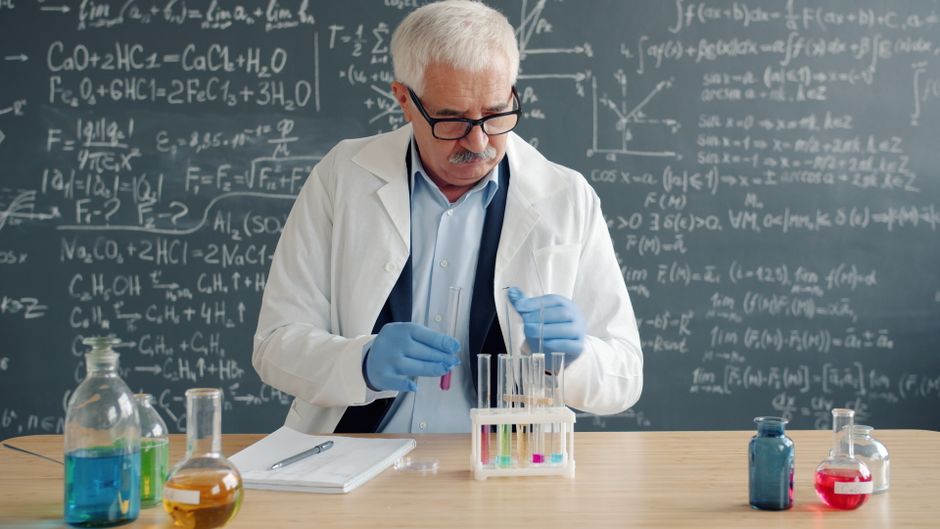
Photo by Vitaly Gariev on Pexels
Conversely, in an endothermic reaction, more energy is absorbed to break old bonds than is released when new bonds form. This means there's a net absorption of energy from the surroundings, usually as heat. You'll feel the surroundings get cooler.
- Key characteristic: The products have more stored chemical energy (enthalpy) than the reactants.
- ΔH value: Positive (ΔH > 0), because the system gains energy.
Here's a simple way to visualize the energy flow:
graph TD
    A["Reactants"] --> B{"Energy Change"}
    B -- "Energy Released (Heat)" --> C["Surroundings (gets warmer)"]
    B -- "Energy Absorbed (Heat)" --> D["Surroundings (gets cooler)"]
    C --> E["Products (lower energy)"]
    D --> F["Products (higher energy)"]

    style A fill:#cef,stroke:#333,stroke-width:2px
    style E fill:#fec,stroke:#333,stroke-width:2px
    style F fill:#fcc,stroke:#333,stroke-width:2px
    style C fill:#afa,stroke:#333,stroke-width:2px
    style D fill:#afa,stroke:#333,stroke-width:2px
    linkStyle 2 stroke:#F00,stroke-width:2px,fill:none;
    linkStyle 3 stroke:#00F,stroke-width:2px,fill:none;
Activation Energy

Photo by Ron Lach on Pexels
Even if a reaction is exothermic and releases energy overall, it often needs an initial "push" to get started. This initial energy input is called activation energy. Think of it as the energy needed to get over an energy "hill" before rolling downhill (exothermic) or uphill to a higher plateau (endothermic). Catalysts work by lowering this activation energy.
3. Worked Example
Imagine you're making instant cold packs for sports injuries. These packs often contain water and a chemical like ammonium nitrate. When you break an inner pouch, the two mix.
Reaction: $\text{NH}_4\text{NO}_3\text{(s)} + \text{H}_2\text{O(l)} \rightarrow \text{NH}_4^+\text{(aq)} + \text{NO}_3^-\text{(aq)}$
You feel the pack get noticeably cold. This means the reaction is absorbing heat from your hand (the surroundings).
- Observation: Cold pack gets cold.
- Conclusion: Heat is being taken from the surroundings into the reaction system.
- Type of reaction: Endothermic.
- Expected ΔH: Positive (ΔH > 0). Indeed, for this reaction, ΔH is approximately +25.7 kJ/mol. This positive value confirms that energy is absorbed from the surroundings.
4. Key Takeaways
- Exothermic reactions release energy (usually as heat) into the surroundings, making them feel warmer.
- Endothermic reactions absorb energy (usually as heat) from the surroundings, making them feel cooler.
- Enthalpy change (ΔH) quantifies this energy change; negative ΔH means exothermic, positive ΔH means endothermic.
- The energy stored in the chemical bonds of products is lower than reactants for exothermic reactions.
- The energy stored in the chemical bonds of products is higher than reactants for endothermic reactions.
- All reactions, even exothermic ones, require some initial energy input called activation energy.
Common Mistakes to Avoid:
- Don't confuse "releases energy" with "requires no energy." Activation energy is almost always needed.
- Don't assume "cold" means energy is lost by the reaction; it means energy is gained by the reaction from the surroundings.
- Don't mix up the sign of ΔH; negative is release (exothermic), positive is absorption (endothermic).
- Forgetting that the "surroundings" are what you feel and interact with, while the "system" is the chemicals reacting.
5. Now Try It
You're observing a burning candle. Describe the energy changes happening. Is it an exothermic or endothermic process? How do you know, based on what you observe and what you've learned about ΔH? What happens to the chemical energy stored in the wax?
Frequently asked about Energy Changes in Chemical Reactions: Exo- and Endothermic Processes
Study this next
Get the full chemical reactions (chemistry in biology) curriculum
Clone the complete plan to your dashboard for unlimited AI-generated notes, practice quizzes, and a personalised revision schedule.
Create Free Account