Introduction to Cellular Life and Properties of Cells
From the New life is a cellular curriculum
Introduction to Cellular Life and Properties of Cells
TL;DR
Cells are the fundamental building blocks of all living things, from tiny bacteria to giant trees and us. They're incredibly organized, carrying out all life's essential processes within their tiny boundaries. Understanding cells is key to grasping how life works.
1. The Mental Model
Think of a cell like a miniature, self-contained city. It has its own power plants, factories, transportation systems, and a protective wall, all working together to keep it alive and functioning. Every living organism is either one of these tiny cities or a massive collection of them.
2. The Core Material
Cells are the smallest units of life. If you break something down smaller than a cell, it's no longer considered "alive." There are two main types of cells: prokaryotic and eukaryotic.
Prokaryotic vs. Eukaryotic Cells

Photo by turek on Pexels
This is a really important distinction.
- Prokaryotic cells are simpler and smaller. They don't have a nucleus or other membrane-bound internal compartments (organelles). Think of them as single-room apartments. Bacteria and Archaea are examples of prokaryotes. Their genetic material (DNA) just floats freely in the cytoplasm.
- Eukaryotic cells are larger and much more complex. They do have a nucleus, which houses their DNA, and many other specialized, membrane-bound organelles that perform specific jobs. Think of them as multi-room houses with separate kitchens, bedrooms, and living areas. Animals, plants, fungi, and protists are all made of eukaryotic cells.
Here's a quick comparison:
graph TD
    A["Cell Type"] --> B["Prokaryotic"]
    A --> C["Eukaryotic"]

    B --> B1["No Nucleus"]
    B --> B2["DNA in cytoplasm"]
    B --> B3["Simple, smaller"]
    B --> B4["No membrane-bound organelles"]
    B --> B5["Examples: Bacteria, Archaea"]

    C --> C1["Has Nucleus"]
    C --> C2["DNA in nucleus"]
    C --> C3["Complex, larger"]
    C --> C4["Has membrane-bound organelles"]
    C --> C5["Examples: Animals, Plants, Fungi, Protists"]
Universal Properties of All Cells
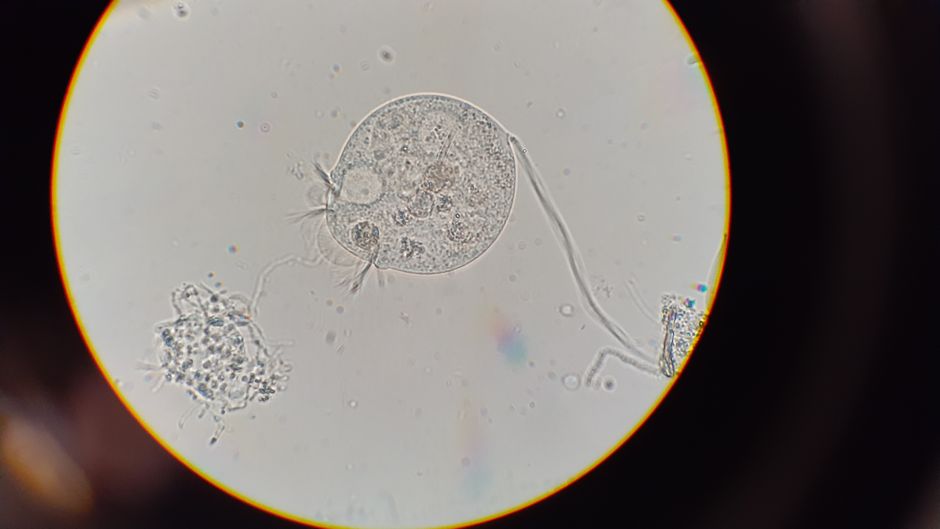
Photo by Coy on Pexels
Despite their differences, all cells share some fundamental characteristics:
- Genetic Material (DNA): All cells store their hereditary information in DNA. This DNA contains instructions for building and operating the cell.
- Cell Membrane: Every cell is enclosed by a cell membrane (also called a plasma membrane). This acts like a selective barrier, controlling what goes in and out of the cell.
- Cytoplasm: Inside the cell membrane, there's a jelly-like substance called cytoplasm. This is where many cellular activities take place.
- Ribosomes: All cells have ribosomes, which are molecular machines responsible for making proteins based on the instructions from the DNA.
- Energy Metabolism: Cells need energy to survive and function. They carry out metabolic processes to convert nutrients into usable energy (often in the form of ATP).
- Reproduction: Cells come from pre-existing cells. They can divide to create new cells, allowing for growth, repair, or reproduction of the organism.
- Response to Stimuli: Cells can react to changes in their environment, like sensing chemicals or light.
- Homeostasis: Cells maintain a stable internal environment, even when external conditions change. This internal balance is crucial for their survival.
3. Worked Example
Imagine you're looking at an unknown single-celled organism under a powerful microscope. You observe the following:
- It's quite small, only about 1 micrometer (µm) across.
- You can clearly see genetic material, but it appears to be floating throughout the cell, not enclosed in any distinct structure.
- There are no obvious internal compartments or organelles.
- It has a cell membrane and ribosomes.
Based on these observations, you can confidently classify this organism as prokaryotic. The key tells are its small size, the absence of a nucleus (DNA floating freely), and the lack of membrane-bound organelles. If it were eukaryotic, you'd expect to see a nucleus and other distinct compartments.
4. Key Takeaways
- Cells are the fundamental units of all life.
- Prokaryotic cells are simple, lack a nucleus and membrane-bound organelles.
- Eukaryotic cells are complex, have a nucleus and many membrane-bound organelles.
- All cells have DNA, a cell membrane, cytoplasm, and ribosomes.
- Cells maintain a stable internal environment (homeostasis) and can reproduce.
- Understanding cell types helps classify organisms and predict their cellular functions.
5. Now Try It
Take a piece of paper and draw two simple diagrams side-by-side: one representing a prokaryotic cell and one representing a eukaryotic cell (you don't need to add every single detail, just the main differences). Label the key features you'd expect to see in each type based on what we've discussed, specifically highlighting the presence or absence of a nucleus and other major internal structures. Once you're done, try to list three organisms that fit each cell type.
Frequently asked about Introduction to Cellular Life and Properties of Cells
Study this next
Get the full New life is a cellular curriculum
Clone the complete plan to your dashboard for unlimited AI-generated notes, practice quizzes, and a personalised revision schedule.
Create Free Account