Cellular Structures and Organelles (Prokaryotic vs. Eukaryotic)
From the Basic cell biology curriculum
TL;DR
Cells are the fundamental units of life and come in two main types: prokaryotic (simpler, no nucleus) and eukaryotic (more complex, with a nucleus and organelles). Understanding their structural differences helps explain their diverse functions and the evolution of life. All cells share basic components like DNA, cytoplasm, ribosomes, and a cell membrane, but eukaryotes have specialized compartments.
1. The Mental Model
Imagine a simple studio apartment versus a large house with many separate rooms. The studio is like a prokaryotic cell—everything happens in one open space. The house is like a eukaryotic cell—different activities are assigned to different rooms (organelles).
2. The Core Material
All living things are made of cells, and these cells are broadly categorized into two types: prokaryotic and eukaryotic. The main difference lies in their internal organization and complexity.
Prokaryotic Cells
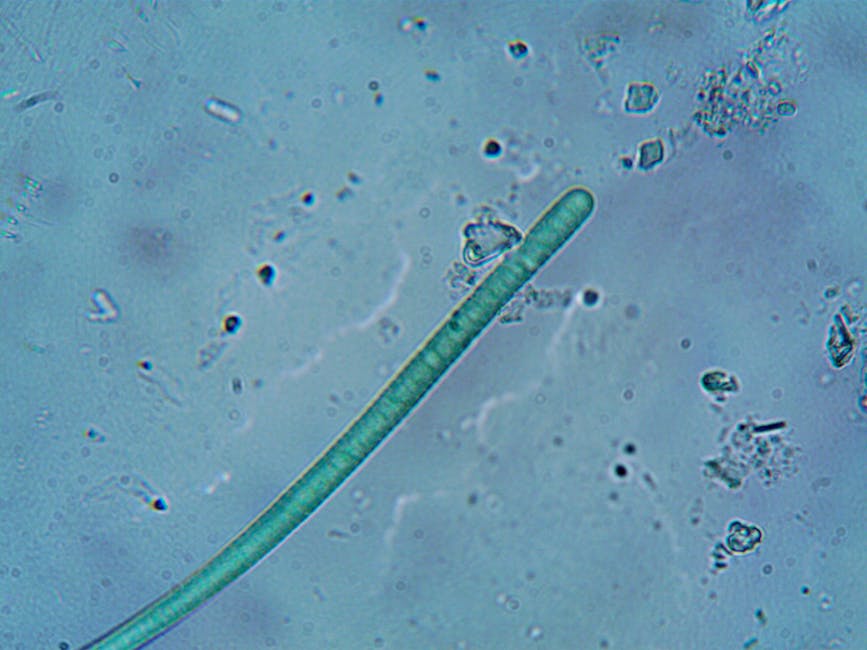
Photo by turek on Pexels
These are the oldest and simplest cell types, including bacteria and archaea. They generally lack a true nucleus and other membrane-bound organelles.
- Genetic Material (DNA): Usually a single, circular chromosome located in a region called the nucleoid, not enclosed by a membrane. Plasmids (small, extra-chromosomal DNA circles) can also be present.
- Ribosomes: Present and responsible for protein synthesis, but they are smaller than eukaryotic ribosomes.
- Cytoplasm: The jelly-like substance filling the cell, where all metabolic reactions occur.
- Cell Membrane: A lipid bilayer that encloses the cytoplasm, regulating what enters and exits the cell.
- Cell Wall: A rigid outer layer (usually made of peptidoglycan in bacteria) that provides structural support and protection.
- Capsule: Some prokaryotes have an additional outermost layer, often made of polysaccharides, for protection and adhesion.
- Flagella/Pili: Hair-like appendages used for movement (flagella) or attachment and gene transfer (pili).
Eukaryotic Cells

Photo by Fayette Reynolds M.S. on Pexels
These are more complex and larger cells, found in animals, plants, fungi, and protists. They are characterized by a true nucleus and many membrane-bound organelles.
- Nucleus: The "control center," housing the cell's main genetic material (linear chromosomes) and enclosed by a nuclear envelope. It's where DNA replication and transcription occur.
- Mitochondria: The "powerhouses" of the cell, where cellular respiration occurs to produce ATP (energy). They have their own DNA and ribosomes.
- Endoplasmic Reticulum (ER): A network of membranes involved in protein and lipid synthesis.
- Rough ER (RER): Studded with ribosomes, involved in synthesizing and modifying proteins destined for secretion or insertion into membranes.
- Smooth ER (SER): Lacks ribosomes, involved in lipid synthesis, detoxification, and calcium storage.
- Golgi Apparatus: Modifies, sorts, and packages proteins and lipids from the ER into vesicles for secretion or delivery to other organelles.
- Lysosomes: (Mainly in animal cells) Contain digestive enzymes to break down waste materials and cellular debris.
- Peroxisomes: Involved in metabolic processes, including breaking down fatty acids and detoxifying harmful substances.
- Cytoskeleton: A network of protein filaments (microtubules, microfilaments, intermediate filaments) providing structural support, cell shape, and facilitating movement of organelles.
- Cell Membrane: Similar to prokaryotes, but often with more complex proteins and cholesterol.
- Ribosomes: Larger than prokaryotic ribosomes and can be free in the cytoplasm or attached to the RER.
- Cytoplasm: Includes the cytosol (the jelly-like fluid) and the organelles suspended within it.
Plant-Specific Eukaryotic Structures:
- Cell Wall: A rigid outer layer (made of cellulose) providing structural support.
- Chloroplasts: Sites of photosynthesis, converting light energy into chemical energy. Like mitochondria, they have their own DNA and ribosomes.
- Central Vacuole: A large, fluid-filled sac that stores water, nutrients, and waste, and helps maintain turgor pressure.
Here's a comparison showing the key differences:
graph TD
    A["Cell Types"] --> B["Prokaryotic Cells"]
    A --> C["Eukaryotic Cells"]

    B --> B1["No true nucleus (nucleoid region)"]
    B --> B2["No membrane-bound organelles"]
    B --> B3["Circular DNA (plasmids common)"]
    B --> B4["Smaller ribosomes"]
    B --> B5["Cell wall (peptidoglycan)"]
    B --> B6["Smaller, simpler"]

    C --> C1["True nucleus (encloses DNA)"]
    C --> C2["Membrane-bound organelles (Mitochondria, ER, Golgi, etc.)"]
    C --> C3["Linear DNA (chromosomes)"]
    C --> C4["Larger ribosomes"]
    C --> C5["Cell wall (plants/fungi only, cellulose/chitin)"]
    C --> C6["Larger, more complex"]

    C --> D["Animal Cells"]
    C --> E["Plant Cells"]

    D --> D1["No cell wall"]
    D --> D2["No chloroplasts"]
    D --> D3["Small or no vacuoles"]

    E --> E1["Cell wall (cellulose)"]
    E --> E2["Chloroplasts"]
    E --> E3["Large central vacuole"]
3. Worked Example
Imagine you're examining two unknown cells under a powerful microscope.
Cell A: You see a cell with a cell wall, a cell membrane, and many small dots (ribosomes) scattered throughout its cytoplasm. There's a region where the genetic material is clumped, but it's not surrounded by a membrane. You don't see any distinct internal compartments. This cell is moving using a long, whip-like structure.
Cell B: This cell also has a cell wall and cell membrane, but inside, you clearly see a large, defined structure containing genetic material. There are many oval-shaped structures, some green, and a huge, clear sac taking up most of the cell's volume.
Analysis:
* Cell A is a prokaryotic cell, likely a bacterium. The lack of a true nucleus, absence of membrane-bound organelles, and the presence of a nucleoid region and flagellum are key indicators.
* Cell B is a eukaryotic cell, specifically a plant cell. The presence of a true nucleus, chloroplasts (the green oval structures), and a large central vacuole are distinguishing features. The cell wall confirms it's not an animal cell.
4. Key Takeaways
- Prokaryotic cells are simple, lack a true nucleus and membrane-bound organelles, and have circular DNA.
- Eukaryotic cells are complex, have a true nucleus, numerous membrane-bound organelles, and linear DNA.
- All cells share fundamental components like cytoplasm, ribosomes, DNA, and a cell membrane.
- Organelles in eukaryotes allow for specialization and division of labor, increasing efficiency.
- Plant cells have unique structures like a cell wall, chloroplasts, and a large central vacuole, which are absent in animal cells.
Common Mistakes to Avoid:
- Don't confuse the nucleoid region in prokaryotes with a true nucleus; it's just where the DNA is concentrated, not membrane-bound.
- Forgetting that ribosomes are present in both prokaryotic and eukaryotic cells, though they differ in size.
- Assuming all eukaryotic cells have the same organelles (e.g., animal cells lack cell walls and chloroplasts).
- Thinking that prokaryotic cells are "primitive" and less successful; they are incredibly diverse and abundant.
5. Now Try It
Draw and label a simple diagram for an animal cell and a plant cell. For each label, briefly (one sentence) describe its function. Then, list three organelles that would never be found in a prokaryotic cell and explain why. Success means your diagrams clearly show the unique features of each eukaryotic cell type, and your explanations for the prokaryotic exclusions highlight the fundamental differences in cellular organization.
Try it yourself: Animal and plant cells in 3D
Frequently asked about Cellular Structures and Organelles (Prokaryotic vs. Eukaryotic)
More from Basic cell biology
Get the full Basic cell biology curriculum
Clone the complete plan to your dashboard for unlimited AI-generated notes, practice quizzes, and a personalised revision schedule.
Save this course free