"What defines a plant? (eukaryotic, multicellular, photosynthetic, cell walls)",
From the plants curriculum
TL;DR
Plants are complex living things defined by several key features: they have specialized cells with a nucleus (eukaryotic), are made of many cells (multicellular), make their own food using sunlight (photosynthetic), and have strong outer walls around their cells. These characteristics together set them apart from animals, fungi, and other life forms.
1. The Mental Model
Think of a plant as a solar-powered, multi-room factory. Each "room" (cell) has a control center (nucleus), many rooms work together (multicellular), it captures sunlight to make energy (photosynthesis), and each room is built with strong, rigid walls (cell walls).
2. The Core Material
When we talk about what makes a plant a plant, we're looking at a combination of characteristics that distinguish them from other forms of life. No single feature is enough on its own, but together they paint a clear picture.
Eukaryotic
First, plants are eukaryotic. This means their cells have a true nucleus that holds their genetic material (DNA), as well as other membrane-bound organelles like mitochondria and chloroplasts. This is in contrast to prokaryotic organisms (like bacteria), which don't have a nucleus or these other specialized compartments. Think of it like a cell having distinct, organized "rooms" for different jobs.
Multicellular
Second, plants are multicellular. This means they are made up of many cells, not just one. These cells aren't just a random collection; they are organized into tissues, organs (like leaves and roots), and organ systems that work together to perform complex functions. A single-celled organism, even if it's eukaryotic and photosynthetic, isn't a plant.
Photosynthetic
Third, and perhaps most famously, plants are photosynthetic. This means they can produce their own food (sugars) using sunlight, water, and carbon dioxide. This process primarily takes place in specialized organelles called chloroplasts, which contain chlorophyll – the green pigment that captures light energy. This ability to create their own energy makes plants producers in most ecosystems, forming the base of many food chains.
Cell Walls
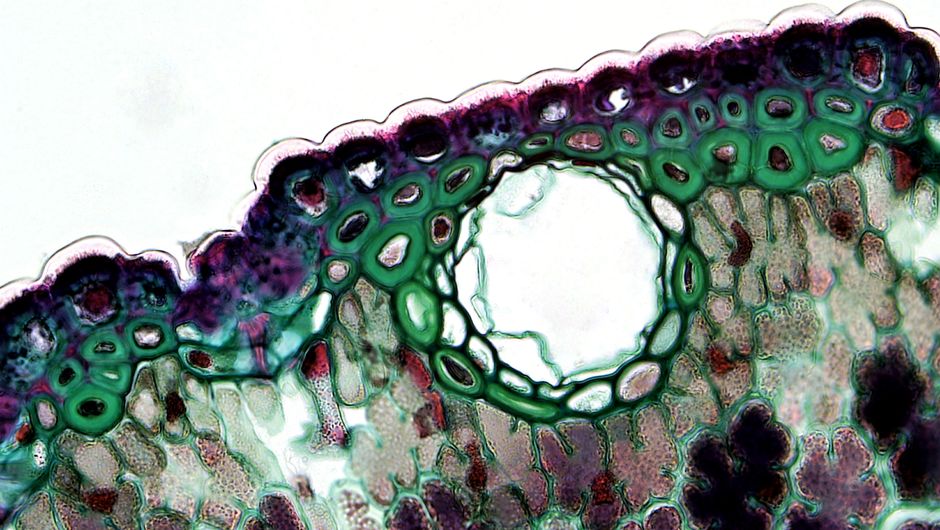
Photo by Fayette Reynolds M.S. on Pexels
Finally, plant cells are characterized by having rigid cell walls made primarily of cellulose. This strong outer layer provides structural support and protection to the cell, maintaining its shape and preventing excessive water uptake. While fungi also have cell walls, theirs are made of chitin, not cellulose, and animals completely lack cell walls. This cellulose-based cell wall is a hallmark of plant cells.
These four characteristics work together. For instance, being multicellular allows for specialized tissues like xylem and phloem (for water and nutrient transport) and strong woody stems, which are supported by their rigid cell walls. Photosynthesis provides the energy for all these complex processes in a multicellular organism.
Here's a diagram summarizing these key features and how they differentiate plants:
graph TD
    A["Organism Classification"] --> B["Is it Eukaryotic?"];
    B -- Yes --> C["Is it Multicellular?"];
    B -- No --> Prokaryote["Prokaryote (e.g., Bacteria)"];
    C -- Yes --> D["Does it perform Photosynthesis?"];
    C -- No --> UnicellularEukaryote["Unicellular Eukaryote (e.g., Yeast)"];
    D -- Yes --> E["Does it have Cellulose Cell Walls?"];
    D -- No --> Animal["Animal (Heterotrophic)"];
    E -- Yes --> Plant["Plant"];
    E -- No --> Fungus["Fungus (Chitin Cell Walls, Heterotrophic)"];
3. Worked Example
Imagine you're examining an unknown organism under a microscope and want to determine if it's a plant.
- First, you check for a nucleus and other organelles. You see clear, membrane-bound structures, including a large nucleus. Conclusion: It's eukaryotic.
- Next, you observe the organism's overall structure. It's not just a single blob; you see distinct tissues like roots and leaves. Conclusion: It's multicellular.
- Then, you test its metabolic activity. You notice it releases oxygen when exposed to light and carbon dioxide. You also see chloroplasts within its cells. Conclusion: It's photosynthetic.
- Finally, you look closely at the cell boundaries. You see a thick, rigid outer layer around each cell, distinct from the cell membrane. Chemical tests confirm it's made of cellulose. Conclusion: It has cellulose cell walls.
Because it meets all four criteria – eukaryotic, multicellular, photosynthetic, and has cellulose cell walls – you can confidently classify this organism as a plant.
4. Key Takeaways
- Plants are defined by a combination of four core features, not just one.
- Eukaryotic: Plant cells have a nucleus and other membrane-bound organelles.
- Multicellular: Plants are composed of many cells working together in tissues and organs.
- Photosynthetic: Plants produce their own food using sunlight, water, and carbon dioxide.
- Cell Walls: Plant cells have rigid cell walls primarily made of cellulose, providing structure and protection.
- These features distinguish plants from animals (heterotrophic, no cell walls), fungi (chitin cell walls, heterotrophic), and single-celled organisms.
Common mistakes to avoid:
- Thinking that just being green or having cell walls is enough to be a plant. Many algae are green, but some aren't multicellular, and fungi have cell walls but aren't photosynthetic.
- Confusing cellulose cell walls with chitin cell walls (found in fungi). They're structurally different.
- Forgetting the "multicellular" aspect; some photosynthetic organisms are single-celled.
- Assuming all multicellular organisms are plants; animals and fungi are also multicellular but lack other key plant characteristics.
5. Now Try It
Take a common item you find around your house or outside – perhaps a mushroom, a piece of wood, or a leaf. Based on what you've learned, write a short paragraph explaining why that item is or isn't a plant, specifically referring to the four defining characteristics. For example, if you pick a mushroom, explain how it differs in its cell walls and nutrition. Success looks like you correctly applying each of the four criteria (eukaryotic, multicellular, photosynthetic, cell walls) to your chosen item and accurately concluding whether it's a plant.
Frequently asked about "What defines a plant? (eukaryotic, multicellular, photosynthetic, cell walls)",
More from plants
Get the full plants curriculum
Clone the complete plan to your dashboard for unlimited AI-generated notes, practice quizzes, and a personalised revision schedule.
Save this course free