Introduction to Biology and Cellular Organization
From the biology curriculum
Introduction to Biology and Cellular Organization
TL;DR
Biology is the scientific study of life, exploring its incredible diversity and complexity at various levels. All living things are made of cells, the basic building blocks that carry out essential life functions. Understanding cell structure and function is key to grasping how life works.
1. The Mental Model
Think of biology as trying to understand the ultimate machine: life itself. Cells are like the fundamental LEGO bricks; they're the smallest units that can do everything needed to be alive, and they come together to build all living things.
2. The Core Material
Biology is a vast field, but it always comes back to understanding life. What is life, anyway? Living things share several characteristics: they're organized, they can grow and develop, they reproduce, they respond to their environment, they maintain internal stability (homeostasis), and they use energy.
Levels of Biological Organization

Photo by MART PRODUCTION on Pexels
To make sense of life's complexity, biologists study it at different levels, from the smallest chemical units to the entire planet. You can think of it like a set of Russian nesting dolls.
graph TD
    A["Atoms (e.g., Carbon, Oxygen)"] --> B["Molecules (e.g., Water, DNA)"];
    B --> C["Organelles (e.g., Mitochondria, Nucleus)"];
    C --> D["Cells (e.g., Nerve Cell, Plant Cell)"];
    D --> E["Tissues (e.g., Muscle Tissue, Connective Tissue)"];
    E --> F["Organs (e.g., Heart, Brain)"];
    F --> G["Organ Systems (e.g., Circulatory System)"];
    G --> H["Organism (e.g., A single human)"];
    H --> I["Population (Group of same species)"];
    I --> J["Community (Different populations interacting)"];
    J --> K["Ecosystem (Community + non-living environment)"];
    K --> L["Biosphere (All life on Earth)"];
- Atoms & Molecules: The chemical foundation of life.
- Organelles: Specialized structures within cells that perform specific functions.
- Cells: The fundamental unit of life.
- Tissues: Groups of similar cells working together (e.g., muscle tissue).
- Organs: Structures made of different tissues working together (e.g., the heart).
- Organ Systems: Groups of organs working together (e.g., the digestive system).
- Organism: An individual living being.
- Population: A group of organisms of the same species in the same area.
- Community: All the different populations interacting in an area.
- Ecosystem: A community plus its non-living environment (e.g., sunlight, water).
- Biosphere: All the ecosystems on Earth.
The Cell: Life's Basic Unit
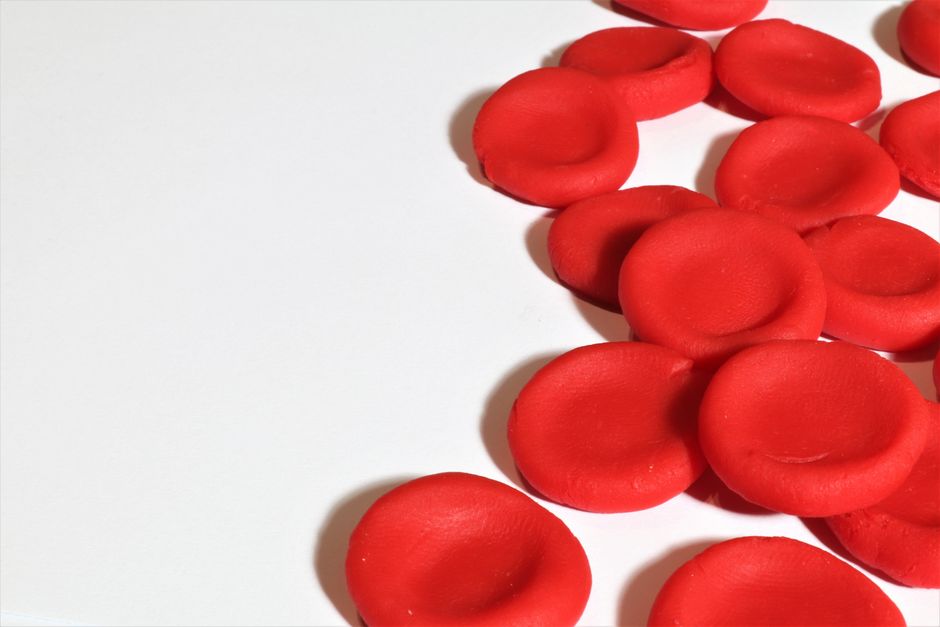
Photo by Roger Brown on Pexels
All living things are composed of one or more cells. Cells are incredibly complex and carry out all the processes necessary for life. There are two main types of cells:
2.1. Prokaryotic Cells
These are the oldest and simplest type of cell.
* No nucleus: Their genetic material (DNA) floats freely in the cytoplasm.
* No membrane-bound organelles: They lack structures like mitochondria or endoplasmic reticulum.
* Generally smaller: Much smaller than eukaryotic cells.
* Examples: Bacteria and Archaea.
2.2. Eukaryotic Cells
These are more complex and evolved cells.
* Has a nucleus: Their DNA is enclosed within a membrane-bound nucleus.
* Has membrane-bound organelles: They contain specialized structures like:
* Mitochondria: "Powerhouses" that generate energy (ATP).
* Endoplasmic Reticulum (ER): Network for protein and lipid synthesis.
* Golgi Apparatus: Modifies, sorts, and packages proteins and lipids.
* Lysosomes (Animal): Break down waste.
* Vacuoles (Plant): Store water and nutrients, maintain turgor.
* Chloroplasts (Plant): Sites of photosynthesis.
* Generally larger: Much larger than prokaryotic cells.
* Examples: Animal cells, plant cells, fungi, protists.
Despite their differences, both prokaryotic and eukaryotic cells have a cell membrane (controls what enters/exits), cytoplasm (the jelly-like substance filling the cell), and ribosomes (structures that make proteins).
3. Worked Example
Imagine you're examining a sample under a microscope. You observe a single, very small organism. Its genetic material isn't contained in a distinct structure; it's just kind of floating around. You also notice a lack of any complex internal compartments.
Based on this, you'd conclude you're looking at a prokaryotic cell, likely a bacterium. If, however, you saw a much larger cell with a clear nucleus and several distinct, membrane-enclosed structures, you'd be looking at a eukaryotic cell. The presence or absence of a nucleus and membrane-bound organelles is the key distinguishing feature.
4. Key Takeaways
- Biology is the study of life, from tiny molecules to global ecosystems.
- Life is organized hierarchically, with cells as the fundamental unit.
- All living things share common characteristics like organization, growth, and reproduction.
- There are two main cell types: prokaryotic (simpler, no nucleus) and eukaryotic (complex, with a nucleus and organelles).
- The nucleus houses genetic material in eukaryotic cells, but not in prokaryotic cells.
- Organelles perform specific jobs within eukaryotic cells, like mitochondria making energy.
Common Mistakes to Avoid:
- Don't confuse prokaryotic cells as "bad" or "primitive"; they are highly successful and diverse.
- Don't forget that all cells (prokaryotic and eukaryotic) have a cell membrane, cytoplasm, and ribosomes.
- Don't mix up the levels of organization; an organ is not the same as an organ system.
- Don't think that all eukaryotic cells are identical; plant and animal cells, for instance, have key differences.
5. Now Try It
Draw a simple Venn diagram comparing and contrasting prokaryotic and eukaryotic cells. In the overlapping section, list features they both share. In the separate sections, list features unique to each type. When you're done, check if you've included at least three shared features and three unique features for each cell type. Success means your diagram clearly shows the distinctions and commonalities without any ambiguity.
Frequently asked about Introduction to Biology and Cellular Organization
More from biology
Get the full biology curriculum
Clone the complete plan to your dashboard for unlimited AI-generated notes, practice quizzes, and a personalised revision schedule.
Create Free Account