Interrelationships and Sustainability Challenges
From the Geog notes curriculum
Interrelationships and Sustainability Challenges
TL;DR
Everything on Earth is connected, and understanding these connections is crucial for tackling big problems like climate change. We're looking at how human actions impact natural systems and what that means for long-term well-being. Thinking sustainably means finding ways to meet our needs without messing things up for the future.
1. The Mental Model
Imagine Earth as a giant, interconnected web where pulling one strand affects all the others. Our actions, like using resources or producing waste, tug on these strands, creating effects that ripple through the environment, society, and economy.
2. The Core Material
When we talk about interrelationships in geography, we're thinking about how different parts of a system interact. This isn't just about natural systems (like climate affecting ecosystems) but also how human systems (like economies or societies) interact with the natural world.
Natural Systems Interrelationships

Photo by K on Pexels
Think about how climate, water cycles, landforms, and living things all influence each other. For instance, a change in temperature (climate) can affect how much ice melts (water cycle), which then impacts sea levels and coastal ecosystems.
Human-Environment Interrelationships

Photo by Victor Abobade on Pexels
This is where it gets really interesting for sustainability. Our societies depend on natural resources (water, timber, minerals) and natural processes (pollination, clean air). But our activities often change these systems. For example, clearing forests for farming affects biodiversity, soil quality, and even local rainfall patterns.
The Triple Bottom Line: People, Planet, Profit
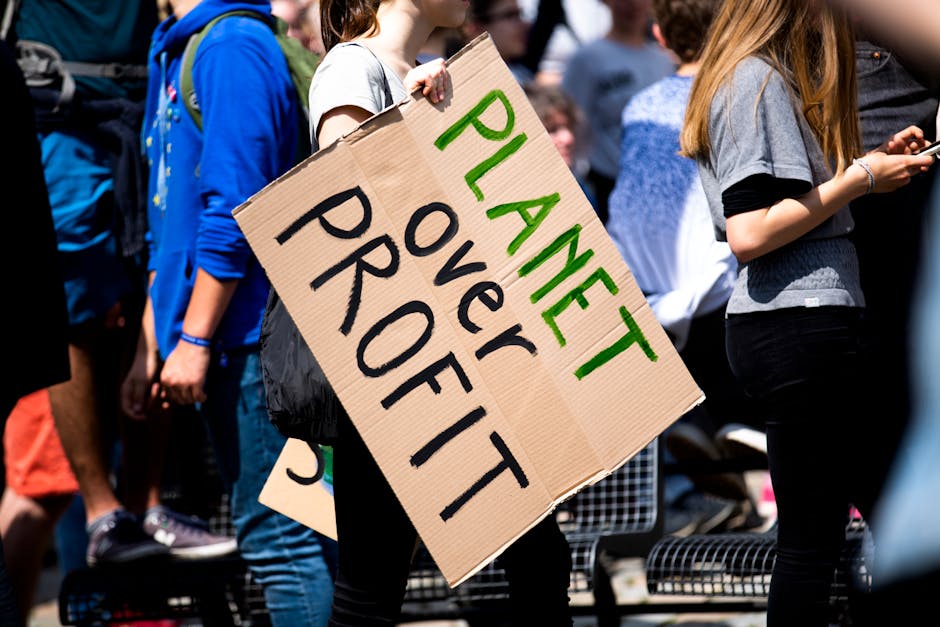
Photo by Markus Spiske on Pexels
Sustainability challenges are complex because they rarely fit into just one category. A "sustainable" solution needs to consider:
* Environmental (Planet): How does it affect natural resources, ecosystems, and pollution?
* Social (People): How does it impact human well-being, equity, health, and communities?
* Economic (Profit): Is it financially viable in the long term? Does it create jobs and prosperity?
A decision that's good for the economy but bad for the environment or society isn't truly sustainable.
graph TD
    A["Resource Extraction (e.g., logging)"] --> B["Habitat Loss/Degradation"];
    A --> C["Soil Erosion"];
    A --> D["Reduced Biodiversity"];
    C --> E["Water Pollution (sediment)"];
    B --> E;
    D --> F["Ecosystem Service Decline (e.g., pollination)"];
    E --> G["Impact on Human Health/Water Supply"];
    F --> H["Food Insecurity"];
    G --> I["Social/Economic Instability"];
    H --> I;
    D --> I;
Sustainability Challenges

Photo by Vitaly Gariev on Pexels
These are the big, complex problems that arise from these interrelationships, especially when human actions degrade the environment or society.
- Climate Change: Burning fossil fuels (economic activity) releases greenhouse gases (environmental impact), leading to global warming, extreme weather, and sea-level rise (environmental, social, economic impacts).
- Biodiversity Loss: Habitat destruction (land use, economic activity) reduces the number of plant and animal species (environmental), which can disrupt ecosystems and services we rely on (social, economic).
- Resource Depletion: Over-extraction of resources like water or minerals (economic demand) can lead to scarcity, conflict, and environmental damage (social, environmental, economic).
- Pollution: Industrial waste or agricultural runoff (economic activity) contaminates air, water, and soil (environmental), causing health problems (social) and affecting livelihoods (economic).
- Inequality: Unequal access to resources or exposure to environmental hazards (social issue) can worsen sustainability challenges, as vulnerable groups often suffer most from environmental degradation.
3. Worked Example
Let's consider the expansion of large-scale palm oil plantations in Southeast Asia.
- Initial Action (Economic): Companies want to grow palm oil because it's a very efficient crop for producing vegetable oil, which is in high global demand for food, cosmetics, and biofuels. This creates jobs and economic growth for some.
- Environmental Interrelationship: To plant palms, vast areas of rainforest are cleared. This leads to:
- Habitat destruction: Critically endangered species like orangutans lose their homes.
- Deforestation: Carbon stored in trees is released into the atmosphere, contributing to climate change.
- Soil degradation: When forest cover is removed, soils can erode more easily, especially on slopes.
- Water quality issues: Runoff from plantations can carry pesticides and fertilizers into rivers, affecting aquatic life and drinking water.
- Social Interrelationship: Local indigenous communities, who depend on these forests for their livelihoods (food, medicine, cultural sites), are displaced or lose access to their traditional lands. This can lead to conflict, poverty, and loss of cultural heritage.
- Sustainability Challenge: The economic benefits come at a significant cost to the environment and local communities, showing a clear imbalance in the "people, planet, profit" equation. A sustainable approach would need to balance these factors, perhaps through certified sustainable palm oil production that avoids deforestation, protects peatlands, and respects local land rights.
4. Key Takeaways
- All systems on Earth (natural, social, economic) are deeply interconnected.
- Human actions have ripple effects across these interconnected systems.
- Sustainability requires balancing environmental protection, social equity, and economic viability.
- Ignoring interrelationships leads to unintended negative consequences and complex sustainability challenges.
- Understanding these connections is the first step towards finding effective solutions.
- Challenges like climate change and biodiversity loss are not isolated but stem from complex interrelationships.
- Solutions must address the root causes of problems, not just the symptoms.
Common Mistakes to Avoid:
* Thinking in isolation: Don't consider environmental, social, or economic issues as separate problems.
* Short-term thinking: Focusing only on immediate benefits without considering long-term consequences.
* Ignoring feedback loops: Not recognizing that an action can cause a change, which then causes further changes back to the original system.
* Blaming a single factor: Most sustainability challenges have multiple, interacting causes.
5. Now Try It
Think about a local environmental issue in your community (e.g., litter, traffic congestion, water scarcity, a new development). Spend 15 minutes mapping out the interrelationships. What are the main human activities contributing to it? How does it impact the natural environment, local society (health, jobs, quality of life), and the economy? Try to identify at least one positive and one negative feedback loop.
Success looks like: A clear, concise list or small diagram showing how different factors are linked, rather than just listing separate problems.
Frequently asked about Interrelationships and Sustainability Challenges
More from Geog notes
Get the full Geog notes curriculum
Clone the complete plan to your dashboard for unlimited AI-generated notes, practice quizzes, and a personalised revision schedule.
Create Free Account