Robotics Safety and Ethical Considerations
From the Robotics curriculum
TL;DR
Robots can be dangerous, so you must design and operate them to be safe for everyone. Beyond physical safety, you need to think about the ethical implications of your robot's actions and data use. Balancing innovation with responsibility is crucial in robotics.
1. The Mental Model
Think of a robot as a powerful, complex tool with a mind of its own (even if it's simple AI). Like a car, it needs clear safety rules, maintenance, and responsible driving. Beyond that, consider its impact on people's jobs, privacy, and decisions.
2. The Core Material
Designing, building, and operating robots comes with significant responsibilities. You're not just creating a machine; you're introducing something into the world that interacts with people and environments, which means safety and ethics are paramount.
2.1 Robotics Safety: Preventing Harm

Photo by Mico Medel on Pexels
Robotics safety is about preventing physical injury, property damage, and operational failures. It's not an afterthought; it needs to be integrated from the earliest design stages.
- Risk Assessment: Before you even build, you need to identify potential hazards. What parts move? How fast? What heavy loads might it drop? Where do people interact with it?
- Safety Standards: Industry standards (like ISO 10218 for industrial robots or ISO/TS 15066 for collaborative robots) provide guidelines for safe design, installation, and operation. You don't have to reinvent the wheel.
- Physical Safeguards: These are hardware-based protections.
- Barriers/Fences: Physical enclosures to keep humans out of a robot's workspace.
- Emergency Stop (E-Stop): Easily accessible buttons to immediately cut power to the robot, stopping all motion.
- Light Curtains/Safety Scanners: Devices that detect if a human enters a protected area and automatically slow or stop the robot.
- Interlocks: Mechanisms that prevent robot operation if a safety door is open.
- Software Safeguards: These are logic-based protections.
- Safe Speed/Separation Monitoring: For collaborative robots (cobots), software ensures the robot slows down or stops if a human is detected nearby.
- Power and Force Limiting: Cobots are designed to limit the force they can exert, reducing the risk of injury upon contact.
- Fault Detection: Systems that monitor for abnormal behavior or component failures and safely shut down the robot.
- Training & Procedures: Even with the safest robot, human error is a factor. Proper training for operators, maintenance personnel, and anyone interacting with the robot is crucial. Clear operating procedures minimize risks.
graph TD
    A["Identify Hazards"] --> B{"Risk Assessment"};
    B --> C["Design Safety Features"];
    C --> D{"Implement Physical Safeguards"};
    C --> E{"Implement Software Safeguards"};
    D --> F["Validate & Test"];
    E --> F;
    F --> G["Operator Training"];
    G --> H["Safe Operation & Maintenance"];
    H --> I{"Continuous Monitoring"};
    I --> B;
2.2 Ethical Considerations: Doing What's Right
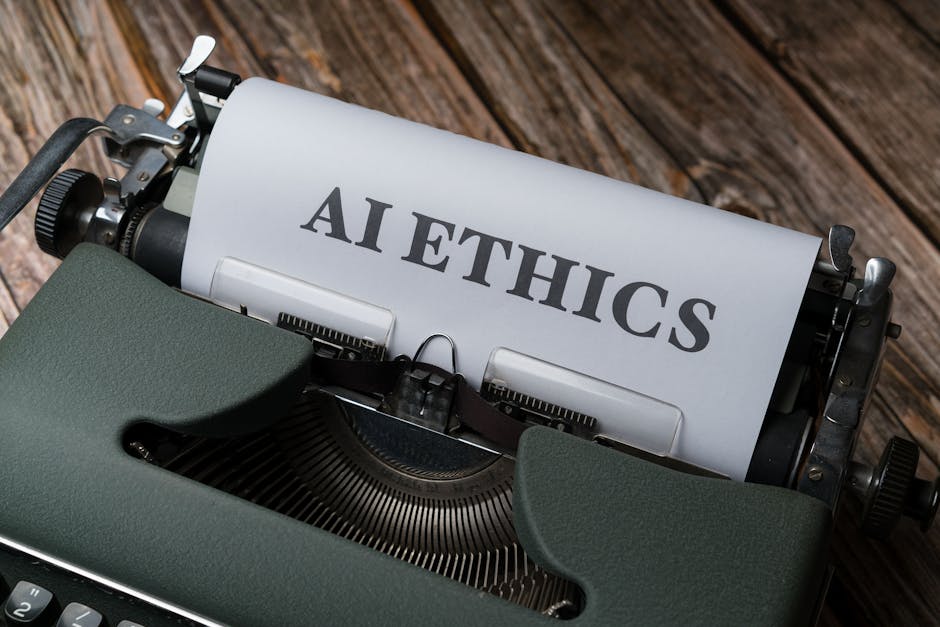
Photo by Markus Winkler on Pexels
Beyond preventing direct physical harm, you need to consider the broader impact of your robot on society, individuals, and the environment.
- Accountability & Responsibility: When a robot causes harm or makes a mistake, who is responsible? The designer, manufacturer, operator, or owner? This needs to be clear.
- Privacy: Robots, especially those with cameras or sensors, can collect vast amounts of data. How is this data stored, used, and protected? Are individuals aware and consenting?
- Bias & Fairness: If your robot uses AI, its decisions can reflect biases present in the data it was trained on. This can lead to unfair or discriminatory outcomes (e.g., in hiring, surveillance). You must actively work to identify and mitigate bias.
- Autonomy & Control: As robots become more autonomous, how much control should humans retain? At what point should a robot be able to make critical decisions without human oversight, especially in life-or-death situations?
- Impact on Employment: The increasing automation enabled by robots can displace human workers. While robots create new jobs, you should consider the societal impact of widespread automation and potential solutions (e.g., retraining programs).
- Human-Robot Interaction (HRI): How do humans perceive and interact with robots? Can robots build trust or create unhealthy dependencies? How do you design robots that are perceived as helpful and non-threatening?
- Misuse Potential: Could your robot be repurposed for harmful intentions (e.g., surveillance, weaponry, unethical manipulation)? You need to consider dual-use concerns.
3. Worked Example
Imagine you're designing a robotic arm for a factory that picks and places heavy engine parts onto an assembly line.
-
Risk Assessment:
- Hazard 1: The arm's fast, powerful movement could strike a worker.
- Hazard 2: It could drop a heavy part onto a worker's foot or head.
- Hazard 3: Pinch points exist where the arm articulates.
- Hazard 4: Software glitch causes unpredictable movement.
-
Safety Implementation:
- Physical: Enclose the robot's primary workspace with a safety fence. Install light curtains at the entry points to the fenced area; if a worker breaks the beam, the robot immediately stops. Place highly visible E-Stop buttons both inside and outside the fenced area.
- Software: Program the robot with safe zones and no-go zones that halt operation if violated. Implement fault detection for motor errors or sensor failures, leading to a safe shutdown. Use redundant control systems so a single failure doesn't lead to uncontrolled motion.
- Training: Workers are thoroughly trained on operation, E-Stop locations, maintenance procedures, and emergency response. "Lock-out/tag-out" procedures are strictly enforced during maintenance.
-
Ethical Considerations:
- Employment: This robot replaced 3 manual laborers. The company provides retraining for these workers to transition to robot maintenance or other roles within the factory, or offers severance and job placement assistance.
- Accountability: Clear protocols are established: if the robot drops a part due to a known software bug, the software developer team is accountable. If it's due to improper maintenance, the maintenance lead is accountable. If it's a design flaw, the robot manufacturer is.
- Data: The robot records operational data (cycle times, error logs) but no personal employee data. This data is used only for performance optimization and predictive maintenance.
4. Key Takeaways
- Always prioritize safety, designing robots to minimize physical harm to humans and property.
- Conduct thorough risk assessments at every stage of robot design and deployment.
- Utilize both physical safeguards (fences, E-stops) and software safeguards (safe speed, fault detection).
- Understand and comply with relevant international and national safety standards.
- Consider the ethical implications of your robot's actions, including privacy, bias, and employment.
- Establish clear lines of accountability and responsibility for robot operations and failures.
- Design robots for clear human-robot interaction and communication.
Common mistakes you should avoid:
- Underestimating the power and potential danger of a robot.
- Assuming humans will always follow safety protocols perfectly.
- Neglecting to involve a diverse group in ethical considerations.
- Treating safety as a checklist item rather than an ongoing process.
- Ignoring the long-term societal impact of your robotic innovation.
5. Now Try It
You're designing a new autonomous delivery robot for urban environments. For this robot, list three specific safety features (physical or software) you'd implement to protect pedestrians and property, and two distinct ethical considerations you'd need to address beyond just physical safety. What success looks like: You'll have identified practical safety measures and thoughtful ethical questions relevant to a public-facing autonomous system.
Frequently asked about Robotics Safety and Ethical Considerations
More from Robotics
Get the full Robotics curriculum
Clone the complete plan to your dashboard for unlimited AI-generated notes, practice quizzes, and a personalised revision schedule.
Save this course free