Robotics Certifications and Standards
From the Robotics curriculum
TL;DR
Robotics certifications validate your skills and knowledge in specific areas like programming, operation, or maintenance. Industry standards ensure robot safety, interoperability, and performance, which is crucial for widespread adoption. Understanding these helps you build safer, more effective robots and advance your career.
1. The Mental Model
Think of certifications as official badges showing you know your stuff in robotics. Standards are like universal rules that everyone agrees on, making sure robots work well together and don't cause harm.
2. The Core Material
When we talk about robotics certifications and standards, we're covering two important but distinct areas that impact how you build, deploy, and operate robots.
What are Robotics Certifications?
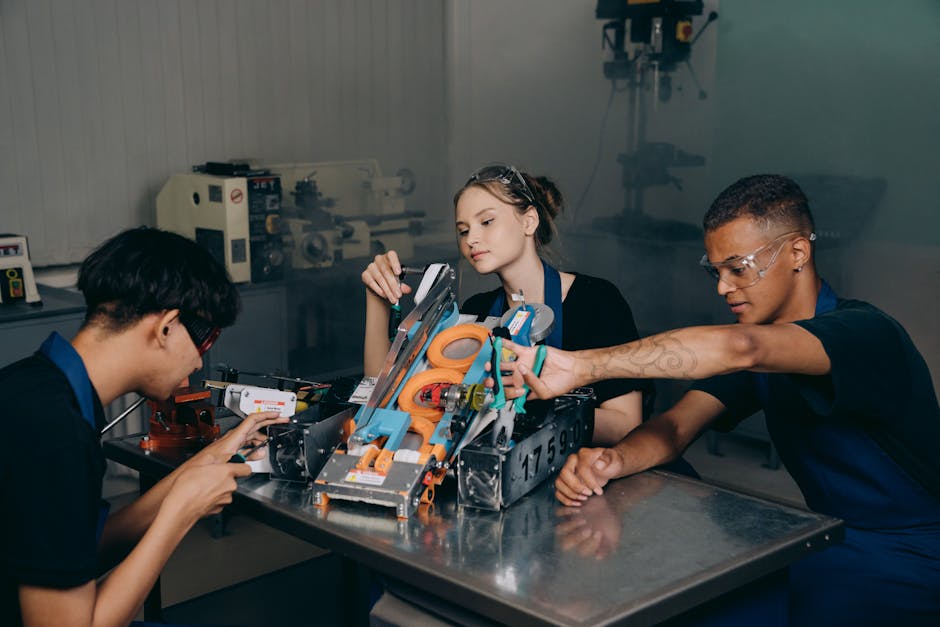
Photo by Mikhail Nilov on Pexels
Certifications are formal recognitions that you've met specific criteria for knowledge or skill in a robotics-related field. They're often offered by vendors, professional organizations, or educational institutions. Getting certified can demonstrate your expertise to potential employers or clients, making you more competitive.
- Vendor-Specific Certifications: These are tied to particular robot brands or software platforms. For example, Universal Robots (UR) offers training and certification for programming and operating their collaborative robots. NVIDIA has certifications for their Jetson platforms in AI and robotics.
- Skill-Based Certifications: These focus on broader skill sets, like robotic process automation (RPA) development, ROS (Robot Operating System) programming, or industrial robot maintenance.
- Safety Certifications: Some certifications might focus specifically on robot safety, like understanding ISO 10218 (covered below) or becoming a certified machine safety expert.
Why are Certifications Useful?

Photo by Pavel Danilyuk on Pexels
- Career Advancement: They can help you get hired, promoted, or qualify for higher-paying roles.
- Skill Validation: They prove you have measurable skills and knowledge.
- Industry Recognition: They show you're serious about your profession and committed to continuous learning.
What are Robotics Standards?

Photo by Tanha Tamanna Syed on Pexels
Standards are documented agreements containing technical specifications or other precise criteria to be used consistently as rules, guidelines, or definitions. In robotics, standards are vital for safety, compatibility, and performance. Without them, every robot would be a unique snowflake, making integration and large-scale deployment incredibly difficult and dangerous.
Key Areas Covered by Standards:
- Safety: The most critical area. Standards ensure robots don't harm humans or damage property.
- Interoperability: Allowing different robots or components from various manufacturers to work together seamlessly.
- Performance: Defining how to measure and report a robot's capabilities (e.g., accuracy, speed).
- Terminology & Communication: Establishing common language and communication protocols.
Important Robotics Standards Bodies:
- ISO (International Organization for Standardization): A global body developing international standards.
- IEC (International Electrotechnical Commission): Focuses on electrical, electronic, and related technologies.
- ANSI (American National Standards Institute) / RIA (Robotics Industries Association): ANSI accredits U.S. standards developers, and RIA often develops robotics standards in the U.S., many of which align with ISO.
Key Robotics Standards You Should Know:

Photo by Tara Winstead on Pexels
- ISO 10218 (Robots and Robotic Devices – Safety requirements for industrial robots): This is the foundational safety standard for industrial robots. It covers requirements for robot design, manufacture, installation, and safeguarding. It has two parts:
- Part 1: Robots: Focuses on the robot itself (e.g., stopping functions, speed limits).
- Part 2: Robot Systems and Integration: Focuses on how robots are integrated into a larger system and the safety measures required for the work cell.
- ISO/TS 15066 (Robots and Robotic Devices – Collaborative Robots): This technical specification builds on ISO 10218-1 and -2 specifically for collaborative robots. It details guidance on safe design and application of robots intended for direct human collaboration, including power and force limiting, hand guiding, and speed/separation monitoring.
- ANSI/RIA R15.06 (Industrial Robots and Robot Systems – Safety Requirements): This is the U.S. national standard, largely harmonized with ISO 10218, but includes some additional U.S.-specific requirements.
- IEC 61508 (Functional safety of electrical/electronic/programmable electronic safety-related systems): This is a general functional safety standard that applies to many industries, including robotics. It provides a framework for ensuring safety-related systems perform correctly.
- ROS Industrial: While not a formal standards body, ROS Industrial provides standardized software interfaces and tools for integrating ROS with industrial hardware, promoting interoperability and accelerating development.
How Certifications and Standards Relate
Certifications often test your understanding and application of these standards. For example, a "Certified Robot Safety Professional" might be certified based on their knowledge of ISO 10218 and ISO/TS 15066.
graph TD
    A["Robotics Landscape"] --> B["Certifications"]
    A --> C["Standards"]

    B --> B1["Vendor-Specific (e.g., UR, NVIDIA)"]
    B --> B2["Skill-Based (e.g., ROS, RPA)"]
    B --> B3["Safety-Focused (e.g., Robot Safety Professional)"]

    C --> C1["Safety Standards"]
    C --> C2["Interoperability Standards"]
    C --> C3["Performance Standards"]

    C1 --> C1a["ISO 10218 (Industrial Robot Safety)"]
    C1 --> C1b["ISO/TS 15066 (Collaborative Robot Safety)"]
    C1 --> C1c["ANSI/RIA R15.06 (US Industrial Safety)"]
    C1 --> C1d["IEC 61508 (Functional Safety)"]

    C2 --> C2a["ROS Industrial (Software Interoperability)"]

    B3 --- C1a
    B3 --- C1b
    C1a -- "Influences" --> B3
    C1b -- "Influences" --> B3
    C2a -- "Enabled by" --> B2

    style A fill:#f9f,stroke:#333,stroke-width:2px
    style B fill:#bbf,stroke:#333,stroke-width:2px
    style C fill:#bbf,stroke:#333,stroke-width:2px
3. Worked Example
Imagine you're designing a new collaborative robotic work cell for an automotive assembly line where humans and robots will work in close proximity without fences.
- Requirement: The robot must safely stop or reduce force if it makes contact with a human, and it must maintain a safe distance when a human enters its workspace.
- Standard Application: You'd immediately turn to ISO/TS 15066 and ISO 10218-2. ISO/TS 15066 would guide you on power and force limiting parameters (e.g., what's a safe force level for incidental contact) and speed/separation monitoring (how fast the robot can move based on human proximity). ISO 10218-2 would provide general guidelines for integrating the robot into the work cell, including emergency stop systems and risk assessments.
- Certification Relevance: Your team's lead robot integrator might hold a "Certified Robot Safety Engineer" or a "Collaborative Robot Programmer" certification. This indicates they understand these standards and can correctly apply them during design, programming, and commissioning to ensure the work cell is compliant and safe. Without adhering to these standards, your robot cell couldn't be legally or safely deployed.
4. Key Takeaways
- Robotics certifications validate your specific skills, making you more marketable.
- Industry standards are critical, ensuring robots are safe, reliable, and compatible.
- ISO 10218 is the primary international safety standard for industrial robots.
- ISO/TS 15066 specifically addresses the unique safety challenges of collaborative robots.
- Understanding these standards is essential for anyone designing, deploying, or operating robotic systems.
- Many standards are developed by bodies like ISO, IEC, and national organizations like ANSI/RIA.
- Vendor-specific certifications often focus on operating or programming a particular brand of robot.
Common Mistakes to Avoid:
- Ignoring safety standards: Never assume a robot is safe just because it's new; always perform risk assessments based on relevant standards.
- Confusing standards with best practices: Standards are minimum requirements; best practices often go beyond them.
- Thinking one certification covers everything: Most certifications are specialized; you'll likely need to gain several over your career.
- Underestimating the importance of interoperability standards: Without them, integrating different robot components becomes a nightmare.
5. Now Try It
Research a robotics certification that interests you (e.g., Universal Robots, ROS, NVIDIA Jetson, or a specific industrial robot brand). Spend 15 minutes finding out:
1. What specific skills or knowledge does this certification validate?
2. Who offers it (vendor, professional body, etc.)?
3. What are the prerequisites or recommended training for it?
Success looks like you being able to clearly explain what the certification is for and how someone would go about getting it.
Frequently asked about Robotics Certifications and Standards
More from Robotics
Get the full Robotics curriculum
Clone the complete plan to your dashboard for unlimited AI-generated notes, practice quizzes, and a personalised revision schedule.
Save this course free