Introduction to Robotics and its Applications
From the Robotics curriculum
TL;DR
Robotics is about designing, building, and operating robots to perform tasks autonomously or semi-autonomously. Robots combine mechanical structures, sensors, and computer programs to interact with the world and automate processes. You'll find them everywhere from manufacturing to exploring other planets, making our lives easier and safer.
1. The Mental Model
Think of a robot as a machine that can sense its environment, think about what to do, and then act on it. It's like an automated worker that doesn't get tired and can often do dangerous or repetitive jobs better than humans.
2. The Core Material
Robotics isn't just about cool humanoids; it's a field integrating mechanics, electronics, and computer science to create machines that can sense, process, and act. Understanding what defines a robot and its common applications will give you a solid foundation.
What is a Robot?
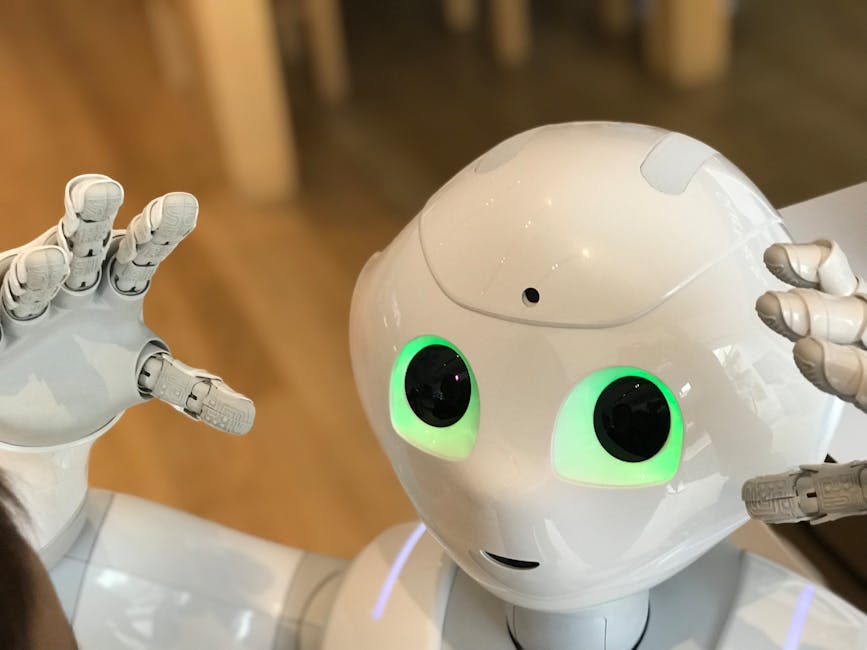
Photo by Laura Musikanski on Pexels
At its heart, a robot is a machine capable of carrying out a complex series of actions automatically, often programmed by a computer. Key characteristics include:
* Sensing: Using sensors (like cameras, touch sensors, GPS) to gather information about its surroundings.
* Processing: Using a "brain" (computer/microcontroller) to interpret sensor data and make decisions based on its programming.
* Acting: Using actuators (motors, grippers, wheels) to perform physical actions in the environment.
* Autonomy: The ability to operate without constant human intervention, ranging from fully autonomous to semi-autonomous (human-supervised).
Types of Robots
Photo by Laura Musikanski on Pexels
Robots come in all shapes and sizes, designed for specific tasks:
* Industrial Robots: Common in manufacturing for tasks like welding, painting, assembly, and material handling. They're typically stationary and designed for precision and repetition.
* Mobile Robots: Designed to move around, like autonomous guided vehicles (AGVs) in warehouses or self-driving cars. They often use wheels, tracks, or legs.
* Humanoid Robots: Built to resemble humans, often for research, personal assistance, or entertainment.
* Medical Robots: Used for surgery, rehabilitation, or delivering medication.
* Service Robots: Cleaners, lawnmowers, or delivery robots that assist people in daily life.
* Exploration Robots: Used in extreme environments, like Mars rovers or underwater drones.
Common Applications

Photo by Vladimir Srajber on Pexels
Robotics impacts nearly every industry:
* Manufacturing: Automating assembly lines, quality control, and hazardous tasks.
* Healthcare: Assisting in surgeries, delivering supplies, and aiding in therapy.
* Logistics & Warehousing: Moving goods, sorting packages, and managing inventory.
* Exploration: Surveying dangerous or inaccessible areas (space, deep sea, disaster zones).
* Agriculture: Harvesting crops, monitoring fields, and spraying pesticides.
* Defense & Security: Surveillance, bomb disposal, and reconnaissance.
Here's a breakdown of the core components and their interaction in a typical robotic system:
graph TD
    A["Environment (Physical World)"] --> B{Sensors};
    B --> C["Controller (Robot Brain)"];
    C --> D{Actuators};
    D --> A;
    C -- "Sends Commands" --> D;
    B -- "Gathers Data" --> C;
    C -- "Makes Decisions" --> C;
    A -- "Receives Actions" --> D;
3. Worked Example
Imagine you're designing a simple mobile robot to deliver small packages in an office building.
- Sensing: The robot needs a camera to see hallways and obstacles, ultrasonic sensors to detect objects close by, and a GPS/IMU (Inertial Measurement Unit) for its position and orientation within the building.
- Processing: Its onboard computer takes the camera feed to identify paths and avoid people. Ultrasonic data tells it how close walls or furniture are. The GPS/IMU helps it navigate from room to room. If an obstacle is detected, its program tells it to stop or go around.
- Acting: Wheels and motors allow it to move through the office. A small gripper arm could pick up and drop off packages. If it encounters a door, a programmed signal might open it or wait for a human to assist.
- Autonomy: You program a route into its system, and it autonomously follows it, adjusting for real-time changes in the environment like unexpected blockages.
So, when the robot "sees" a person in its path, its "brain" processes this, and it "acts" by stopping or rerouting, fulfilling its delivery task without crashing.
4. Key Takeaways
- Robots are programmable machines that sense, process, and act on their environment to perform tasks.
- They integrate mechanical parts, electronic components (sensors, actuators), and computer programming.
- Robots offer benefits like increased efficiency, safety in hazardous environments, and precision for repetitive tasks.
- Applications range widely, from manufacturing assembly lines to surgical assistance and space exploration.
- Autonomous capabilities allow robots to operate with minimal human intervention, making decisions based on their programming and sensor data.
Common mistakes to avoid:
* Thinking robots are only humanoids; most are specialized machines.
* Underestimating the complexity of programming robots to handle unexpected real-world situations.
* Believing robots can replace all human jobs; they often augment human capabilities.
* Ignoring the importance of sensors; a robot can't act intelligently without good data.
5. Now Try It
Think about a repetitive or dangerous task you encounter in daily life or a fictional scenario. Design a simple robot to perform that task. Describe what sensors it would need, what its main "brain" would process (what decisions it would make), and what actions it would take. What would be its biggest challenge?
Frequently asked about Introduction to Robotics and its Applications
More from Robotics
Get the full Robotics curriculum
Clone the complete plan to your dashboard for unlimited AI-generated notes, practice quizzes, and a personalised revision schedule.
Save this course free