Bohr Model and Quantum Concepts
From the Physics Atomic structure and Radioactive decay curriculum
TL;DR
The Bohr model describes electrons orbiting a nucleus in specific energy levels, but it fails for multi-electron atoms. Quantum mechanics provides a more accurate picture, explaining electron behavior with wave-particle duality and probability distributions. These quantum concepts are fundamental to understanding atomic stability and spectra.
1. The Mental Model
Imagine electrons aren't just tiny balls orbiting the nucleus like planets around the sun. Instead, think of them occupying specific "shelves" or energy levels around the nucleus, and they can jump between these shelves by absorbing or emitting energy.
2. The Core Material
Before the Bohr model, physicists knew atoms had a nucleus and electrons, but they couldn't explain why electrons didn't just spiral into the nucleus (which classical physics predicted). They also couldn't explain the discrete "lines" of light (atomic spectra) emitted by excited atoms.
The Bohr Model (a good start, but flawed)
Niels Bohr proposed a model for the hydrogen atom that introduced a few key ideas:
- Quantized Orbits: Electrons can only exist in specific, stable orbits (energy levels) around the nucleus without radiating energy. These orbits are quantized, meaning only certain radii and energies are allowed. Think of stairs – you can stand on step 1 or step 2, but not "between" them.
- Energy Transitions: Electrons can jump from a lower energy level to a higher one by absorbing a specific amount of energy (like a photon). Conversely, they emit a photon of a specific energy when falling from a higher to a lower level. This explains atomic spectra! The energy of the photon corresponds to the energy difference between the two levels.
- Angular Momentum Quantization: Bohr also proposed that the angular momentum of an electron in an orbit is quantized, meaning it can only take on discrete values.
The Bohr model successfully explained the hydrogen spectrum and the Rydberg formula, a big achievement! However, it had limitations: it couldn't explain spectra for atoms with more than one electron, the varying intensities of spectral lines, or the splitting of lines in magnetic fields (Zeeman effect).
Quantum Mechanics (the more accurate picture)
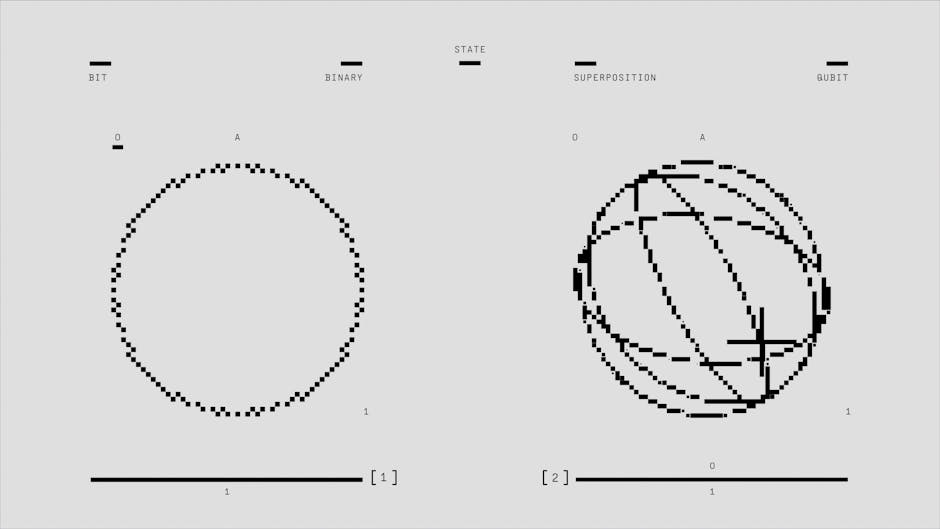
Photo by Google DeepMind on Pexels
This is where things get a bit weirder but also much more powerful. Quantum mechanics replaced the idea of definite electron orbits with a probabilistic view.
- Wave-Particle Duality: De Broglie suggested that particles, including electrons, can also exhibit wave-like properties. An electron isn't just a particle; it's also a wave. This means it doesn't just travel in a path; it has a wavelength.
- Heisenberg Uncertainty Principle: You can't simultaneously know both the exact position and the exact momentum of an electron. The more precisely you know one, the less precisely you know the other. This essentially means we can't pinpoint an electron's exact "orbit" like a planet.
- Schrödinger Equation: This is the core mathematical tool of quantum mechanics. Solving it for an atom gives you "wave functions" (ψ), which don't describe a precise electron path, but rather the probability of finding an electron in a certain region of space around the nucleus.
- Orbitals: Instead of fixed orbits, we talk about orbitals. An orbital is a region of space where there's a high probability (e.g., 90%) of finding an electron. These orbitals have specific shapes (s, p, d, f) and energy levels.
- Quantum Numbers: Each electron in an atom is described by a unique set of four quantum numbers:
- Principal Quantum Number (n): Defines the electron's main energy level and size of the orbital (1, 2, 3...). Corresponds roughly to Bohr's energy levels.
- Angular Momentum (Azimuthal) Quantum Number (l): Defines the shape of the orbital (s, p, d, f subshells). For n=1, l=0 (s orbital). For n=2, l=0 (s) or l=1 (p).
- Magnetic Quantum Number (m_l): Defines the orientation of the orbital in space (e.g., px, py, pz).
- Spin Quantum Number (m_s): Describes an intrinsic property of the electron, its "spin" (either +1/2 or -1/2).
- Pauli Exclusion Principle: No two electrons in an atom can have the exact same set of all four quantum numbers. This means each orbital can hold a maximum of two electrons, and they must have opposite spins.
Here's how these concepts link up:
graph TD
    A["Bohr Model (Quantized Orbits)"] --> B["Explained H-atom Spectra"]
    B --> C{Limitations (Multi-electron, Fine Structure)}
    C --> D["Quantum Mechanics (More Accurate)"]
    D --> E["Wave-Particle Duality (Electrons as Waves)"]
    D --> F["Heisenberg Uncertainty Principle"]
    D --> G["Schrödinger Equation (Probability)"]
    G --> H["Orbitals (Probabilistic Regions)"]
    H --> I["Quantum Numbers (n, l, m_l, m_s)"]
    I --> J["Pauli Exclusion Principle"]
    J --> K["Explains Atomic Structure & Spectra More Fully"]
3. Worked Example
Let's consider an electron in a hydrogen atom transitioning between energy levels.
Imagine an electron in a hydrogen atom is initially in the n=3 energy level. It then transitions down to the n=1 (ground) state. We want to calculate the energy of the photon emitted and its wavelength.
The energy levels for a hydrogen atom are given by the formula:
E_n = -13.6 eV / n^2
-
Calculate the initial energy (n=3):
E_3 = -13.6 eV / (3^2) = -13.6 eV / 9 ≈ -1.51 eV -
Calculate the final energy (n=1):
E_1 = -13.6 eV / (1^2) = -13.6 eV / 1 = -13.6 eV -
Calculate the energy difference (energy of emitted photon):
ΔE = E_final - E_initial = E_1 - E_3 = -13.6 eV - (-1.51 eV) = -12.09 eV.
The absolute value, 12.09 eV, is the energy of the emitted photon. (The negative sign just indicates energy was emitted). -
Convert eV to Joules (J):
1 eV = 1.602 x 10^-19 J
Energy = 12.09 eV * (1.602 x 10^-19 J/eV) ≈ 1.936 x 10^-18 J -
Calculate the wavelength (λ) using E = hc/λ:
Where h is Planck's constant (6.626 x 10^-34 J·s) and c is the speed of light (3.00 x 10^8 m/s).
λ = hc / E
λ = (6.626 x 10^-34 J·s * 3.00 x 10^8 m/s) / (1.936 x 10^-18 J)
λ ≈ (1.9878 x 10^-25 J·m) / (1.936 x 10^-18 J)
λ ≈ 1.026 x 10^-7 mThis wavelength (102.6 nanometers) corresponds to a photon in the ultraviolet range of the electromagnetic spectrum.
4. Key Takeaways
- The Bohr model introduced the concept of quantized energy levels for electrons in atoms.
- It successfully explained the line spectra of hydrogen but failed for more complex atoms.
- Quantum mechanics uses wave functions and probability to describe electron locations, not fixed orbits.
- Orbitals are regions of space where electrons are likely to be found, defined by quantum numbers.
- Wave-particle duality means electrons can behave as both particles and waves.
- The Heisenberg Uncertainty Principle means we can't perfectly know an electron's position and momentum at the same time.
- The Pauli Exclusion Principle states that no two electrons in an atom can have the same set of four quantum numbers.
Common Mistakes to Avoid:
- Don't confuse Bohr's "orbits" with quantum "orbitals"; they are fundamentally different.
- Don't think of electrons as just tiny particles orbiting a nucleus like planets.
- Don't assume the Bohr model is completely useless; it was an important stepping stone.
- Don't forget that energy is absorbed for excitation and emitted for de-excitation.
5. Now Try It
Using the energy level formula for hydrogen (E_n = -13.6 eV / n^2), calculate the energy of the photon emitted when an electron in a hydrogen atom falls from the n=4 level to the n=2 level. What part of the electromagnetic spectrum would this photon be in? (Hint: The Balmer series involves transitions to n=2, which are often in the visible light range). What would success look like? You should have an energy value in eV (or Joules) and a specific wavelength, along with a statement about the type of light emitted.
Frequently asked about Bohr Model and Quantum Concepts
Study this next
Get the full Physics Atomic structure and Radioactive decay curriculum
Clone the complete plan to your dashboard for unlimited AI-generated notes, practice quizzes, and a personalised revision schedule.
Save this course free