Alternating Current (AC) Fundamentals
From the Applied electricity curriculum
TL;DR
Alternating Current (AC) constantly changes direction and magnitude, making it ideal for power transmission over long distances. Unlike DC, AC's ability to be easily transformed to different voltages is its major advantage. Understanding how AC waveforms, frequency, and phase work is key to working with electrical systems.
1. The Mental Model
Imagine electricity as a water flow. With Direct Current (DC), water always flows in one direction. With Alternating Current (AC), the water periodically reverses its flow, sloshing back and forth, but still delivering energy.
2. The Core Material
AC is the type of electricity you get from wall outlets in your home and that's transmitted across power grids. Its main characteristic is that the voltage and current periodically reverse direction, usually in a smooth, sinusoidal pattern.
Why AC?
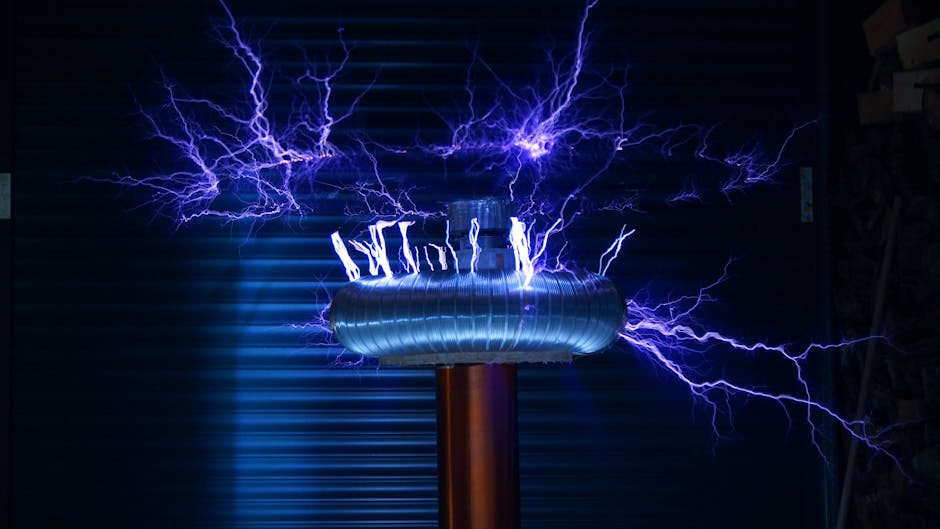
Photo by Killian Eon on Pexels
The biggest advantage of AC over DC is its ability to be easily transformed to different voltage levels using transformers. High voltages are efficient for long-distance transmission (less current, less heat loss), while lower voltages are safer for home use. DC systems need complex and expensive converters to change voltage levels efficiently.
AC Waveforms: The Sine Wave
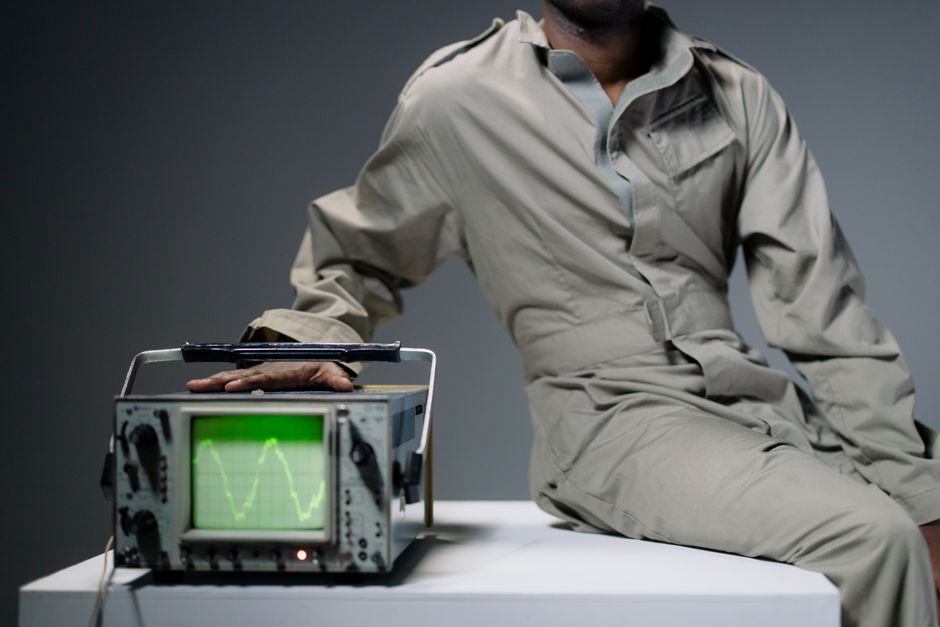
Photo by cottonbro studio on Pexels
The most common AC waveform is the sine wave. It represents how voltage or current changes over time.
- Cycle: One complete pattern of the wave, from zero, to positive peak, to zero, to negative peak, and back to zero.
- Peak Value (Amplitude): The maximum voltage or current reached during a cycle, both positive and negative.
- Peak-to-Peak Value: The total voltage or current from the positive peak to the negative peak.
- Instantaneous Value: The voltage or current at any specific point in time within the cycle.
Frequency
Frequency (f) tells us how many complete cycles occur in one second. It's measured in Hertz (Hz).
- In North America, the standard frequency is 60 Hz.
- In many other parts of the world, it's 50 Hz.
A 60 Hz current completes 60 full cycles every second.
Period (T) is the time it takes for one complete cycle to occur. It's the reciprocal of frequency:
$T = \frac{1}{f}$
For a 60 Hz system, the period is $T = \frac{1}{60} \approx 0.0167$ seconds (or 16.7 milliseconds).
Phase
When you have multiple AC waves, their phase describes their relationship in time to each other.
- In phase: Two waves are in phase if their peaks and zeros occur at the exact same time.
- Out of phase: Two waves are out of phase if their peaks and zeros don't align. This difference is measured in degrees or radians.
- A phase shift of 90 degrees means one wave reaches its peak when the other is at zero.
- A phase shift of 180 degrees means one wave is at its positive peak when the other is at its negative peak.
Phase is crucial when dealing with multi-phase AC systems (like three-phase power) or when analyzing how components like inductors and capacitors affect current and voltage.
graph TD
    A["AC Fundamentals"] --> B["Key Characteristics"]
    B --> C["Waveform (Sine Wave)"]
    B --> D["Frequency"]
    B --> E["Phase"]
    C --> C1["Cycle"]
    C --> C2["Peak Value"]
    C --> C3["Peak-to-Peak"]
    D --> D1["Hertz (Hz)"]
    D --> D2["Period (T)"]
    E --> E1["In Phase"]
    E --> E2["Out of Phase"]
    E2 --> E2a["Phase Shift (Degrees/Radians)"]
3. Worked Example
Let's say you're working with a European power supply that operates at 230 V, 50 Hz. You want to know the period of this AC signal.
-
Identify the given frequency (f):
$f = 50 \text{ Hz}$ -
Use the formula for period (T):
$T = \frac{1}{f}$ -
Substitute the frequency value:
$T = \frac{1}{50 \text{ Hz}}$ -
Calculate the period:
$T = 0.02 \text{ seconds}$
So, for a 50 Hz AC supply, one complete cycle of the voltage or current takes 0.02 seconds (or 20 milliseconds). This means the voltage changes direction and completes its pattern 50 times every second.
4. Key Takeaways
- AC voltage and current periodically reverse direction, typically in a smooth sine wave.
- The main advantage of AC is its easy transformation to different voltage levels, crucial for power transmission.
- Frequency (Hz) indicates how many cycles occur per second; the period is the time for one cycle ($T=1/f$).
- Phase describes the time relationship between different AC waveforms.
- A 60 Hz system completes 60 cycles per second, meaning its period is about 16.7 milliseconds.
Common Mistakes to Avoid:
- Confusing peak voltage with RMS voltage (we'll cover RMS later, but peak is the absolute max).
- Forgetting that frequency and period are inversely related.
- Assuming all AC systems are 60 Hz; always check the regional standard.
5. Now Try It
You're presented with an AC waveform from an oscilloscope, and you measure that one complete cycle takes 0.01 seconds. Calculate the frequency of this AC signal. What would a device designed for 50 Hz do if plugged into this supply (assuming compatible voltage)?
Success looks like: You correctly calculate the frequency in Hertz and can explain the potential issue of a frequency mismatch.
Try it yourself: AC generator in 3D
Frequently asked about Alternating Current (AC) Fundamentals
Study this next
Get the full Applied electricity curriculum
Clone the complete plan to your dashboard for unlimited AI-generated notes, practice quizzes, and a personalised revision schedule.
Save this course free