Mitochondria and Chloroplasts: Energy Transformers
From the Biology curriculum
TL;DR
Mitochondria convert glucose into usable energy (ATP) for cells through cellular respiration, while chloroplasts capture light energy to make glucose through photosynthesis. These two organelles are vital for nearly all life on Earth, forming a complementary energy cycle. They both originated from ancient bacteria through endosymbiosis, retaining their own DNA and unique double membranes.
1. The Mental Model
Think of mitochondria as your cell's power plants, burning fuel (glucose) to generate electricity (ATP). Chloroplasts are like tiny solar panels and food factories, converting sunlight into that fuel (glucose).
2. The Core Material
Mitochondria and chloroplasts are fascinating organelles found in eukaryotic cells, each playing a critical role in energy transformation. They're often called the "powerhouses" and "food factories" of the cell, respectively. What's even cooler is their shared evolutionary history.
Endosymbiotic Theory
Both mitochondria and chloroplasts are thought to have originated from free-living bacteria that were engulfed by ancestral eukaryotic cells billions of years ago. Instead of being digested, these bacteria formed a symbiotic relationship with the host cell, eventually evolving into the organelles we know today. This theory is supported by several key pieces of evidence:
* Double Membranes: Both organelles have an outer membrane (from the host cell's engulfment) and an inner membrane (from the original bacterial membrane).
* Own DNA: They contain their own circular DNA, separate from the cell's nuclear DNA, much like bacterial chromosomes.
* Ribosomes: They have their own ribosomes, similar in size and structure to bacterial ribosomes, used for synthesizing some of their own proteins.
* Reproduction: They reproduce independently by binary fission, just like bacteria.
Mitochondria: The Cell's Power Plant

Photo by Leo Freire on Pexels
Mitochondria are responsible for cellular respiration, the process that breaks down glucose to produce adenosine triphosphate (ATP), the primary energy currency of the cell. Without ATP, cells can't perform essential functions like muscle contraction, nerve impulses, or synthesizing new molecules.
Here's a simplified breakdown:
1. Glycolysis (in cytoplasm): Glucose is split into two pyruvate molecules. A small amount of ATP is produced.
2. Krebs Cycle (in mitochondrial matrix): Pyruvate is further broken down, releasing carbon dioxide and producing electron carriers (NADH and FADH2).
3. Electron Transport Chain (on inner mitochondrial membrane): The electron carriers deliver electrons, powering a series of protein complexes to pump protons. This creates a proton gradient, which is then used by ATP synthase to generate a large amount of ATP. Oxygen is the final electron acceptor, forming water.
Structure of a Mitochondrion:
- Outer Membrane: Smooth and permeable to small molecules.
- Inner Membrane: Highly folded into structures called cristae, which increase the surface area for the electron transport chain.
- Intermembrane Space: The space between the outer and inner membranes.
- Matrix: The innermost compartment, containing enzymes for the Krebs cycle, mitochondrial DNA, and ribosomes.
graph TD
    A[Glucose] --> B{Glycolysis (Cytoplasm)};
    B --> C[Pyruvate];
    C --> D{Krebs Cycle (Mitochondrial Matrix)};
    D --> E[Electron Carriers (NADH, FADH2)];
    E --> F{Electron Transport Chain (Inner Mitochondrial Membrane)};
    F --> G[Proton Gradient];
    G --> H[ATP Synthase];
    H --> I[LOTS of ATP];
    F --> J[Water (from Oxygen)];
    D --> K[Carbon Dioxide];
Chloroplasts: The Cell's Food Factory
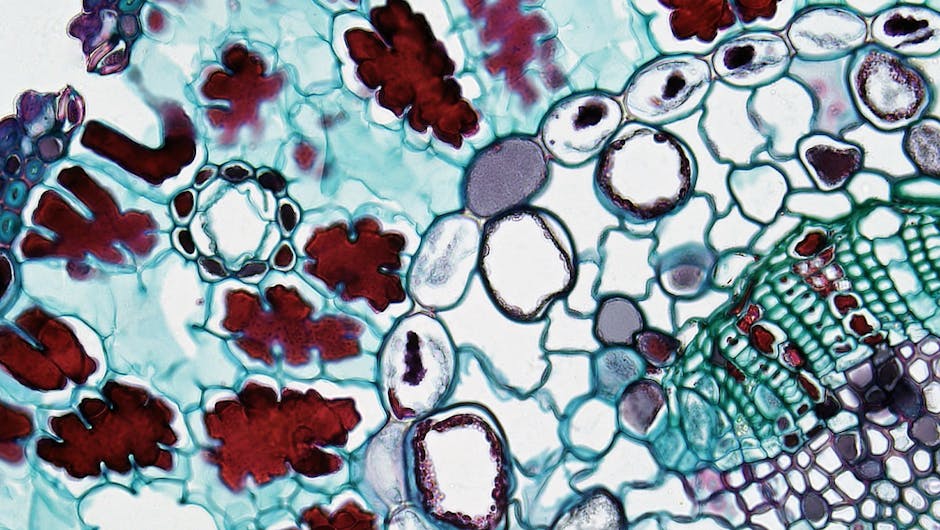
Photo by Fayette Reynolds M.S. on Pexels
Chloroplasts are found in plant cells and some algae and are responsible for photosynthesis, the process that converts light energy into chemical energy in the form of glucose. This glucose then serves as the primary energy source for the plant and, indirectly, for most other life forms on Earth.
Here's a simplified breakdown:
1. Light-Dependent Reactions (in thylakoid membranes): Chlorophyll pigments capture light energy, which is used to split water molecules (releasing oxygen) and generate ATP and NADPH (another electron carrier).
2. Light-Independent Reactions (Calvin Cycle, in stroma): The ATP and NADPH from the light reactions are used to fix carbon dioxide from the atmosphere, converting it into glucose.
Structure of a Chloroplast:
- Outer Membrane: Smooth and permeable.
- Inner Membrane: Regulates passage of materials in and out.
- Stroma: The fluid-filled space within the inner membrane, containing enzymes for the Calvin cycle, chloroplast DNA, and ribosomes.
- Thylakoids: Flattened sacs stacked into structures called grana (singular: granum). The thylakoid membranes contain chlorophyll and are the site of the light-dependent reactions.
Complementary Relationship
Mitochondria and chloroplasts have a beautiful, complementary relationship. The products of photosynthesis (glucose and oxygen) are the reactants for cellular respiration. Conversely, the products of cellular respiration (carbon dioxide and water) are the reactants for photosynthesis. This forms a crucial cycle that sustains life on Earth.
3. Worked Example
Let's trace energy from the sun to a muscle contraction.
- Sunlight hits a plant leaf. Inside the chloroplasts, chlorophyll absorbs this light energy.
- Light-dependent reactions occur in the thylakoid membranes. Water (H₂O) is split, releasing oxygen (O₂) into the atmosphere, and energy is captured in ATP and NADPH molecules.
- Light-independent reactions (Calvin Cycle) occur in the chloroplast's stroma. Carbon dioxide (CO₂) from the air is combined with the ATP and NADPH to synthesize glucose (C₆H₁₂O₆). This glucose can be stored or used by the plant.
- A human eats the plant (or an animal that ate the plant). The glucose from the plant is digested and absorbed into the human's cells.
- In a muscle cell, glucose undergoes glycolysis in the cytoplasm, breaking it into pyruvate.
- Pyruvate enters the mitochondrion's matrix. Here, it's further broken down in the Krebs cycle, releasing CO₂ (which you exhale) and generating electron carriers (NADH, FADH₂).
- These electron carriers go to the inner mitochondrial membrane for the electron transport chain. Their electrons power proton pumps, creating a gradient.
- ATP synthase uses this proton gradient to produce a large amount of ATP.
- This ATP then provides the energy for the muscle cell to contract, allowing you to lift your arm!
4. Key Takeaways
- Mitochondria and chloroplasts are unique organelles with their own DNA, ribosomes, and double membranes, supporting the endosymbiotic theory.
- Mitochondria are the sites of cellular respiration, breaking down glucose to generate ATP, the cell's energy currency.
- Chloroplasts are the sites of photosynthesis, converting light energy into glucose and releasing oxygen.
- The inner membrane of mitochondria is highly folded into cristae to maximize surface area for ATP production.
- Chloroplasts contain stacks of thylakoids called grana, where light-dependent reactions occur.
- These two organelles maintain a vital, complementary cycle of energy and matter (glucose, oxygen, CO₂, water) for life on Earth.
- Without ATP from mitochondria, cells can't perform basic functions; without glucose from chloroplasts, most food chains collapse.
Common Mistakes to Avoid
- Don't confuse the functions: mitochondria make ATP from glucose, chloroplasts make glucose from light.
- Remember both have double membranes, not just one.
- Don't forget that both have their own genetic material and ribosomes.
- Mixing up where the Krebs cycle (matrix) and electron transport chain (inner membrane) happen in mitochondria.
- Forgetting that plants also have mitochondria to break down the glucose they produce.
5. Now Try It
Imagine you are explaining the energy flow in a leaf cell to someone. Draw a simple diagram (or just list the steps) showing how sunlight becomes usable energy for the cell. Label where photosynthesis and cellular respiration occur within the organelles, and name the key inputs and outputs for each process. Success looks like clearly showing the connection between the two organelles and their roles in creating and using energy within the plant cell.
Try it yourself: Transformer calculator: turns ratio
Frequently asked about Mitochondria and Chloroplasts: Energy Transformers
More from Biology
Get the full Biology curriculum
Clone the complete plan to your dashboard for unlimited AI-generated notes, practice quizzes, and a personalised revision schedule.
Save this course free