Cellular Organization and Integration
From the Biology curriculum
TL;DR
Cells are the basic units of life, organizing into increasingly complex structures like tissues, organs, and organ systems to perform specialized functions. This hierarchical organization allows multicellular organisms to maintain internal stability, known as homeostasis, through coordinated cellular activities. Understanding this framework helps us see how every part contributes to the whole organism's survival.
1. The Mental Model
Think of cells like individual LEGO bricks. They're amazing on their own, but when you snap them together in specific ways, you can build incredible, functional structures, from a small toy car to a huge castle. That's essentially how life organizes from cells to entire organisms.
2. The Core Material
Life is built in a hierarchy, starting small and getting more complex. Each level builds upon the last, leading to a fully functional organism.
Levels of Organization

Photo by MART PRODUCTION on Pexels
-
Cells: These are the fundamental units of life. Whether you're a single-celled bacterium or a human, cells are where life happens. They carry out all basic life processes, like getting energy, growing, and reproducing.
- Prokaryotic cells: Simple, no nucleus or membrane-bound organelles (e.g., bacteria).
- Eukaryotic cells: More complex, with a nucleus and organelles (e.g., animal, plant, fungal cells).
-
Tissues: When similar cells group together and work in a coordinated way to perform a specific function, they form a tissue. Imagine a bunch of muscle cells working together to contract.
- Epithelial tissue: Covers body surfaces, lines cavities, forms glands (e.g., skin, lining of digestive tract).
- Connective tissue: Supports, protects, and binds other tissues (e.g., bone, blood, fat).
- Muscle tissue: Responsible for movement (e.g., skeletal, cardiac, smooth muscle).
- Nervous tissue: Transmits electrical signals (e.g., brain, spinal cord, nerves).
-
Organs: Different types of tissues working together for a common purpose form an organ. Your stomach, for example, has epithelial tissue for lining, muscle tissue for churning food, nervous tissue for control, and connective tissue to hold it all together.
-
Organ Systems: A group of organs that cooperate to perform major functions for the body creates an organ system. The digestive system includes organs like the stomach, intestines, liver, and pancreas, all working together to process food.
-
Organism: This is the complete living being, made up of all the organ systems working in harmony.
Here's how that hierarchy looks:
graph TD
    A["Cells"] --> B["Tissues"]
    B --> C["Organs"]
    C --> D["Organ Systems"]
    D --> E["Organism"]
Cellular Integration and Homeostasis
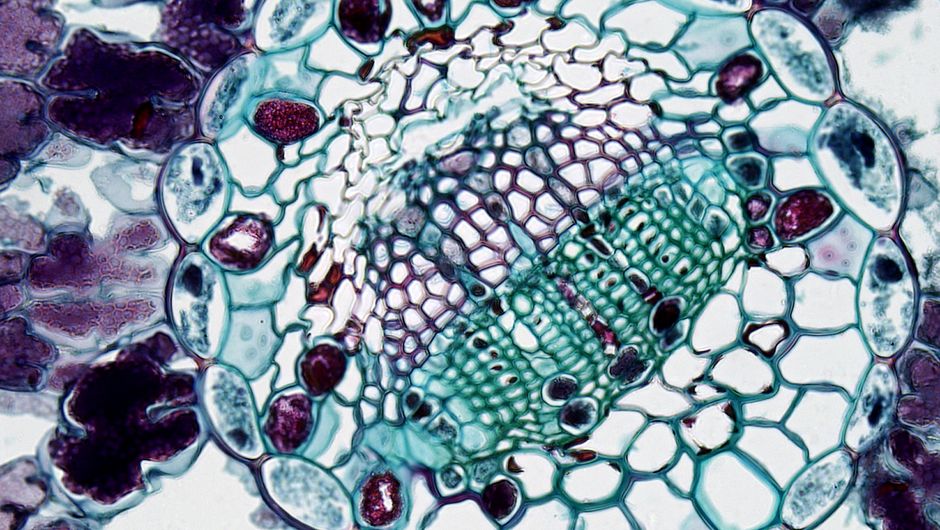
Photo by Fayette Reynolds M.S. on Pexels
The magic of multicellular life isn't just in the organization, but in the integration—how all these parts communicate and work together. This cooperation is crucial for maintaining homeostasis, which is the body's ability to keep its internal environment stable, despite changes outside.
Think about your body temperature. If you get cold, your cells sense it, tissues shiver (muscle tissue!), and organs like your brain coordinate responses to warm you up. If you get too hot, sweat glands (epithelial tissue) activate. This constant balancing act is homeostasis, and it relies on all levels of organization being integrated.
Key mechanisms for integration:
- Cell Communication: Cells talk to each other through chemical signals (hormones, neurotransmitters) or direct contact. This ensures coordinated action.
- Feedback Loops: These are mechanisms that regulate physiological processes.
- Negative feedback: Most common; it reduces the stimulus (e.g., high blood sugar causes insulin release, lowering blood sugar).
- Positive feedback: Less common; it amplifies the stimulus (e.g., contractions during childbirth).
3. Worked Example
Let's trace how your body responds to a drop in blood glucose (sugar) levels, demonstrating cellular organization and integration for homeostasis.
- Stimulus: You haven't eaten in a while, and your blood glucose drops.
- Cells (Sensors): Specific cells in your pancreas (islet cells) detect this low glucose.
- Organ (Pancreas): The pancreas, acting as an endocrine organ, responds by releasing a hormone called glucagon.
- Target Organ (Liver): Glucagon travels through your bloodstream to liver cells.
- Tissue/Cellular Response: Liver cells (epithelial tissue, specifically hepatocytes) have receptors for glucagon. When glucagon binds, it triggers these liver cells to break down stored glycogen into glucose and release it into the blood.
- Organ System (Circulatory/Endocrine): The circulatory system distributes the released glucose, and the endocrine system coordinates the hormonal response.
- Homeostasis Restored: Blood glucose levels return to normal.
This entire process involves specialized cells forming tissues, organs (pancreas, liver), and organ systems (endocrine, circulatory) working together to maintain the body's internal balance.
4. Key Takeaways
- Cells are the fundamental building blocks of all living organisms.
- Life is organized hierarchically, from cells to tissues, organs, organ systems, and finally the complete organism.
- Tissues are groups of similar cells working together for a specific function.
- Organs are composed of different tissues cooperating for a common purpose.
- Organ systems are collections of organs that perform major body functions.
- Homeostasis is the maintenance of stable internal conditions, crucial for survival.
- Cellular integration, often through communication and feedback loops, is essential for achieving and maintaining homeostasis.
Common mistakes to avoid:
- Confusing tissues with organs: Remember, tissues are parts of organs, not organs themselves.
- Underestimating the role of communication: Without cell-to-cell communication, larger structures couldn't function together.
- Thinking of organization as separate steps: It's a continuous, integrated system, not a series of isolated levels.
- Forgetting about homeostasis: It's the ultimate goal and reason for this complex organization.
5. Now Try It
Choose one major organ system (e.g., respiratory, nervous, urinary) and, in your own words, describe its primary function. Then, identify at least two key organs within that system and explain what types of tissues you'd expect to find in each, and how those tissues contribute to the organ's function. Success looks like clearly articulating the system's role and detailing the tissue-level contributions of its components.
Try it yourself: Area under a curve: integration and the trapezium rule
Frequently asked about Cellular Organization and Integration
More from Biology
Get the full Biology curriculum
Clone the complete plan to your dashboard for unlimited AI-generated notes, practice quizzes, and a personalised revision schedule.
Save this course free