Introduction to Cells and Cell Theory
From the Biology curriculum
TL;DR
Cells are the fundamental building blocks of all living things, from bacteria to plants and animals. Cell theory provides a unifying framework for understanding life, stating that all organisms are made of cells, cells are the basic unit of life, and all cells come from pre-existing cells. Understanding cells is crucial for grasping how biological systems function and interact.
1. The Mental Model
Think of cells like the LEGO bricks of life. Just as you build anything from a simple car to a complex castle with LEGO bricks, all living organisms are constructed from these tiny, fundamental units, each with its own specific job.
2. The Core Material
Cells are the smallest units of life that can perform all the functions necessary for life, such as metabolism, growth, and reproduction. They're incredibly diverse, but all share some basic components.
Types of Cells: Prokaryotic vs. Eukaryotic
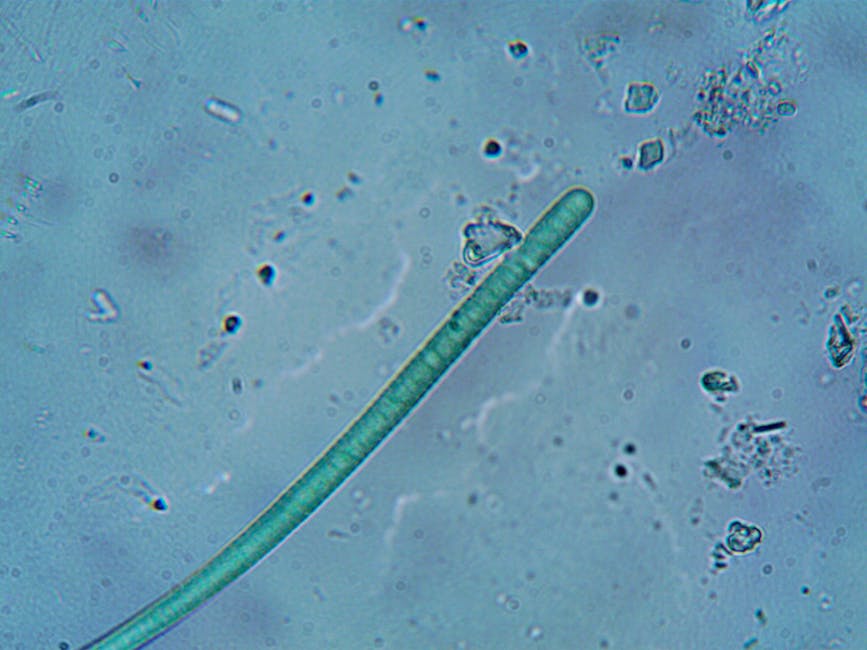
Photo by turek on Pexels
There are two main types of cells:
- Prokaryotic Cells: These are simpler and generally smaller cells. They lack a true nucleus and other membrane-bound organelles. Their genetic material (DNA) is free-floating in the cytoplasm. Bacteria and archaea are examples of prokaryotes.
- Eukaryotic Cells: These are more complex and generally larger. They possess a true nucleus, which houses their DNA, and a variety of membrane-bound organelles that perform specialized functions (like mitochondria for energy or chloroplasts for photosynthesis in plants). Animals, plants, fungi, and protists are all made of eukaryotic cells.
Here's a quick comparison:
graph TD
    A["Cell Types"] --> B["Prokaryotic Cells"]
    A --> C["Eukaryotic Cells"]
    B --> B1["No true nucleus"]
    B --> B2["DNA in cytoplasm"]
    B --> B3["Simpler, smaller"]
    B --> B4["Examples: Bacteria, Archaea"]
    C --> C1["True nucleus (DNA inside)"]
    C --> C2["Membrane-bound organelles"]
    C --> C3["More complex, larger"]
    C --> C4["Examples: Animals, Plants, Fungi"]
Key Components Shared by All Cells
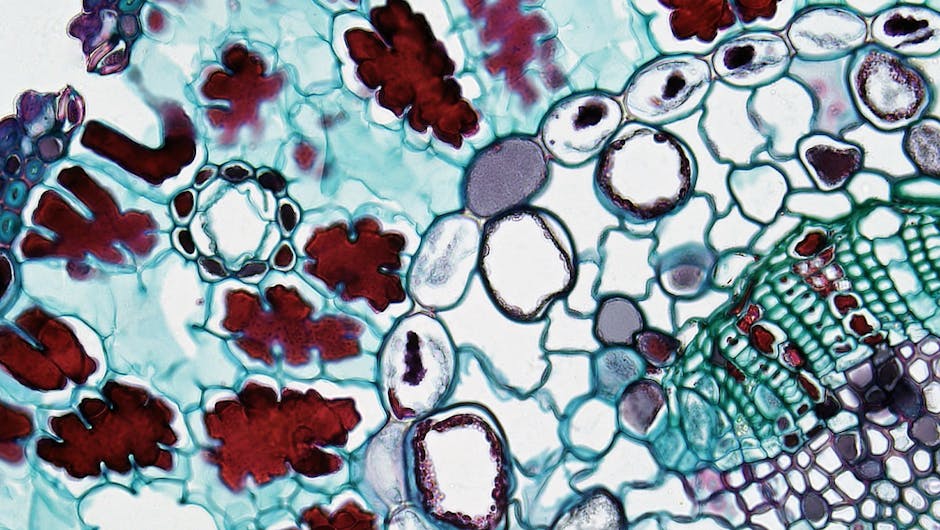
Photo by Fayette Reynolds M.S. on Pexels
Despite their differences, all cells (both prokaryotic and eukaryotic) share some fundamental structures:
- Plasma Membrane (Cell Membrane): This is a thin, flexible barrier that surrounds the cell, regulating what enters and leaves. It's like the cell's "skin" or "gatekeeper."
- Cytoplasm: This is the jelly-like substance that fills the cell and surrounds the organelles. It's where many cellular reactions occur.
- DNA (Genetic Material): This is the cell's "blueprint" or "instruction manual," containing all the information needed to build and operate the cell.
- Ribosomes: These tiny structures are responsible for protein synthesis (making proteins based on the DNA instructions). Think of them as the cell's "protein factories."
The Cell Theory

Photo by Leo Freire on Pexels
The Cell Theory is one of the foundational principles of biology. It's not just a guess; it's a well-established scientific theory supported by vast evidence. It has three main tenets:
- All known living things are made up of one or more cells. This means whether it's a tiny bacterium or a giant whale, cells are the fundamental units of their structure.
- The cell is the basic structural and functional unit of all living things. This means a cell is the smallest entity that can be considered "alive" and carry out life processes. You can't have "half a cell" doing life functions.
- All cells arise from pre-existing cells by division. Cells don't spontaneously appear; they come from other cells dividing. This disproved the idea of spontaneous generation.
3. Worked Example
Let's consider a simple example: a single-celled organism like an Amoeba.
According to Cell Theory:
- Is it made of cells? Yes, an Amoeba is a cell. It's a single-celled organism.
- Is it a basic unit of life? Yes, the Amoeba cell can move, feed, digest, excrete waste, and reproduce—all essential life functions. It's the simplest unit capable of independent life.
- Does it come from pre-existing cells? Yes, an Amoeba reproduces by dividing into two new daughter Amoeba cells. It doesn't just appear out of nowhere.
This simple example perfectly illustrates all three tenets of the cell theory in action for a single organism.
4. Key Takeaways
- Cells are the fundamental building blocks of all life.
- There are two main types of cells: prokaryotic (simpler, no true nucleus) and eukaryotic (complex, with a nucleus and organelles).
- All cells share a plasma membrane, cytoplasm, DNA, and ribosomes.
- The Cell Theory states that all living things are made of cells.
- The cell is the basic unit of structure and function in living things.
- All cells arise from pre-existing cells through cell division.
- Understanding cells is crucial for comprehending all biological processes.
Common Mistakes to Avoid:
- Don't confuse the cell wall (found in plants, fungi, some bacteria) with the plasma membrane (found in all cells).
- Don't think that only complex organisms have cells; even bacteria are single-celled organisms.
- Avoid the idea that new cells can spontaneously generate; they always come from existing cells.
- Don't assume all cells are the same size or shape; they are incredibly diverse, reflecting their varied functions.
5. Now Try It
Imagine you've discovered a new microscopic life form. Based on what you've learned about cells and cell theory, what three key observations would you need to make to confirm that this new life form is indeed made of cells and adheres to cell theory? Think about what you'd look for and how you'd interpret your findings.
Success looks like: Clearly stating three distinct observations you'd make and explaining why each observation confirms a specific tenet of cell theory.
Frequently asked about Introduction to Cells and Cell Theory
More from Biology
Get the full Biology curriculum
Clone the complete plan to your dashboard for unlimited AI-generated notes, practice quizzes, and a personalised revision schedule.
Save this course free