"description": "Introduction to the scientific method, fundamental quantities, and basic measurement techniques across scientific disciplines.",
From the Integrated Science curriculum
TL;DR
Science is a systematic way of understanding the world through observation and experimentation, following a process called the scientific method. Everything we measure in science relies on fundamental quantities, which are the basic building blocks like length, mass, and time. Accurate measurement techniques ensure our data is reliable and helps us draw valid conclusions.
1. The Mental Model
Think of science as a detective story where you're trying to figure out how the world works. You observe clues (data), form ideas (hypotheses), test them out (experiments), and then either confirm or revise your ideas based on what you find.
2. The Core Material
Science isn't just a collection of facts; it's a process for discovering them. This process is the scientific method.
The Scientific Method

Photo by Markus Winkler on Pexels
The scientific method provides a structured approach to inquiry:
- Observation: You notice something interesting or a problem that needs explaining.
- Question: Based on your observation, you form a question. (e.g., "Why does this plant grow faster?")
- Hypothesis: You propose a testable explanation or prediction for your question. This is an educated guess. (e.g., "I hypothesize that plant A grows faster because it gets more sunlight.")
- Experiment: You design and conduct an experiment to test your hypothesis. This involves controlling variables – changing one thing (independent variable) and observing its effect on another (dependent variable) while keeping everything else the same (controlled variables).
- Analysis: You collect and analyze the data from your experiment.
- Conclusion: You interpret your data to determine if it supports or refutes your hypothesis. If it refutes it, you might revise your hypothesis and test again. If it supports it, your hypothesis gains strength, but it's never proven absolutely true, just supported by evidence.
graph TD
    A["Observe/Ask a Question"] --> B["Form a Hypothesis"]
    B --> C["Design & Conduct Experiment"]
    C --> D["Analyze Data"]
    D --> E{"Does data support hypothesis?"}
    E -- Yes --> F["Draw Conclusion/Report Results"]
    E -- No --> G["Revise Hypothesis/Re-experiment"]
    F --> A
    G --> B
Fundamental Quantities (SI Units)

Photo by Markus Winkler on Pexels
To measure and describe the world consistently, scientists use a standard system called the International System of Units (SI). These are the basic quantities that all other measurements are derived from:
- Length: Measures distance. The SI unit is the meter (m).
- Mass: Measures the amount of matter in an object. The SI unit is the kilogram (kg). (Note: not grams!)
- Time: Measures duration. The SI unit is the second (s).
- Electric Current: Measures the flow of electric charge. The SI unit is the ampere (A).
- Temperature: Measures the degree of hotness or coldness. The SI unit is the kelvin (K).
- Amount of Substance: Measures the number of elementary entities (like atoms or molecules). The SI unit is the mole (mol).
- Luminous Intensity: Measures the power emitted by a light source in a particular direction. The SI unit is the candela (cd).
Understanding these fundamental units is crucial because every measurement you take, from how far a car travels to how much sugar is in a solution, ultimately relates back to them.
Basic Measurement Techniques
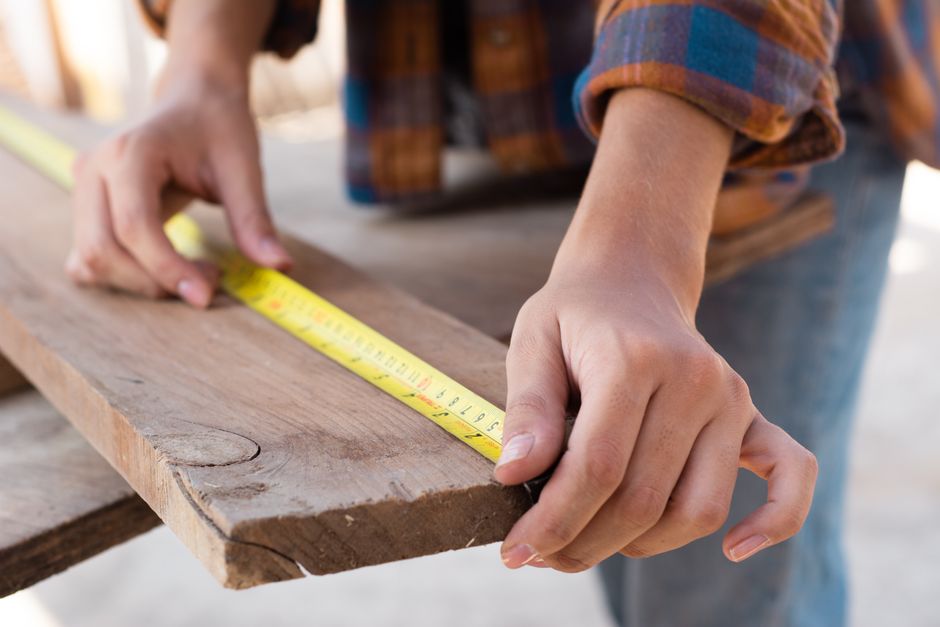
Photo by Los Muertos Crew on Pexels
Accurate measurements are vital for reliable scientific data. Here are some key principles:
- Precision vs. Accuracy:
- Accuracy refers to how close a measurement is to the true or accepted value.
- Precision refers to how close repeated measurements are to each other. You want both!
- Tools: Use the correct tool for the job (e.g., ruler for length, balance for mass, stopwatch for time).
- Calibration: Ensure your measuring instruments are properly calibrated (set to zero, reading correctly).
- Reading Scales: Read instruments at eye level to avoid parallax error (where your viewing angle makes the reading appear higher or lower than it is). For liquids in a graduated cylinder, read the bottom of the meniscus (the curved surface of the liquid).
- Significant Figures: Record only the digits that are known with certainty plus one estimated digit. This communicates the precision of your measurement.
3. Worked Example
Let's say you want to determine if different brands of paper towels absorb water differently.
- Observation: You notice some paper towels seem to soak up spills better than others.
- Question: Does Brand X paper towel absorb more water than Brand Y?
- Hypothesis: If Brand X paper towel is placed in water, then it will absorb a greater volume of water than Brand Y paper towel.
- Experiment:
- Independent Variable: Brand of paper towel.
- Dependent Variable: Volume of water absorbed.
- Controlled Variables: Size of paper towel (e.g., 1 square from each roll), initial water temperature, type of water, time allowed for absorption (e.g., 30 seconds), method of measurement (e.g., using a graduated cylinder).
- Procedure: Take one square of Brand X. Submerge it in a beaker containing 100 mL of water for 30 seconds. Remove it, gently squeeze out any unabsorbed drips, and measure the remaining water in the beaker. Subtract the remaining volume from the initial 100 mL to find the absorbed volume. Repeat this 3-5 times for Brand X and then for Brand Y.
- Analysis: You record the absorbed volumes for each trial and calculate the average for Brand X and Brand Y.
- Conclusion: If Brand X absorbed an average of 50 mL and Brand Y absorbed 35 mL, your conclusion would be: "The data supports the hypothesis that Brand X paper towel absorbs a greater volume of water than Brand Y paper towel under these experimental conditions."
4. Key Takeaways
- The scientific method is a systematic process of observation, questioning, hypothesizing, experimenting, analyzing, and concluding.
- A hypothesis is a testable explanation, not just a guess, and it can be supported or refuted by evidence.
- The seven fundamental SI units (meter, kilogram, second, ampere, kelvin, mole, candela) form the basis for all scientific measurements.
- Accurate and precise measurements are crucial for reliable data, using proper tools and techniques like reading at eye level.
- Variables (independent, dependent, controlled) are essential components in designing effective experiments.
- Scientific conclusions are based on evidence and can lead to revising hypotheses or further investigation.
Common Mistakes to Avoid:
- Confusing hypothesis with a proven fact: A hypothesis is a proposed explanation, not a guaranteed truth.
- Ignoring controlled variables: Failing to keep all other factors constant ruins the integrity of an experiment.
- Misinterpreting precision and accuracy: Just because measurements are close to each other (precise) doesn't mean they're correct (accurate).
- Failing to use proper units: Always include the correct SI unit with every measurement.
- Drawing conclusions that aren't supported by your data: Stick to what your experiment actually showed.
5. Now Try It
Imagine you want to know if playing classical music makes plants grow taller.
1. Formulate a testable hypothesis.
2. Identify the independent, dependent, and at least three controlled variables for an experiment to test your hypothesis.
3. Describe how you would measure the dependent variable and what SI unit you'd use.
Success looks like clearly defined components for a solid experimental design.
Frequently asked about "description": "Introduction to the scientific method, fundamental quantities, and basic measurement techniques across scientific disciplines.",
More from Integrated Science
Get the full Integrated Science curriculum
Clone the complete plan to your dashboard for unlimited AI-generated notes, practice quizzes, and a personalised revision schedule.
Save this course free