"timeframe": "Days 1-3",
From the Integrated Science curriculum
TL;DR
The first three days of an Integrated Science course usually focus on establishing foundational scientific concepts and introducing the scientific method. You'll learn how scientists approach problems, collect data, and draw conclusions. These initial steps are crucial for understanding all future science topics.
1. The Mental Model
Think of the first few days as setting up your scientist's toolkit. You're learning what tools are inside (like observation and data collection) and how to use them properly to solve scientific puzzles.
2. The Core Material
Integrated Science aims to connect different fields of science rather than treating them as separate subjects. For Days 1-3, you're likely building a common base that applies across biology, chemistry, and physics.
2.1 What is Science?

Photo by Ann H on Pexels
Science is a way of understanding the natural world through observation and experimentation. It's not just a collection of facts; it's a process for finding those facts.
2.2 The Scientific Method
Photo by Markus Winkler on Pexels
This is the core process all scientists use. It's a systematic approach to asking and answering questions.
Here's how it generally flows:
graph TD
    A["Observe/Ask a Question"] --> B["Form a Hypothesis"]
    B --> C["Design & Conduct Experiment"]
    C --> D["Collect & Analyze Data"]
    D --> E["Draw a Conclusion"]
    E --> F["Communicate Results"]
    F --> A;
Let's break down each step:
- Observe/Ask a Question: Science starts with curiosity. You notice something and wonder why or how it happens. For example, "Why does bread get moldy faster in a warm, moist place than in a cold, dry place?"
- Form a Hypothesis: This is an educated guess or a testable explanation for your observation. It's usually stated as an "If... then... because..." statement. It must be testable. For example, "If bread is kept in a warm, moist environment, then it will grow mold faster than bread kept in a cold, dry environment, because mold thrives in warm, moist conditions."
- Design & Conduct Experiment: You create a way to test your hypothesis. This involves identifying variables:
- Independent Variable: The thing you intentionally change or control (e.g., the environment—warm/moist vs. cold/dry).
- Dependent Variable: The thing you measure or observe that might change because of your independent variable (e.g., the amount of mold growth).
- Controlled Variables: Everything else you keep the same to ensure a fair test (e.g., type of bread, amount of light, initial freshness of bread).
- Collect & Analyze Data: During your experiment, you carefully record your observations and measurements. This data might be qualitative (descriptive, like "some mold," "lots of mold") or quantitative (numerical, like "mold covered 2 cm²"). Then you look for patterns or trends.
- Draw a Conclusion: Based on your data, you decide if your hypothesis was supported or refuted. It's rarely "proven," as science is always open to new evidence. If your data doesn't support your hypothesis, that's still valuable information, and you might revise your hypothesis and test again.
- Communicate Results: Scientists share their findings with others through reports, presentations, or publications. This allows others to review, repeat, and build upon the work.
2.3 Basic Measurement and Observation
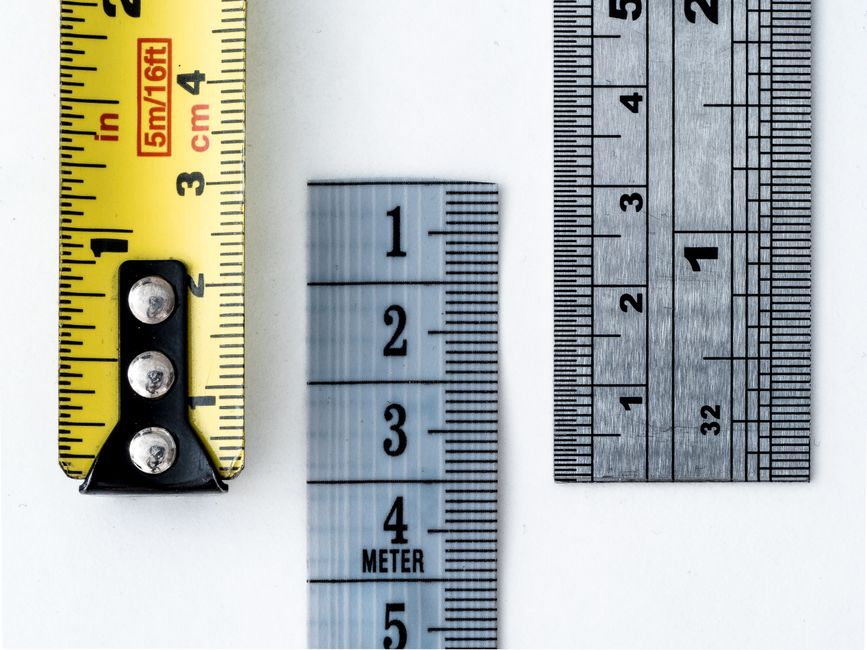
Photo by William Warby on Pexels
You'll also likely practice fundamental skills like making accurate observations and taking measurements. This might include using rulers, measuring cylinders, or thermometers, and understanding units (like meters, grams, liters, Celsius). Precision and accuracy are key here.
3. Worked Example
Let's say you observe that plants near a window grow taller than plants in a darker corner of the room.
1. Observe/Ask a Question: Do plants need light to grow tall?
2. Form a Hypothesis: If plants receive more light, then they will grow taller, because light is essential for photosynthesis, which provides energy for growth.
3. Design & Conduct Experiment:
* Get three identical plant seedlings.
* Independent Variable: Amount of light.
* Dependent Variable: Plant height.
* Controlled Variables: Same type of plant, same pot size, same soil, same amount of water, same room temperature.
* Place Plant A by a bright window.
* Place Plant B in a moderately lit spot.
* Place Plant C in a dark closet.
* Water them equally every day.
* Measure their height every 3 days for two weeks.
4. Collect & Analyze Data: You record heights in a table. After two weeks, Plant A grew 10 cm, Plant B grew 5 cm, and Plant C grew 1 cm and looked sickly.
5. Draw a Conclusion: The data supports the hypothesis. Plants that received more light grew significantly taller.
6. Communicate Results: You'd share your findings, maybe with a graph showing the growth of each plant over time.
4. Key Takeaways
- Integrated Science links different science fields together, starting with common fundamental principles.
- The scientific method is a systematic process for investigating questions about the natural world.
- A hypothesis is a testable, educated guess, often stated as an "If... then... because..." statement.
- Experiments involve controlling variables to isolate the effect of one factor (the independent variable) on another (the dependent variable).
- Accurate observation and precise measurement are crucial for reliable scientific data.
- Conclusions are drawn from data, determining whether the hypothesis was supported or refuted.
- Scientists share their findings to contribute to collective knowledge.
Common Mistakes to Avoid:
- Not controlling all variables in an experiment, making it impossible to draw a clear conclusion.
- Forming a hypothesis that isn't testable (e.g., "Ghosts make things move").
- Confusing observation with interpretation (e.g., "The plant is happy" instead of "The plant has green leaves").
- Changing your hypothesis after seeing the results to make it fit your data.
5. Now Try It
Imagine you want to test if different brands of paper towels absorb water differently.
- Formulate a Hypothesis: Write a testable hypothesis for this question in an "If... then... because..." format.
- Identify Variables: For your experiment, list the independent variable, the dependent variable, and at least three controlled variables.
- Outline the Experiment: Briefly describe how you would conduct this experiment to test your hypothesis fairly.
Success looks like clearly identifying the core components of the scientific method for this simple scenario, showing you can think like a scientist.
Frequently asked about "timeframe": "Days 1-3",
More from Integrated Science
Get the full Integrated Science curriculum
Clone the complete plan to your dashboard for unlimited AI-generated notes, practice quizzes, and a personalised revision schedule.
Save this course free