"name": "Foundations of Science and Measurement",
From the Integrated Science curriculum
TL;DR
Science is a systematic way of understanding the natural world through observation and experimentation, relying on testable explanations. Accurate measurement is crucial in science, using standard units to ensure consistent and comparable results worldwide. Understanding scientific notation and significant figures helps us handle very large or small numbers and reflect the precision of our measurements.
1. The Mental Model
Imagine science as a detective story: you observe clues (data), form a hypothesis (a suspect explanation), and then design experiments to test your theory. Measurement is your reliable magnifying glass, providing precise evidence that helps you solve the mystery of how things work.
2. The Core Material
Science isn't just a collection of facts; it's a process for learning about the universe. This process, often called the scientific method, involves making observations, asking questions, forming hypotheses, conducting experiments, analyzing data, and drawing conclusions. It's an iterative cycle, meaning you might go back and refine your hypothesis or experiment based on your findings.
A hypothesis is a testable explanation for an observation. It's an "if-then" statement, like "If I add fertilizer to my plant, then it will grow taller." An experiment is designed to test this hypothesis, usually by changing one variable (the independent variable, like fertilizer) and observing its effect on another variable (the dependent variable, like plant height), while keeping everything else constant (controlled variables).
The Scientific Method (Simplified)

Photo by Polina Tankilevitch on Pexels
graph TD
    A["Observation/Question"] --> B["Formulate Hypothesis"]
    B --> C["Design Experiment"]
    C --> D["Collect Data"]
    D --> E["Analyze Data"]
    E --> F["Draw Conclusion"]
    F --> G{"Supports Hypothesis?"}
    G -- Yes --> H["Share Results/Further Questions"]
    G -- No --> B
The Importance of Measurement
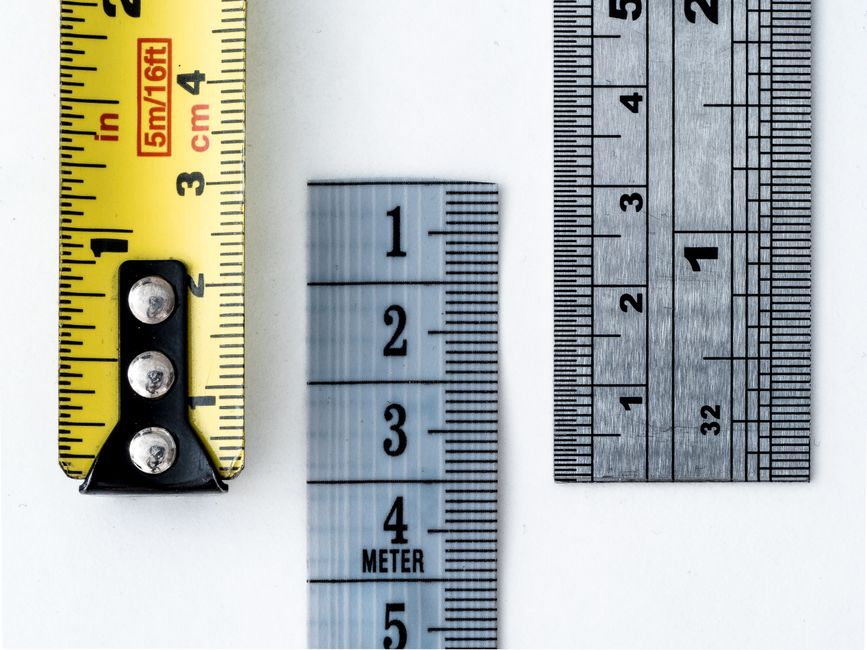
Photo by William Warby on Pexels
Measurement is fundamental to science. Without it, our observations would be vague and our experiments unreliable. Imagine trying to describe how much a plant grew without a ruler! Accurate and precise measurements allow us to collect quantitative data, which is essential for analyzing results and drawing valid conclusions.
The International System of Units (SI) is the global standard for measurement. It provides a common language for scientists everywhere, ensuring that a meter is a meter whether you're in Paris or Pittsburgh. Key SI base units you'll use often include:
* Length: meter (m)
* Mass: kilogram (kg)
* Time: second (s)
* Temperature: Kelvin (K) or Celsius (°C)
* Amount of substance: mole (mol)
When you measure, you also need to think about precision and accuracy.
* Accuracy refers to how close a measurement is to the true or accepted value. If you weigh a 10 kg bag of flour and your scale reads 9.9 kg, that's pretty accurate.
* Precision refers to how close repeated measurements are to each other. If you weigh the 10 kg bag five times and get 9.9 kg, 9.8 kg, 9.9 kg, 9.8 kg, and 9.9 kg, your measurements are precise (they're close to each other), but maybe not perfectly accurate if the true value is 10 kg.
Handling Numbers: Scientific Notation and Significant Figures
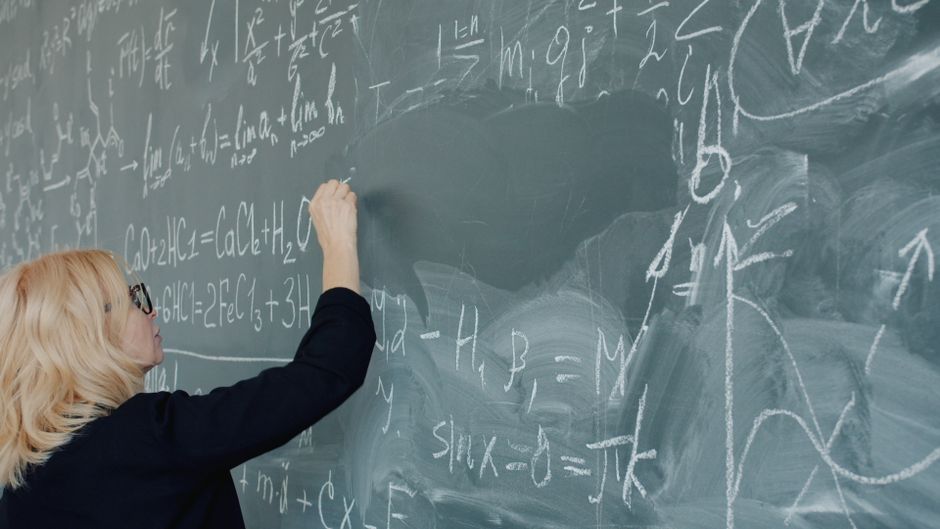
Photo by Vitaly Gariev on Pexels
Science often deals with extremely large or small numbers. Scientific notation is a concise way to express these numbers. It involves writing a number as a product of a coefficient (a number between 1 and 10) and a power of 10.
* Large number example: The distance from Earth to the Sun is about 150,000,000,000 meters. In scientific notation, this is $1.5 \times 10^{11}$ m.
* Small number example: The mass of an electron is about 0.000000000000000000000000000000911 kg. In scientific notation, this is $9.11 \times 10^{-31}$ kg.
Significant figures (sig figs) tell you about the precision of a measurement. When you record a measurement, you include all the digits you know for sure, plus one estimated digit. The more significant figures, the more precise the measurement.
* If you measure a length as 5.2 cm, you know the 5 and the 2 for sure.
* If you measure it as 5.23 cm, it's more precise; you're estimating the '3'.
Rules for counting significant figures:
1. Non-zero digits are always significant. (e.g., 23.45 has 4 sig figs)
2. Zeros between non-zero digits are significant. (e.g., 1005 has 4 sig figs)
3. Leading zeros (before non-zero digits) are NOT significant. They just show the decimal place. (e.g., 0.0025 has 2 sig figs)
4. Trailing zeros (at the end of the number) are significant ONLY if the number contains a decimal point. (e.g., 12.00 has 4 sig figs; 1200 has 2 sig figs, but 1200. has 4 sig figs)
3. Worked Example
Let's say you're measuring the growth of a bean sprout over five days.
Observation/Question: My bean sprout seems to be growing. How much does it grow each day?
Hypothesis: If I water my bean sprout daily, then it will grow about 1.5 cm per day.
You set up an experiment: you measure the sprout's height each day using a ruler marked in millimeters.
Day 1: 0.8 cm (initial height)
Day 2: 2.3 cm
Day 3: 3.9 cm
Day 4: 5.6 cm
Day 5: 7.2 cm
Now, let's look at the daily growth, paying attention to significant figures:
- Day 1 to 2: 2.3 cm - 0.8 cm = 1.5 cm
- Day 2 to 3: 3.9 cm - 2.3 cm = 1.6 cm
- Day 3 to 4: 5.6 cm - 3.9 cm = 1.7 cm
- Day 4 to 5: 7.2 cm - 5.6 cm = 1.6 cm
All measurements are to one decimal place, so your answers should also be to one decimal place.
Average daily growth: (1.5 + 1.6 + 1.7 + 1.6) / 4 = 6.4 / 4 = 1.6 cm/day.
You'd then compare this 1.6 cm/day average to your hypothesis of 1.5 cm/day. Your data suggests the sprout grew slightly more than your hypothesis, but it's pretty close! You might conclude that your hypothesis was mostly supported, and then ask new questions or refine your next experiment.
4. Key Takeaways
- The scientific method is a cyclical process of observation, hypothesis, experimentation, and conclusion.
- A hypothesis is a testable statement, often in an "if-then" format.
- Accurate and precise measurements, using SI units, are crucial for reliable scientific data.
- Scientific notation helps manage very large or very small numbers efficiently.
- Significant figures indicate the precision of a measurement and guide how you round calculated answers.
- Accuracy is how close to the true value; precision is how close repeated measurements are to each other.
- Experiments typically have independent, dependent, and controlled variables.
Common mistakes to avoid:
- Forgetting to control variables, which makes it hard to know what caused your results.
- Not using consistent units throughout your calculations.
- Confusing accuracy with precision, as they measure different aspects of your data quality.
- Misapplying significant figure rules, leading to answers that seem more or less precise than your measurements actually allow.
5. Now Try It
Imagine you want to find out if the temperature of water affects how quickly a sugar cube dissolves. Design a simple experiment:
1. Formulate a clear, testable hypothesis.
2. Identify your independent, dependent, and at least two controlled variables.
3. Describe the steps you would take to measure the dissolving time, specifying which SI units you'd use and how you'd account for precision in your measurements.
Success looks like a well-structured plan that addresses each point, showing you understand the basics of the scientific method and good measurement practices.
Frequently asked about "name": "Foundations of Science and Measurement",
More from Integrated Science
Get the full Integrated Science curriculum
Clone the complete plan to your dashboard for unlimited AI-generated notes, practice quizzes, and a personalised revision schedule.
Save this course free